

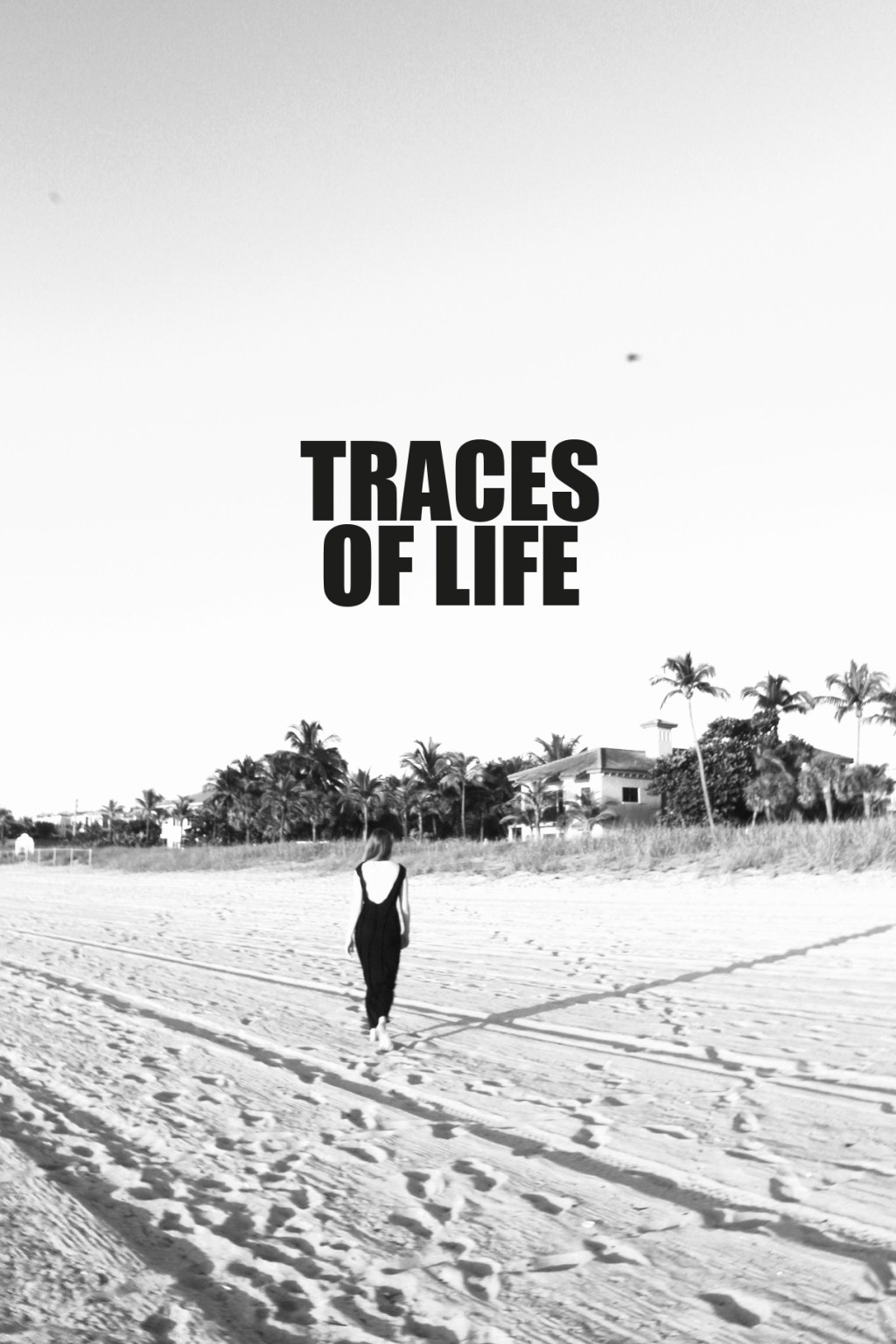
I’m always thinking. About everything. Always. Every thought in my head is analyzed, questioned again, a new answer sought again – over and over again. Every moment that I have experienced in life, will experience, am currently experiencing – everything is played over and over in my head. Over and over. Every time I analyze a situation anew. Every time I feel differently. Every time I think differently. And think and think and think. Thoughts come and go, rushing through my memory – the same thought, new thoughts, old thoughts. Over and over. Sometimes it gets more and more complicated. I can’t sleep. My head can’t calm down. Chaos. Thoughts. Even more thoughts. But sometimes there is peace. Sometimes everything suddenly seems clear to you. Sometimes a thought makes so much sense that suddenly everything seems so easy and for a brief moment everything is fine. Silence. But just as quickly it rushes again and the thoughts come and go. Back and forth. The chaos is back and nothing makes sense anymore. Overthinking. Thought Scapes.
inspiration.
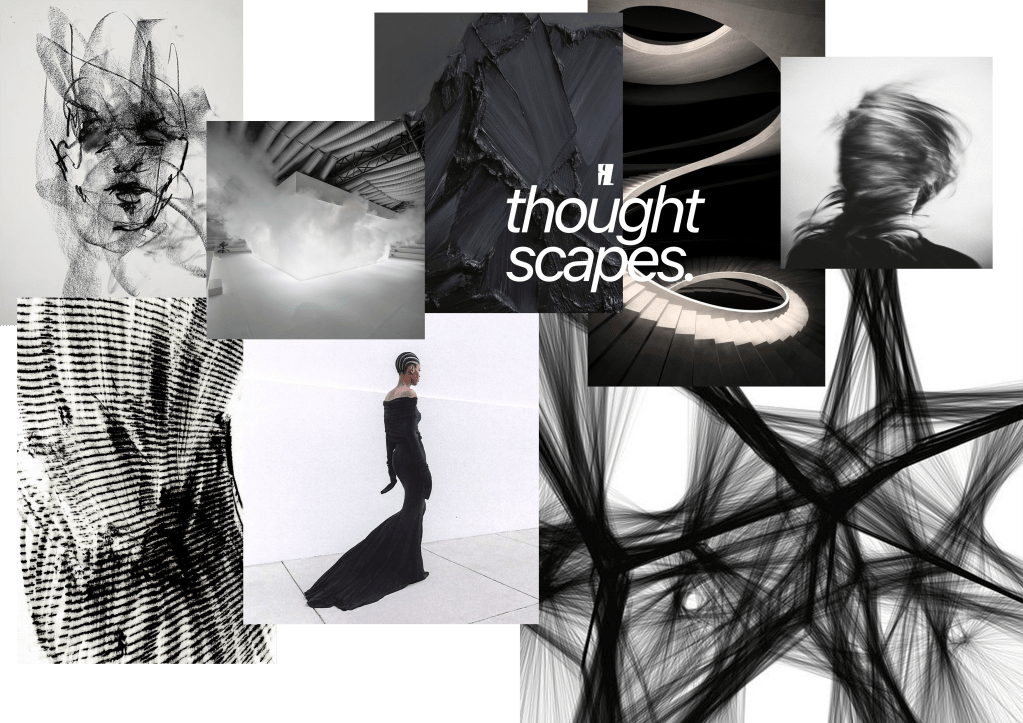

The Concept.
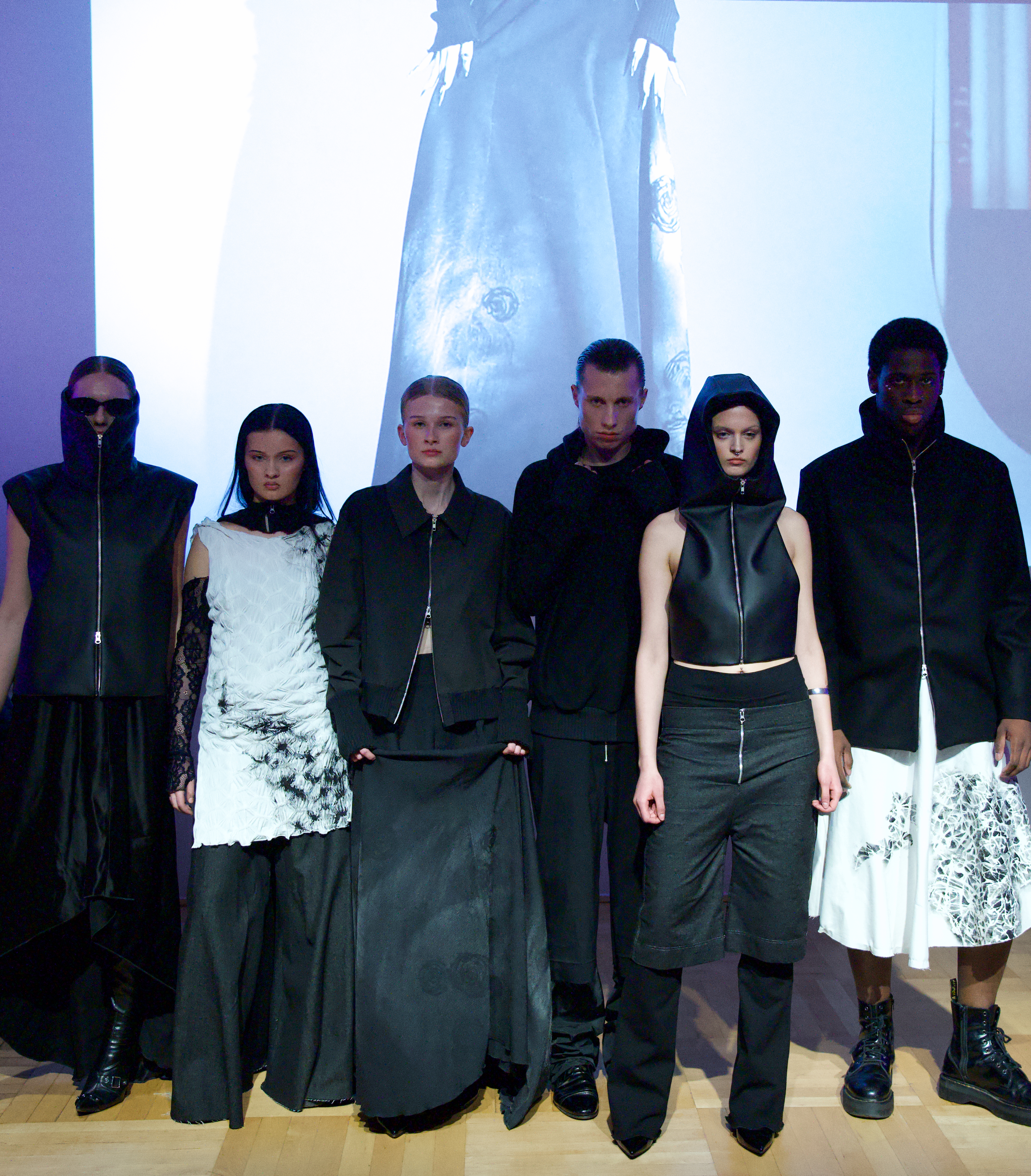
My final collection, “Thought Scapes”, with the theme of overthinking, is about delving into how our minds work, with a focus on how we tend to think too much about everything. The collection aims to show that overthinking can have both good and bad sides.
Inspired by the twists and turns of our minds, it captures the mix of clear thoughts and chaos that comes with excess thinking. The designs show how overthinking affects us in different ways, both good and bad. The main idea behind “Thought scapes” is to make it clear that overthinking everything and analyzing every little detail of life can make our actions and decisions in life easier or very difficult.
Our thoughts and worries can also affect our dreams. If we think about something a lot, we may dream about it too. Overthinking can also affect not only our waking state, but also our dreams, by determining the content and course of our next thought images.
Overthinking can cause internal chaos, making our thought process overly complicated and confusing. This chaos often manifests itself through an abundance of thoughts that are constantly repeating or contradictory, which can lead to confusion, uncertainty, and stress.
Overthinking can also cause clear thinking to become clouded by a multitude of thoughts and analyses. This can lead to excessive rumination and difficult decision making, thereby affecting the ability to think clearly.
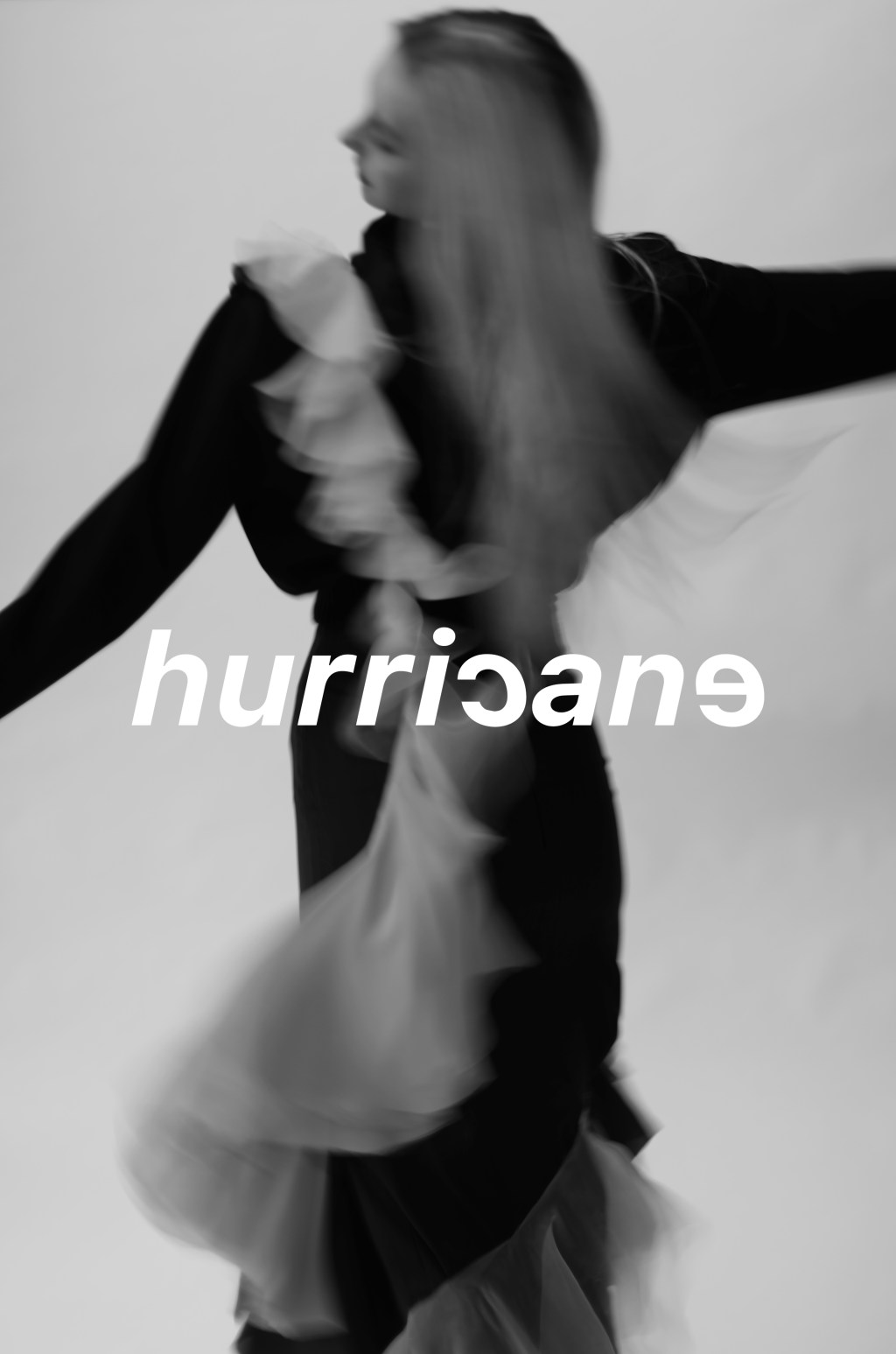
Thought Scapes is not just about clothing; it takes all the crazy thoughts we have and turns them into something beautiful. The collection shows that while our minds can be chaotic, there is something special about it. Chaos. It wants people to look within themselves and find peace in all the noise. That thoughts find their peace. That I find my peace.
Lookbook.
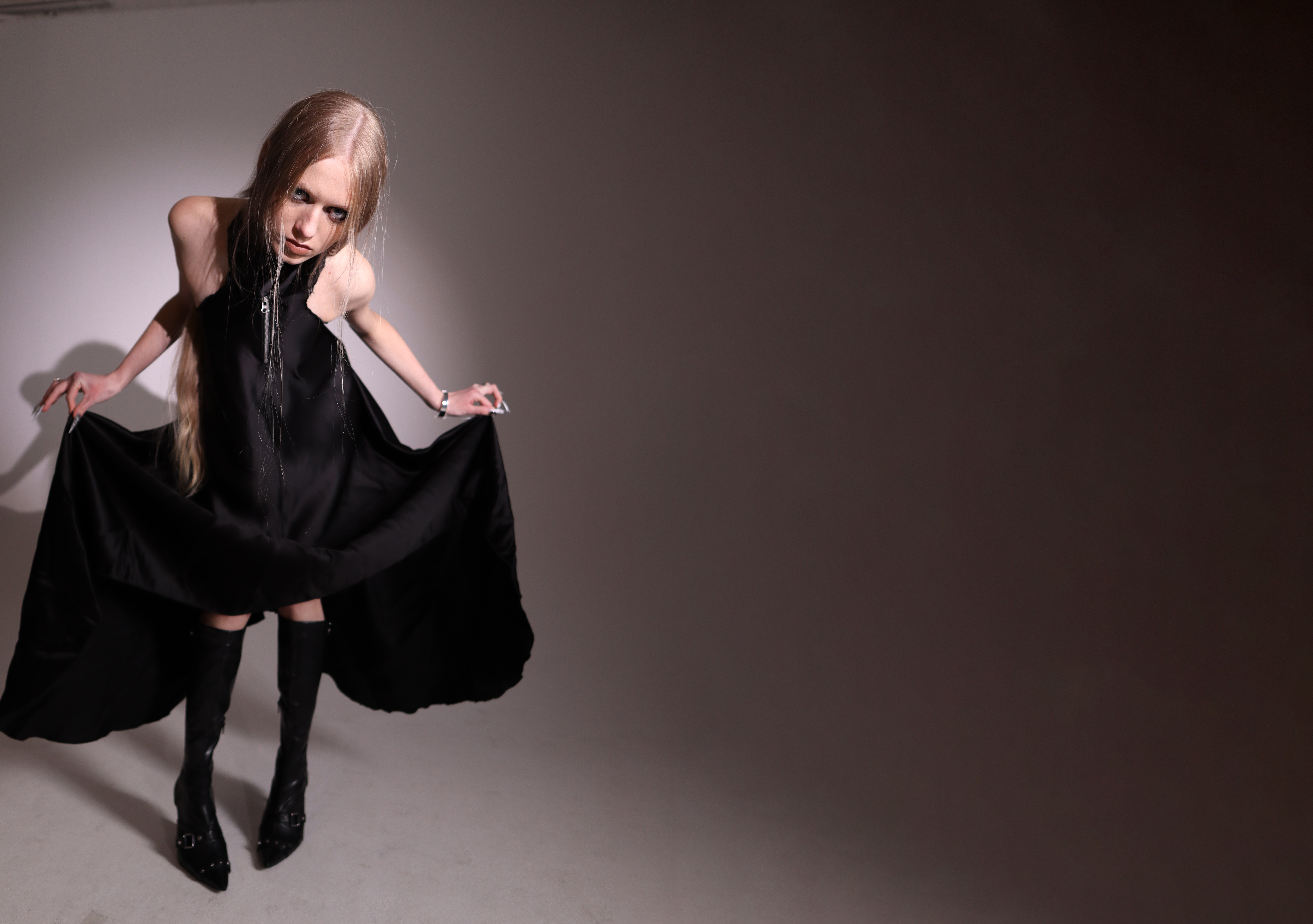
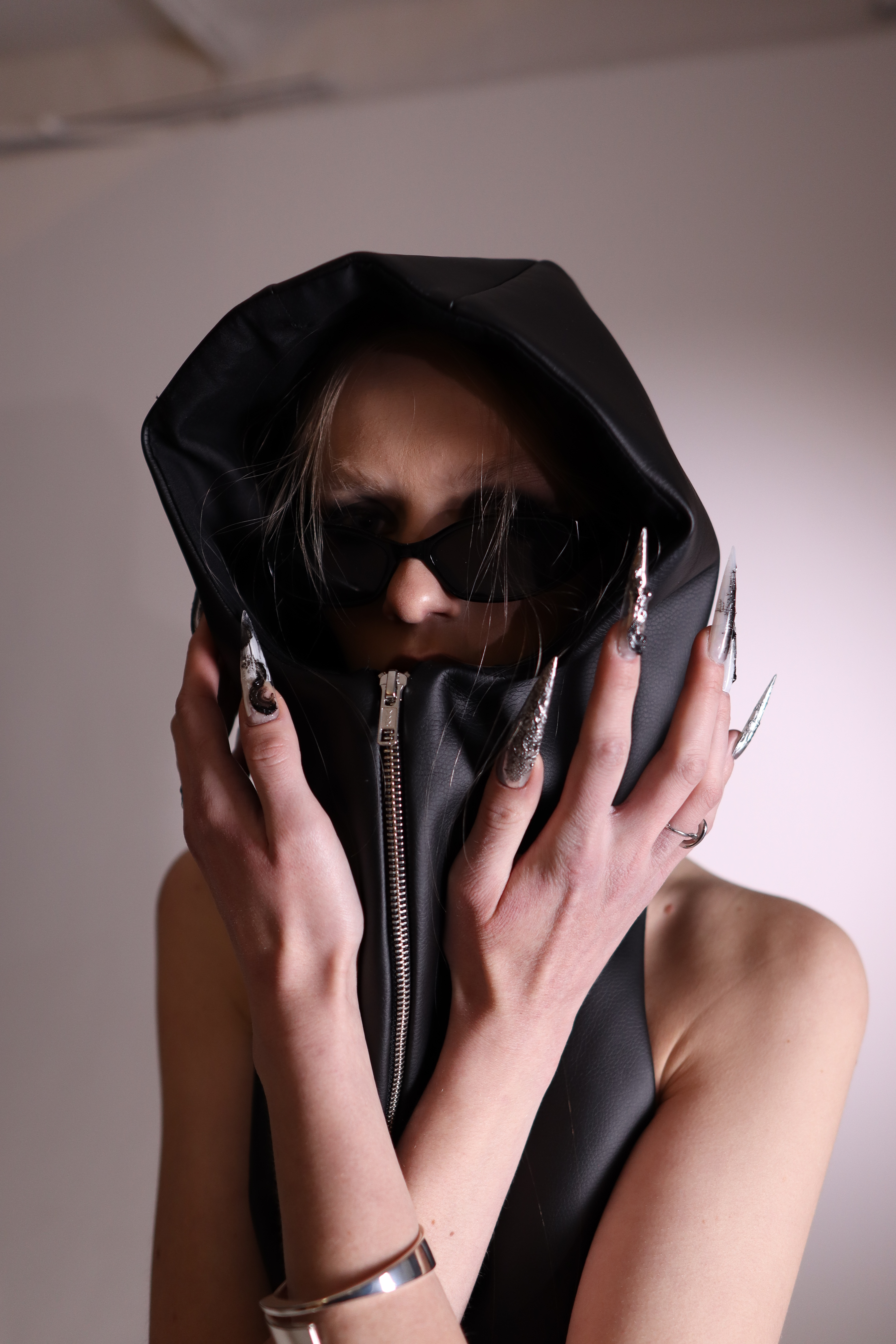
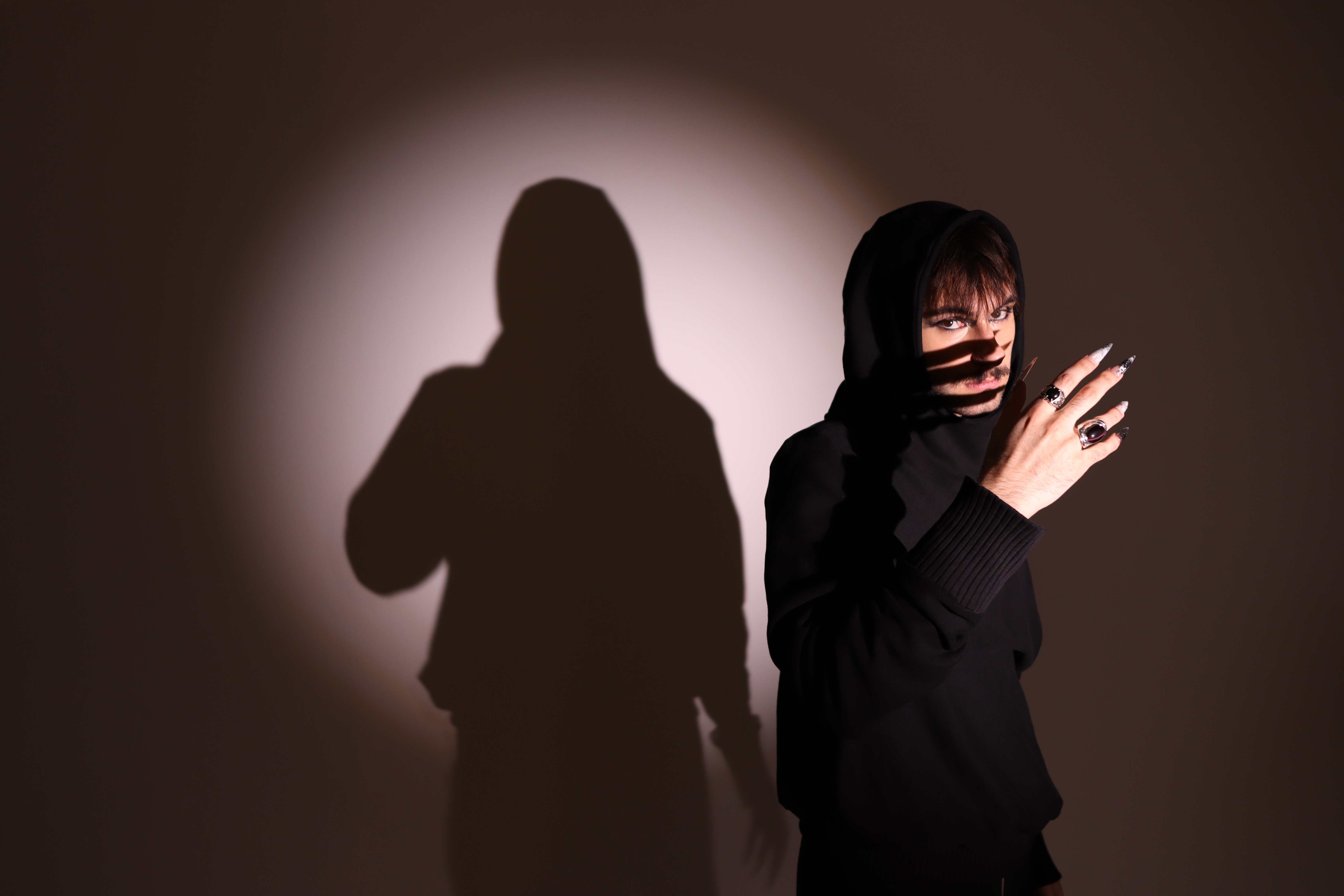
Fortress of Thoughts.
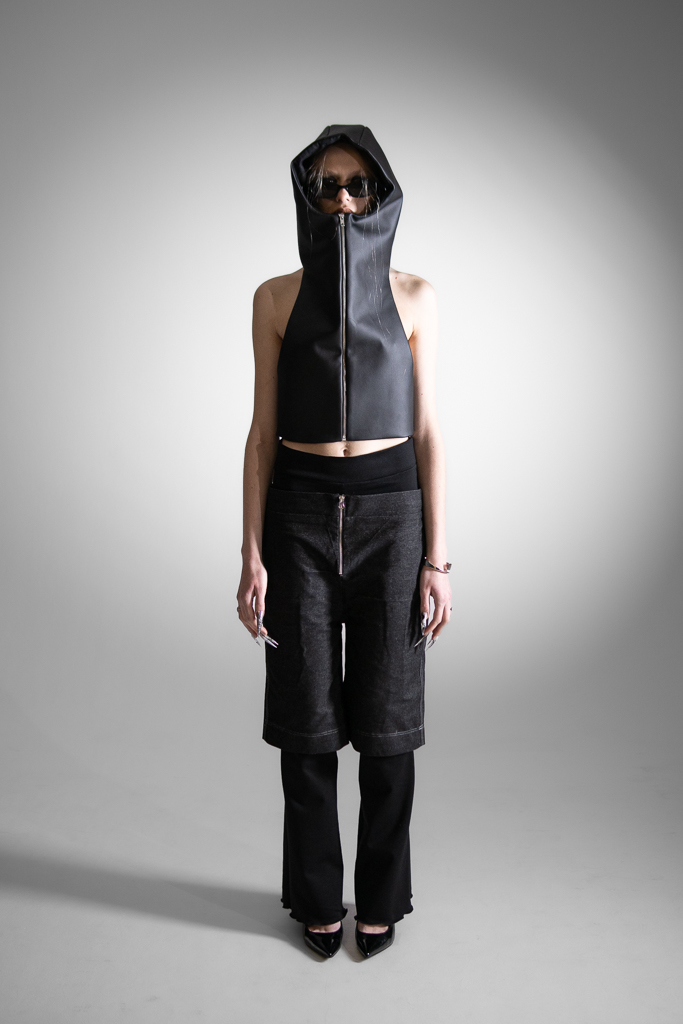
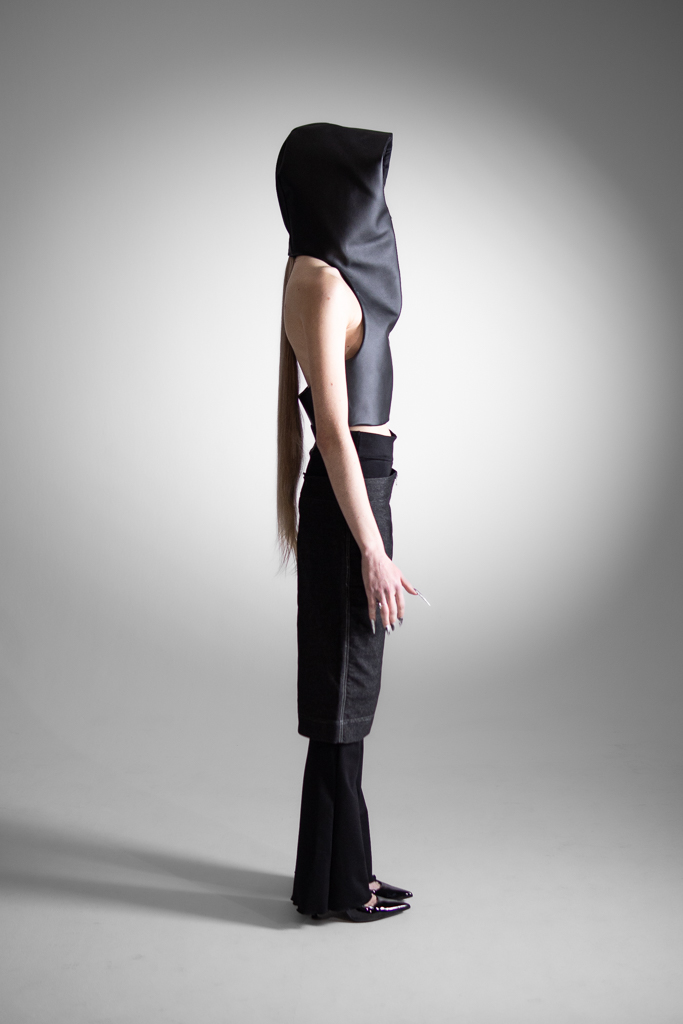
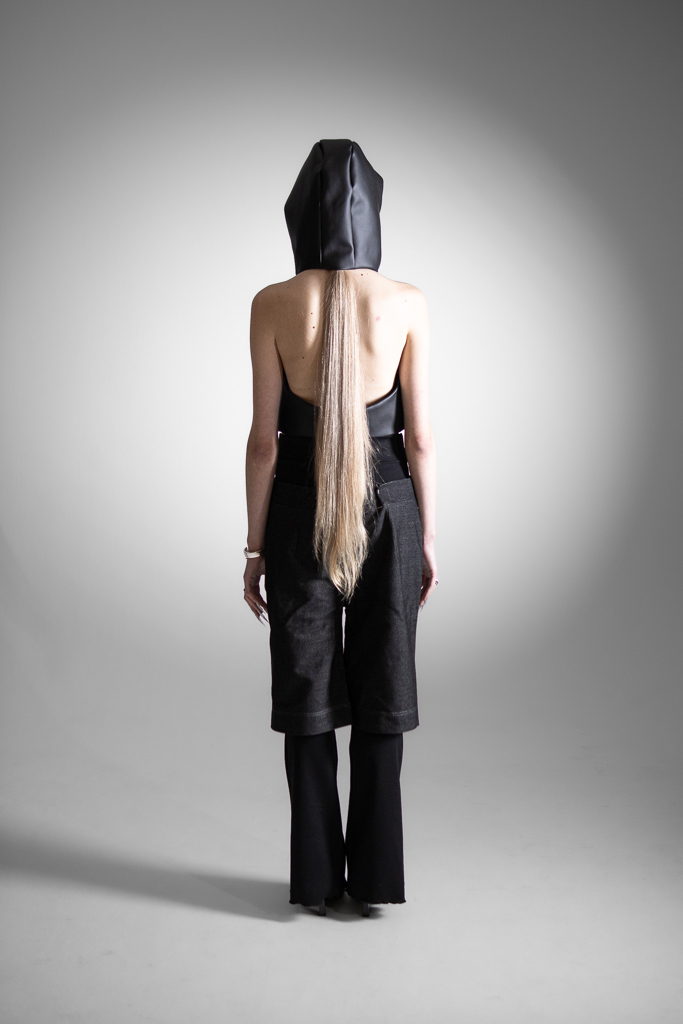
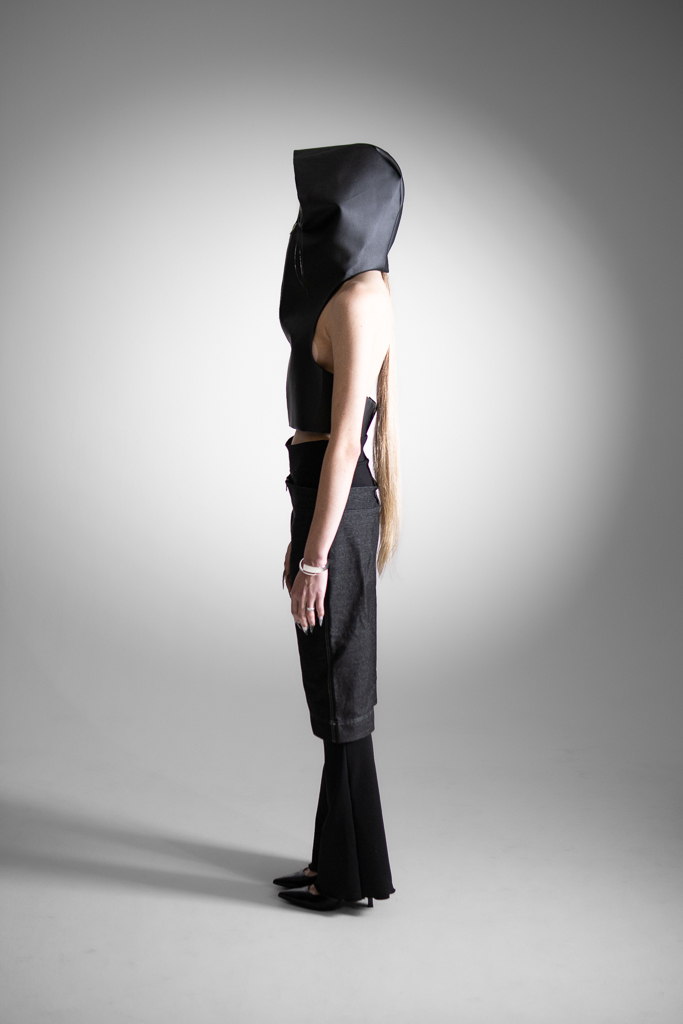
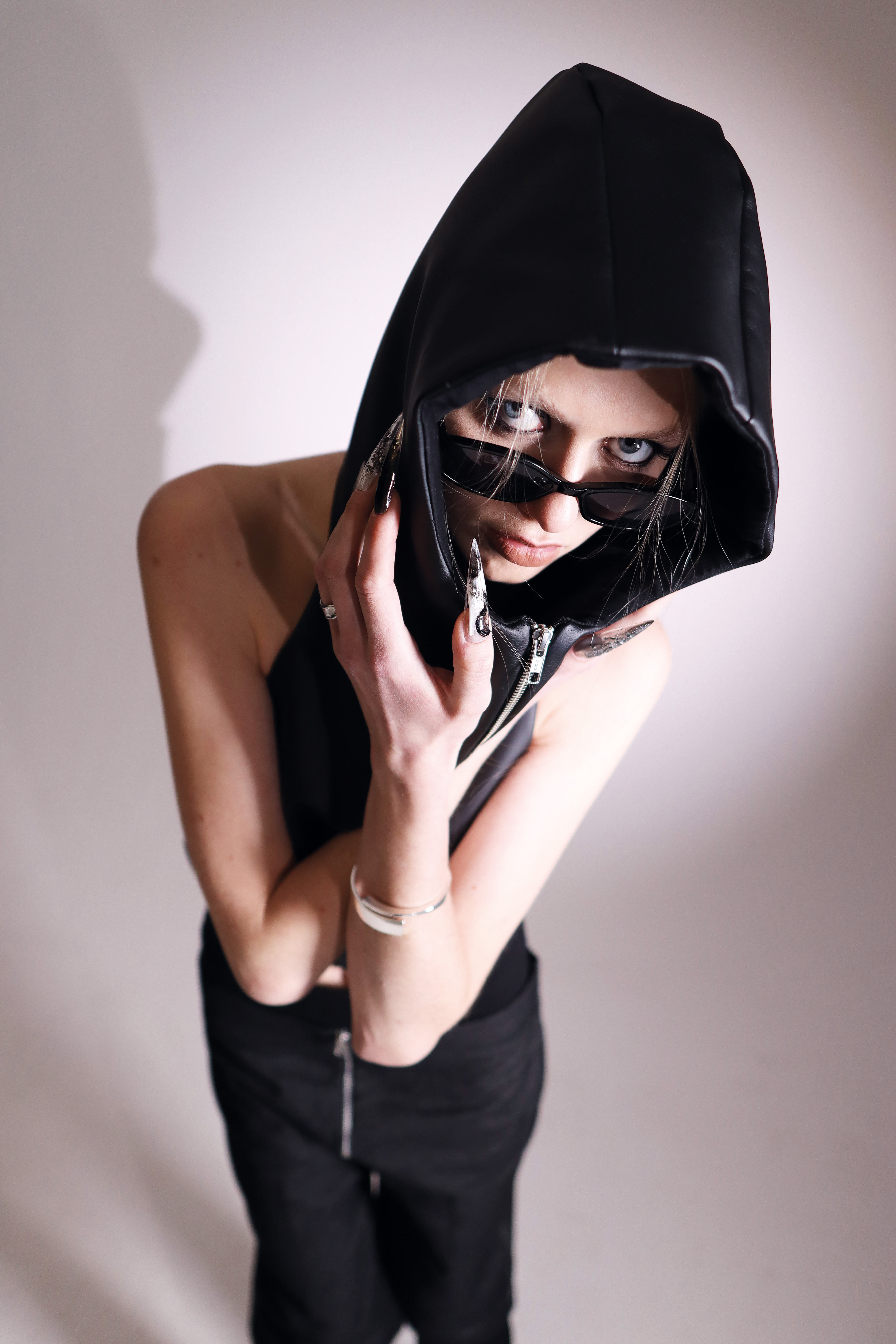
The mind becomes a fortress, built from endless thoughts, doubts, and analyses. „Fortress of Thoughts“ describes the defense mechanism of overthinking – the constant construction of mental walls to shield oneself from uncertainties and external influences. But the higher these walls grow, the more one becomes a prisoner of their own mind.
Every possibility is dissected, every scenario analyzed down to the smallest detail, until no movement is possible. Thoughts turn into walls, patterns become chains, and the search for security transforms into self-imposed isolation. It is the struggle between the need for control and the inability to let go – an endless cycle in which the mind traps itself.
Eclipsed Mind.
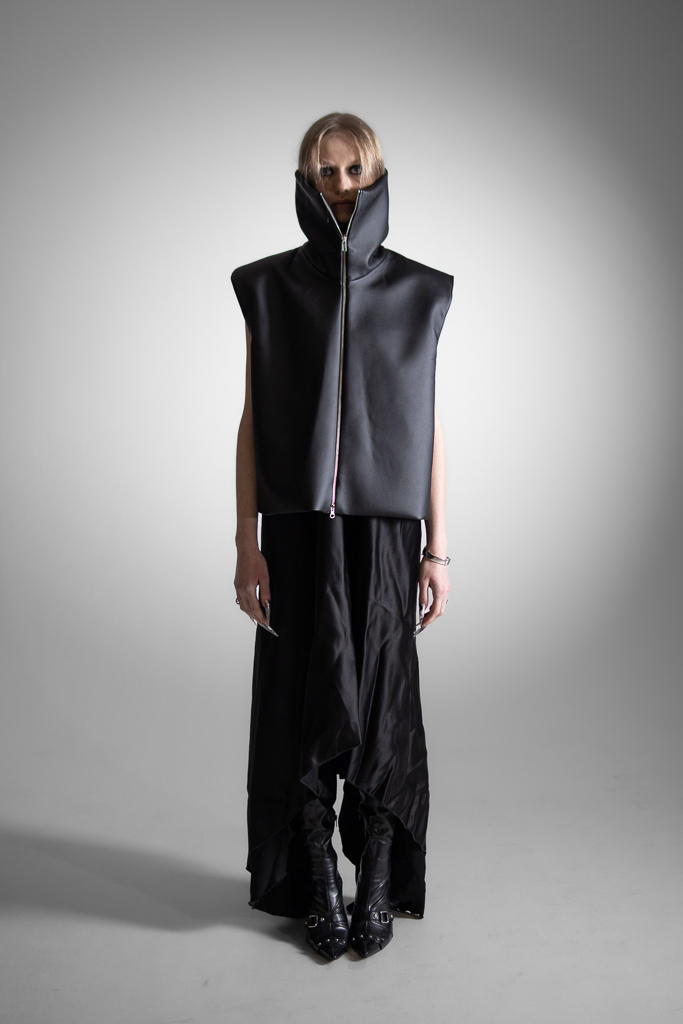
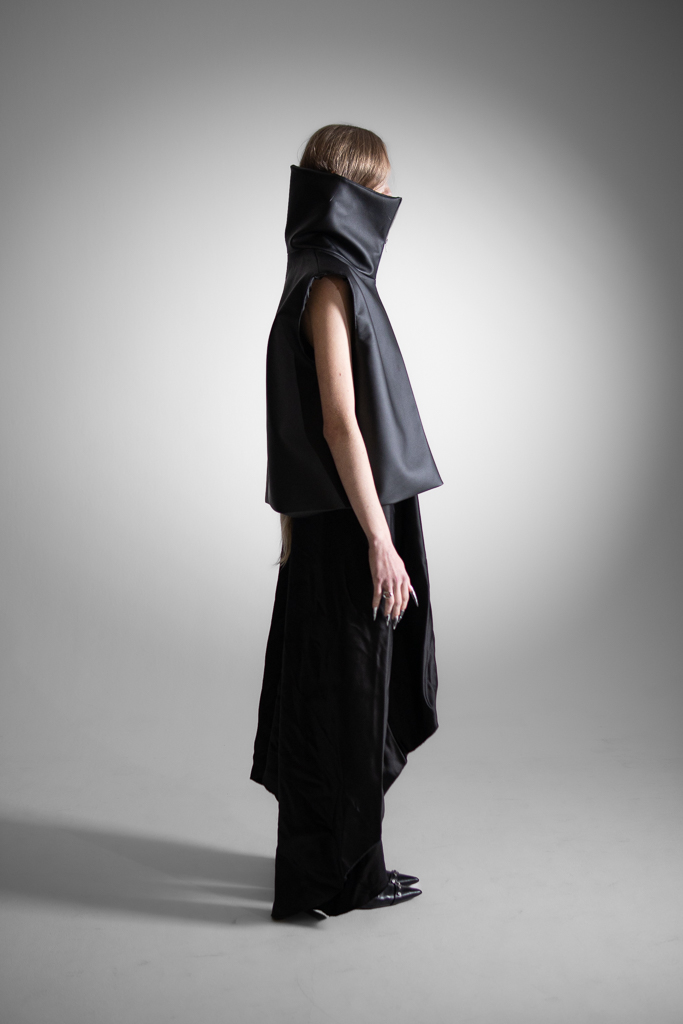
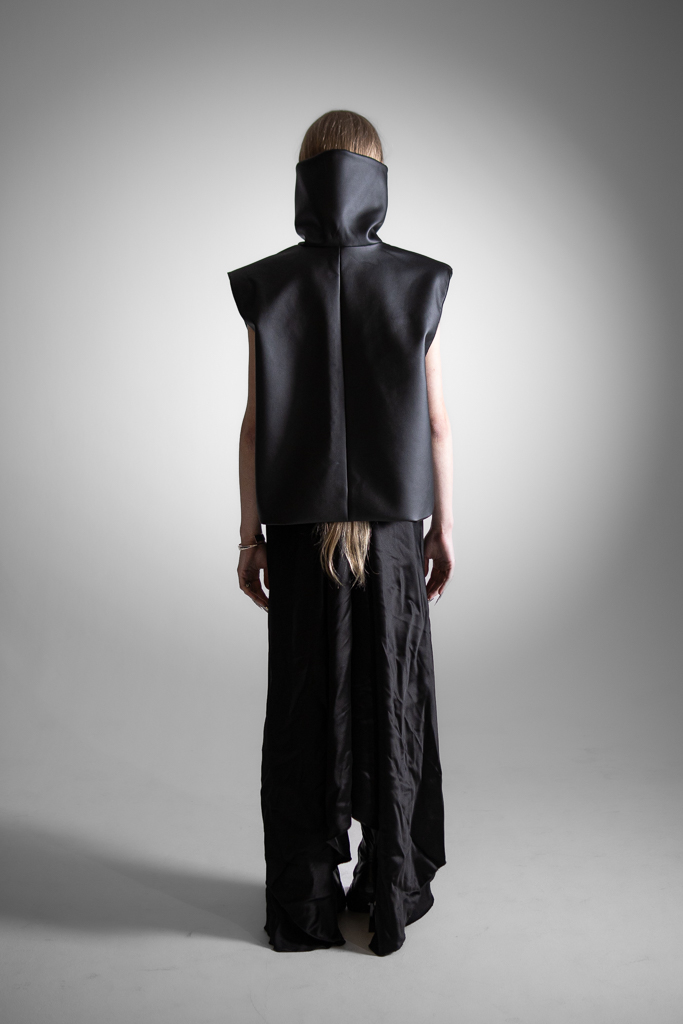
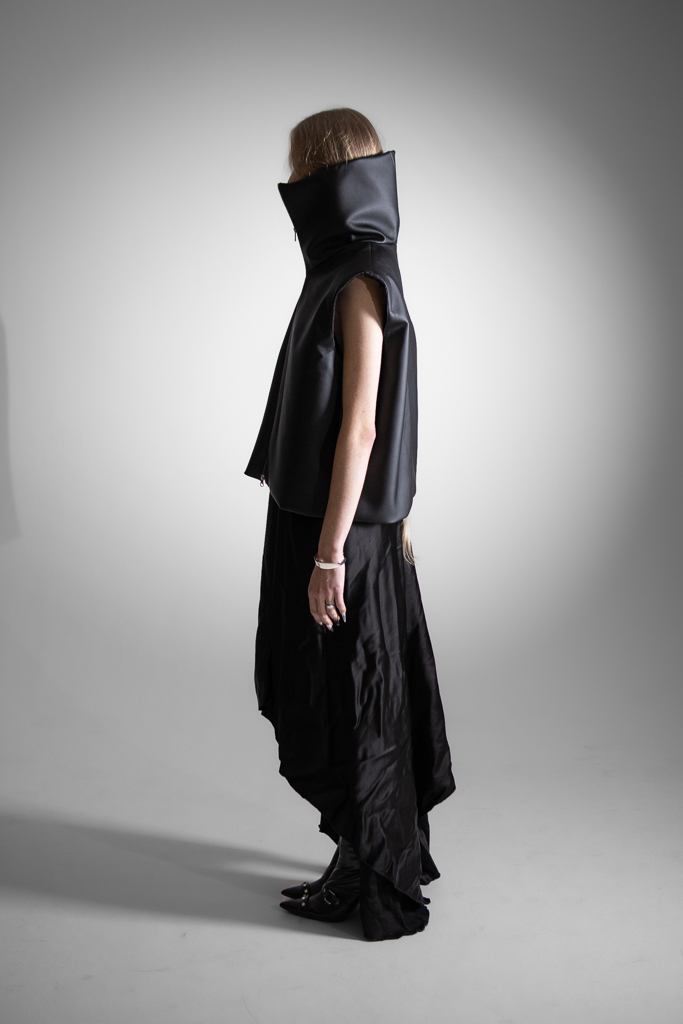
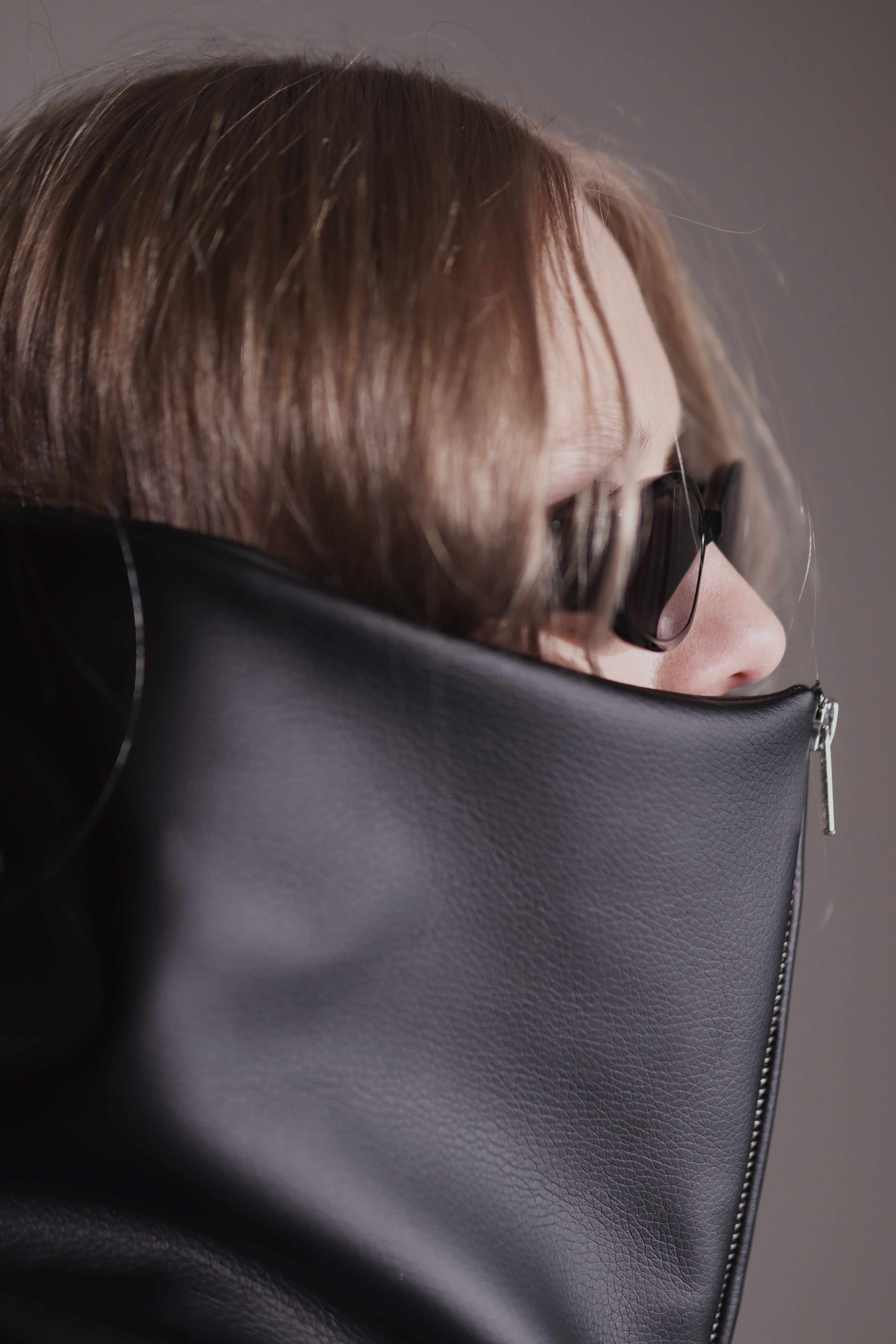
A mind overshadowed by its own thoughts. „Eclipsed Mind“ captures the moment when clarity seems within reach, yet is constantly obscured by spiraling thoughts—like a solar eclipse, where the light remains but is hidden behind dark layers.
Overthinking becomes a trap: one tries to bring order to the chaos, to gain control over the thoughts, but the stronger the will, the more everything slips away. The boundaries between reality and imagination blur, thoughts spiral endlessly, intertwining and consuming themselves. It is the paradox of seeking understanding while getting lost in it—a suspended state between enlightenment and oblivion.
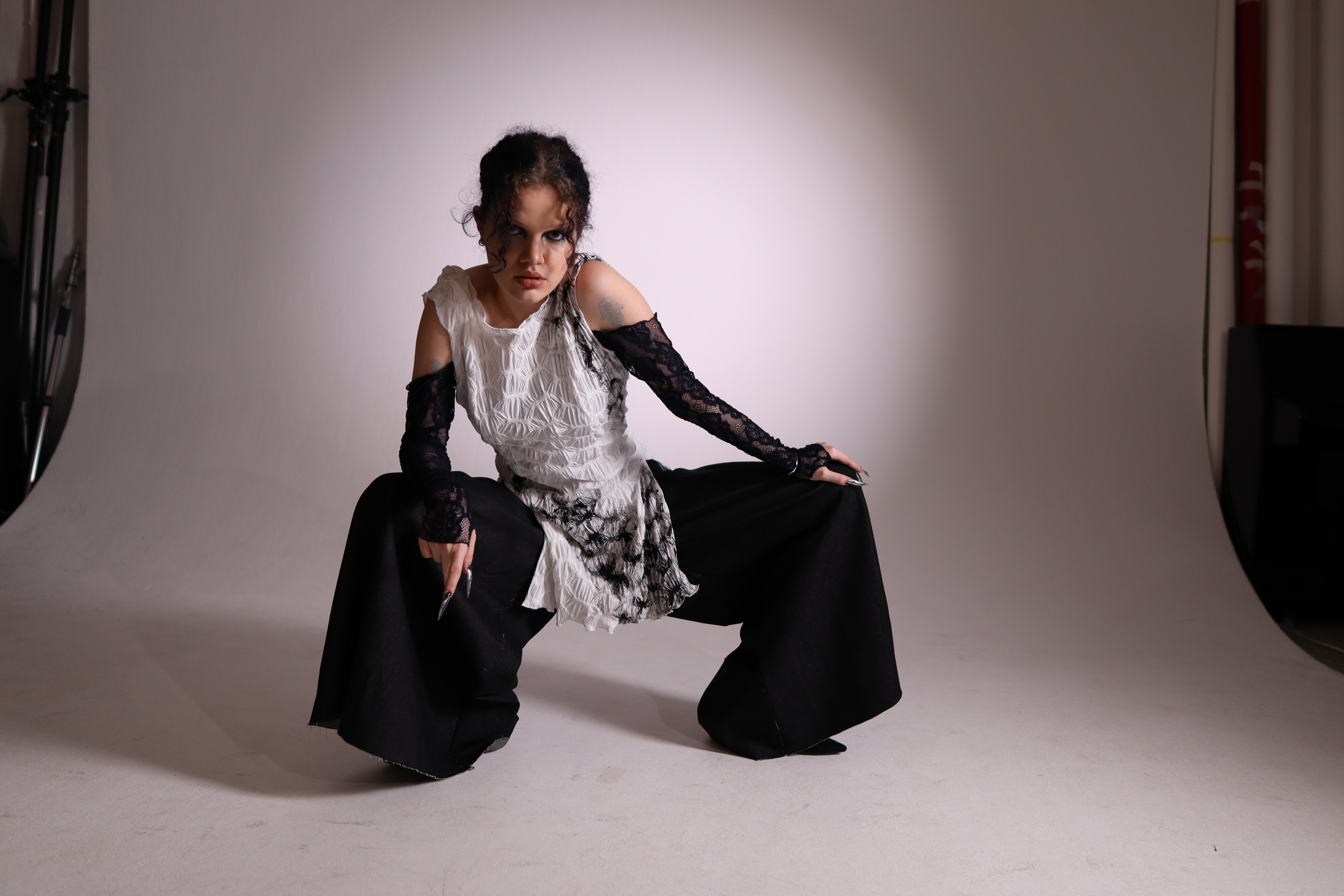
Duality Rift.

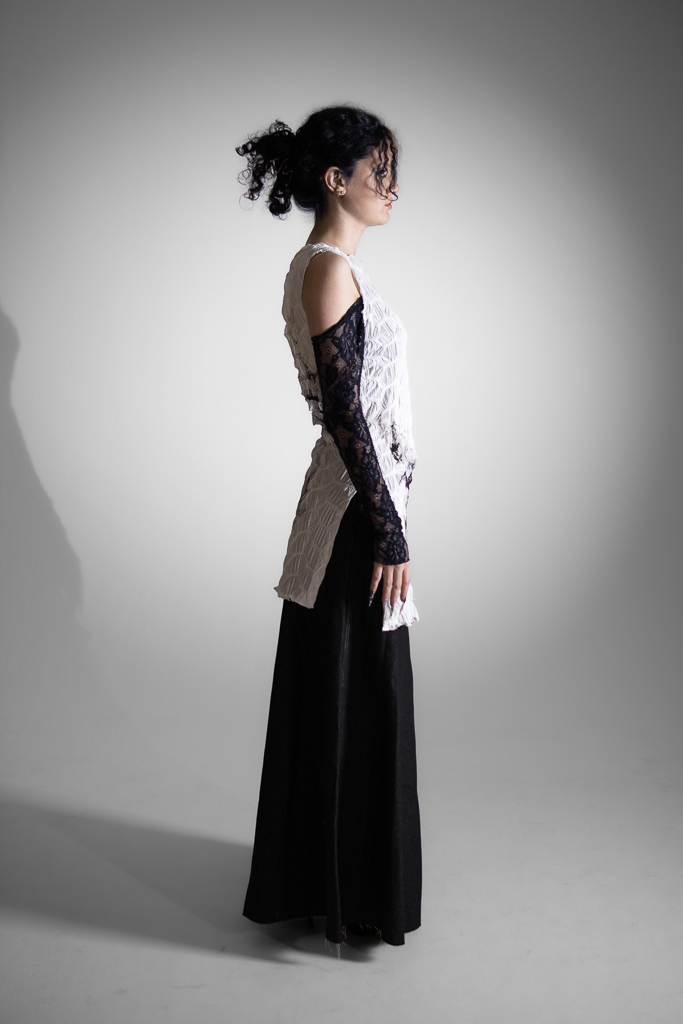
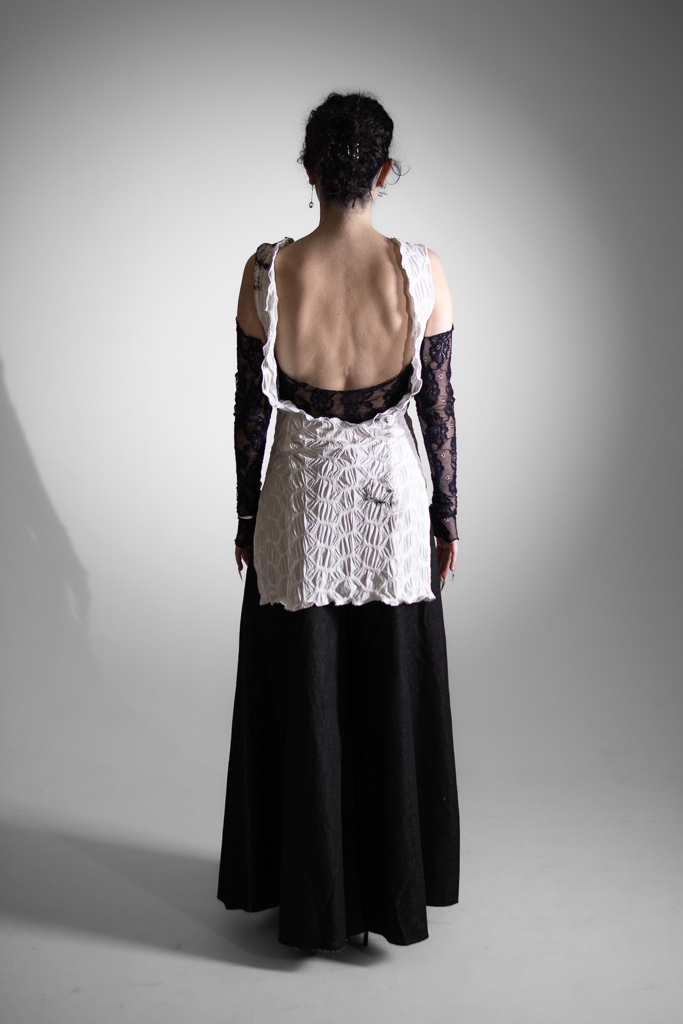
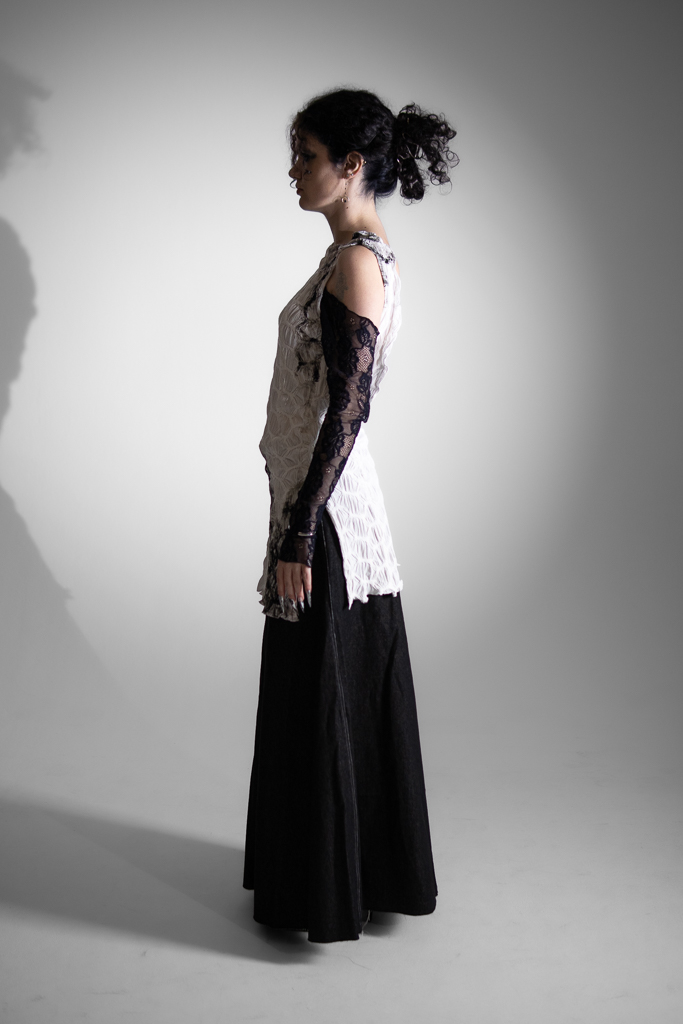
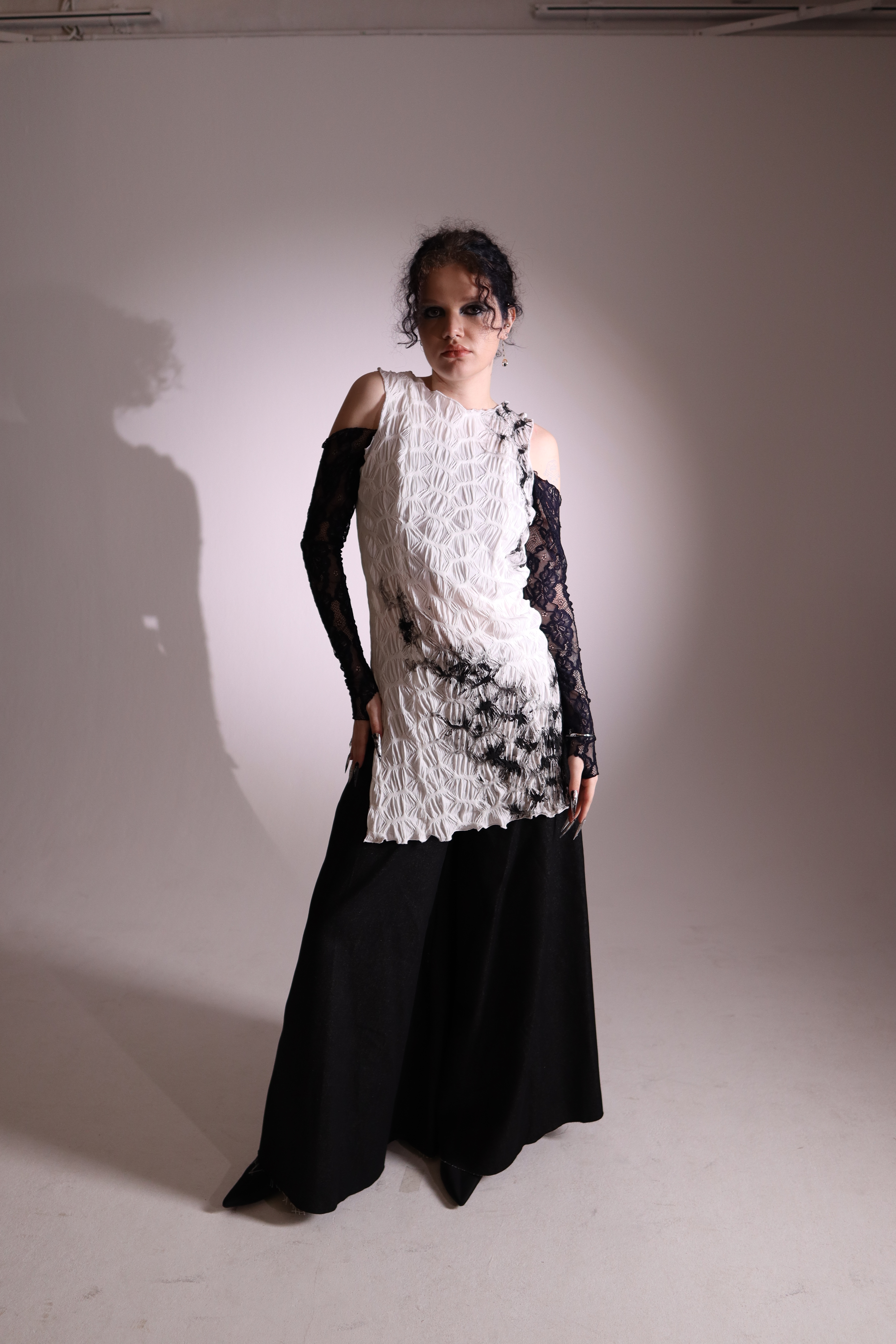
A fracture between two extremes -between chaos and order, control and surrender, clarity and confusion. „Duality Rift“embodies the inner tearing of overthinking: the constant shift between rational analysis and emotional overwhelm, between the urge to understand everything and the fear of never finding an answer.
It is the feeling of existing in two worlds at once – one that craves structure and one that drowns in endless thought loops. Yet, the more one tries to choose a side, the deeper the rift grows, dividing everything. An eternal tension, an unceasing oscillation between opposites, never finding rest.
Lucid Reflective Blur.
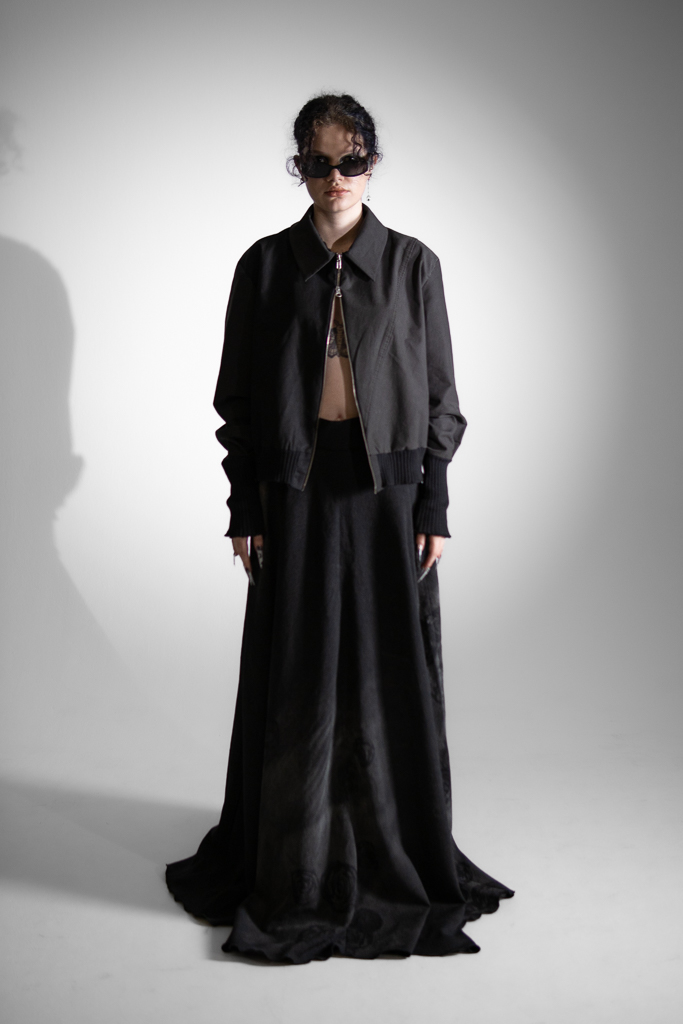
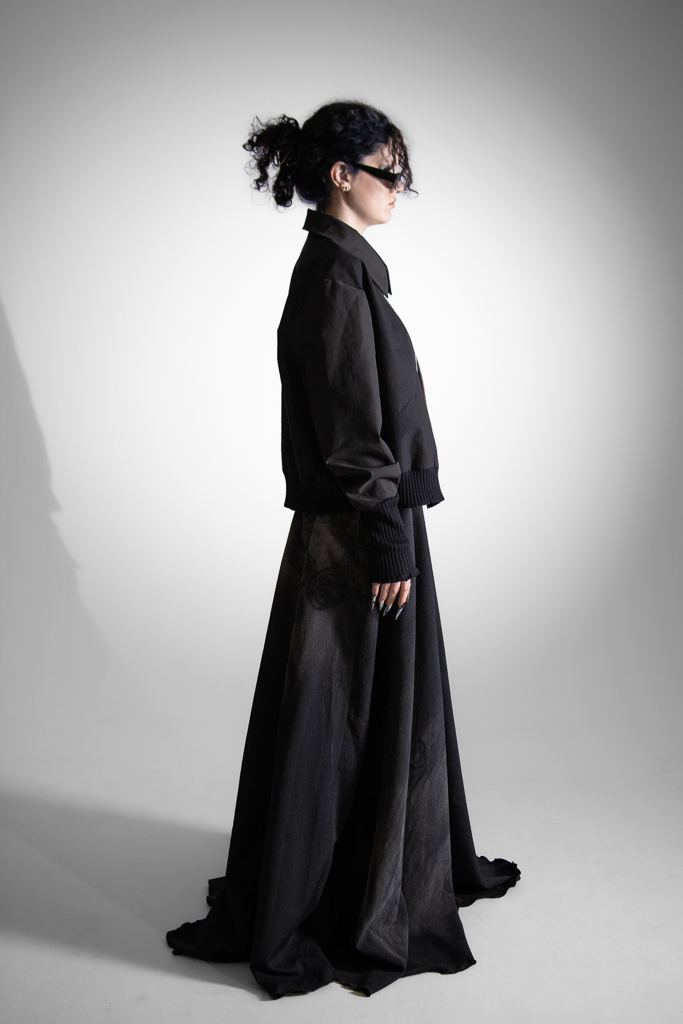

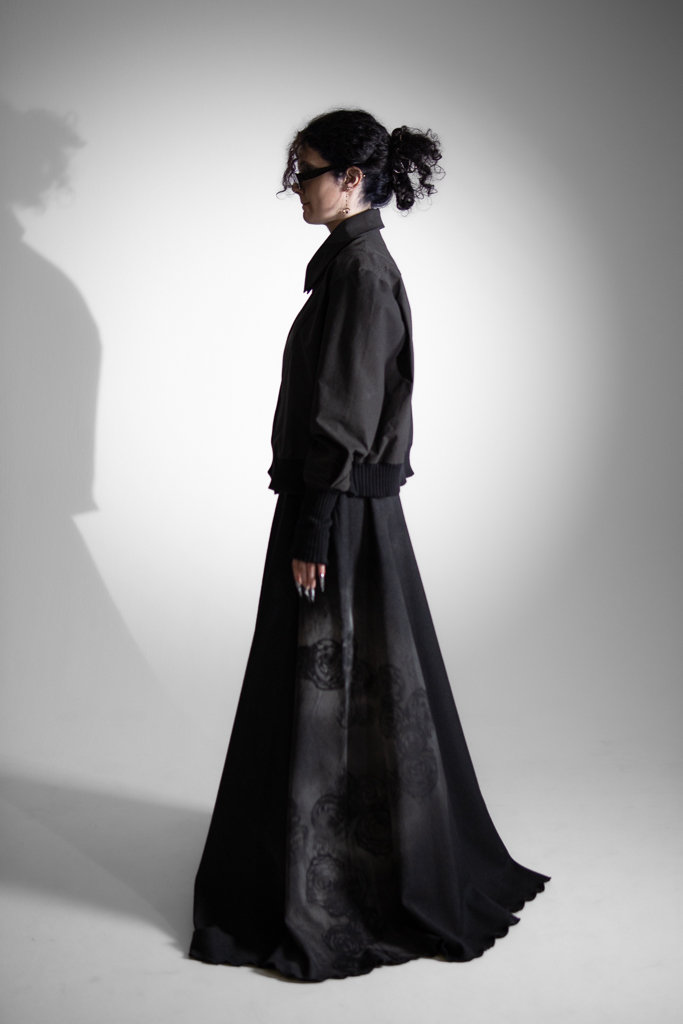
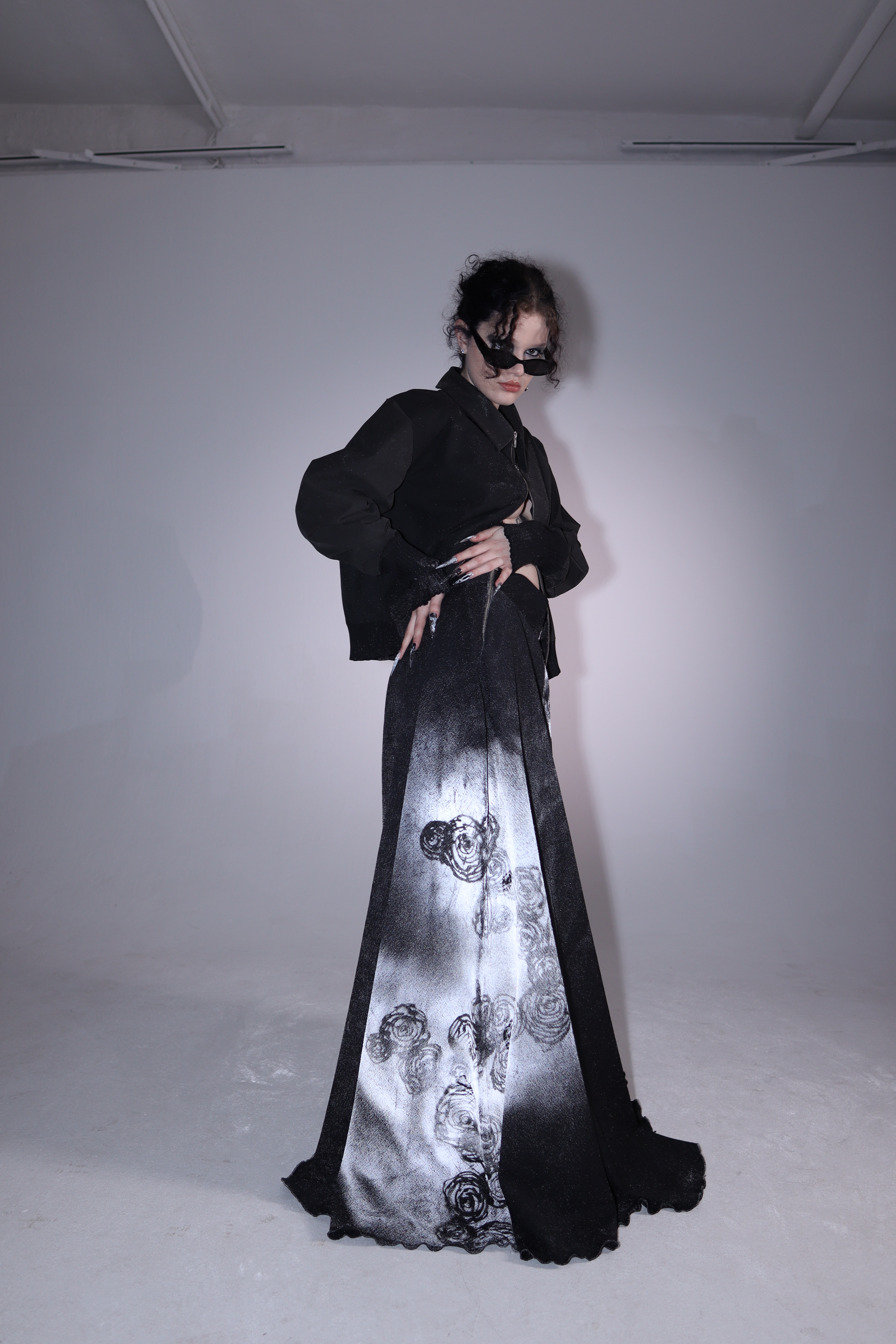
A state between wakefulness and dreaming, between control and the unstoppable vortex of thoughts. In both lucid dreaming and overthinking, the boundaries between reality and illusion blur. Thoughts become overwhelming, emotions intensify, details are exaggerated – yet the moment one tries to grasp them, they slip away, dissolve, only to reappear in a new form.
A look that oscillates between clarity and distortion – like a mind clinging to a single lucid thought, piercing through it for a fleeting moment, only to lose it again in the infinity of its own reflections.
Ephemeral Clarity.
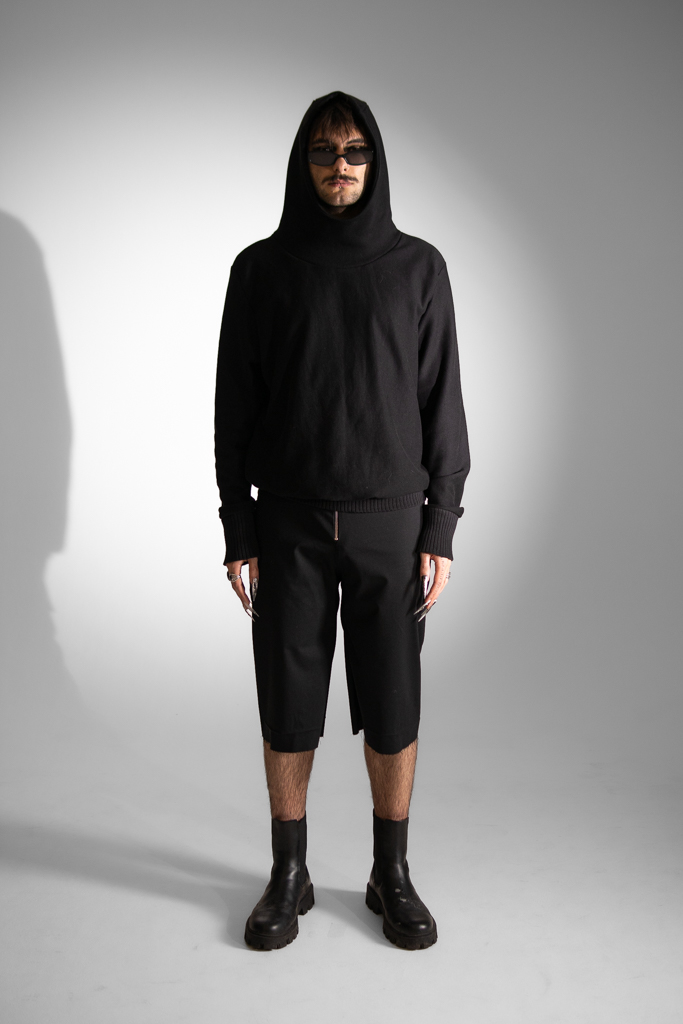
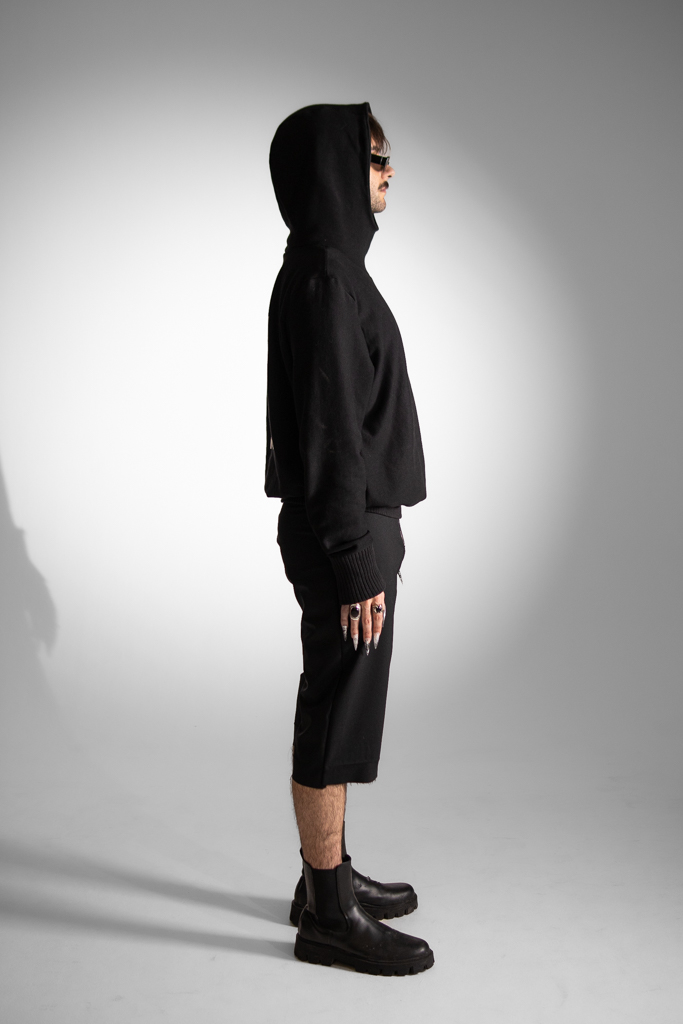
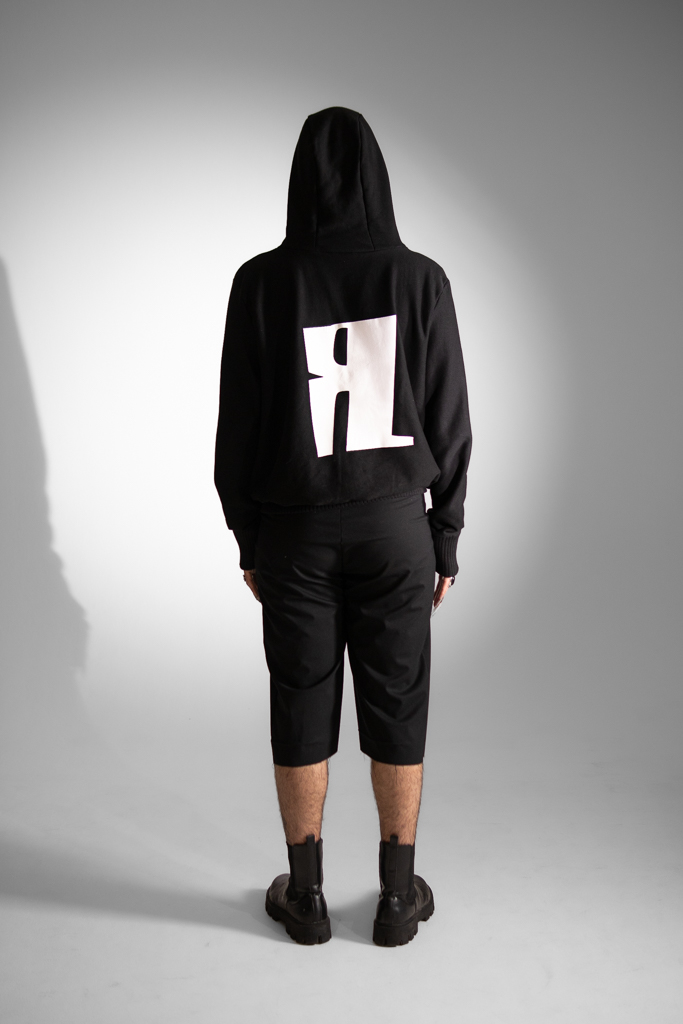
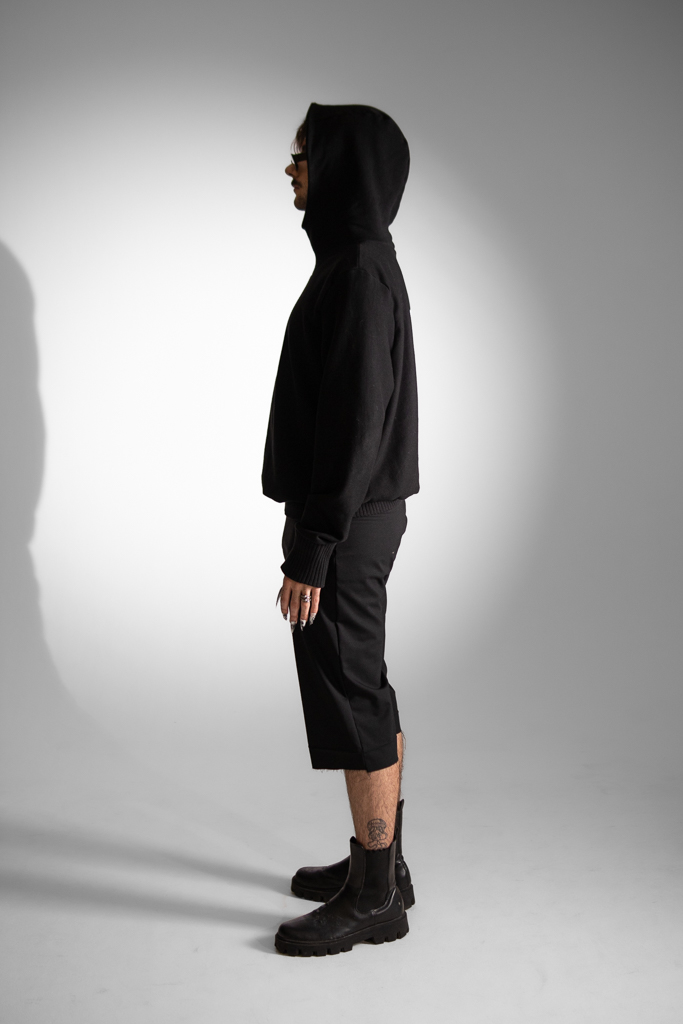
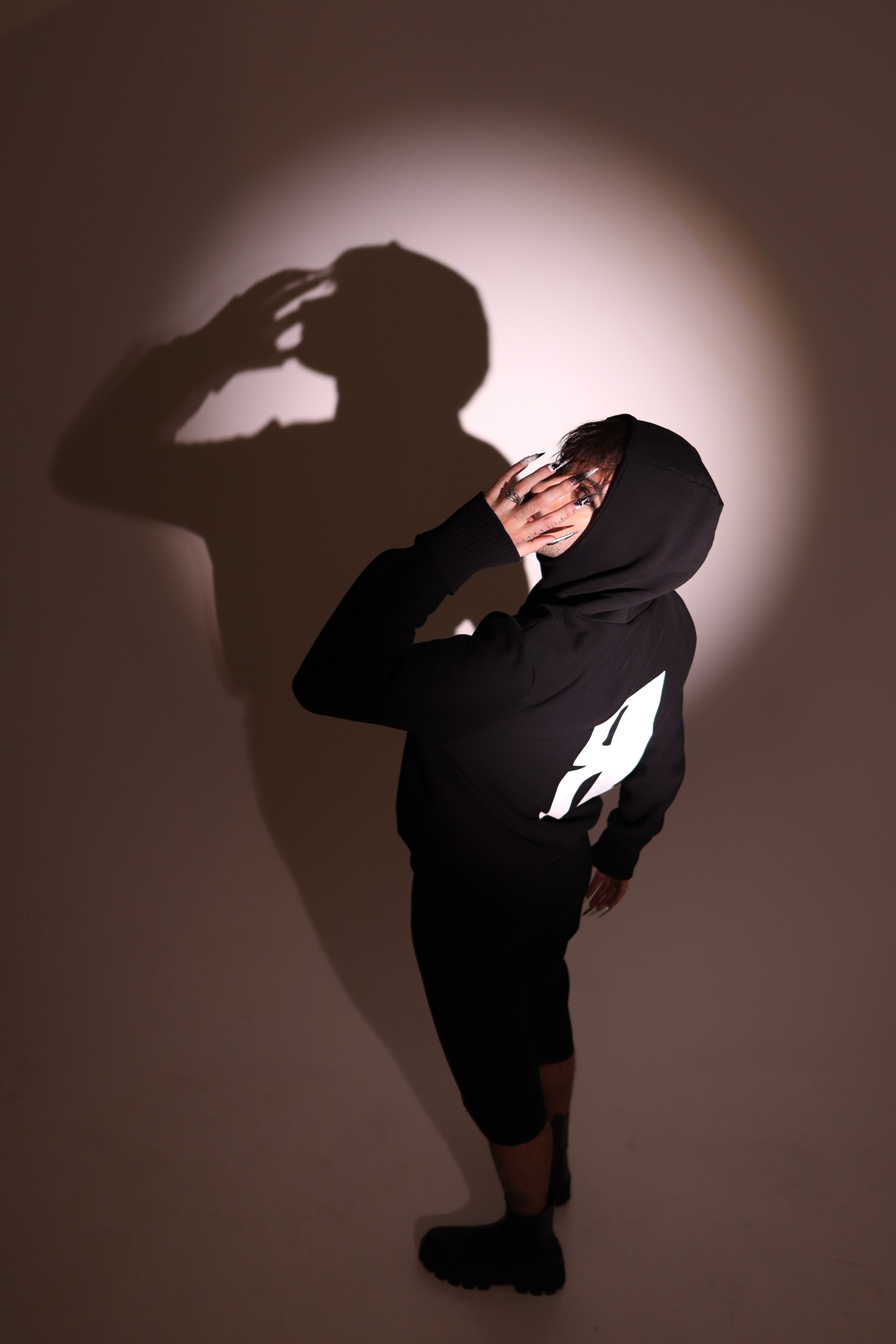
A fleeting moment of insight – clear, sharp, almost illuminating. Yet the moment it is grasped, it begins to fade. „Ephemeral Clarity“ captures the deceptive feeling of finally bringing order to the chaos of thoughts, only to sink back into uncertainty the next moment.
Like a beam of light piercing through dense darkness, the solution seems within reach. But the more one focuses on it, the more it slips away, dissolving into new questions, new doubts, new spirals of thought. An illusion of control – beautiful, yet fleeting.
Resonant Silence.
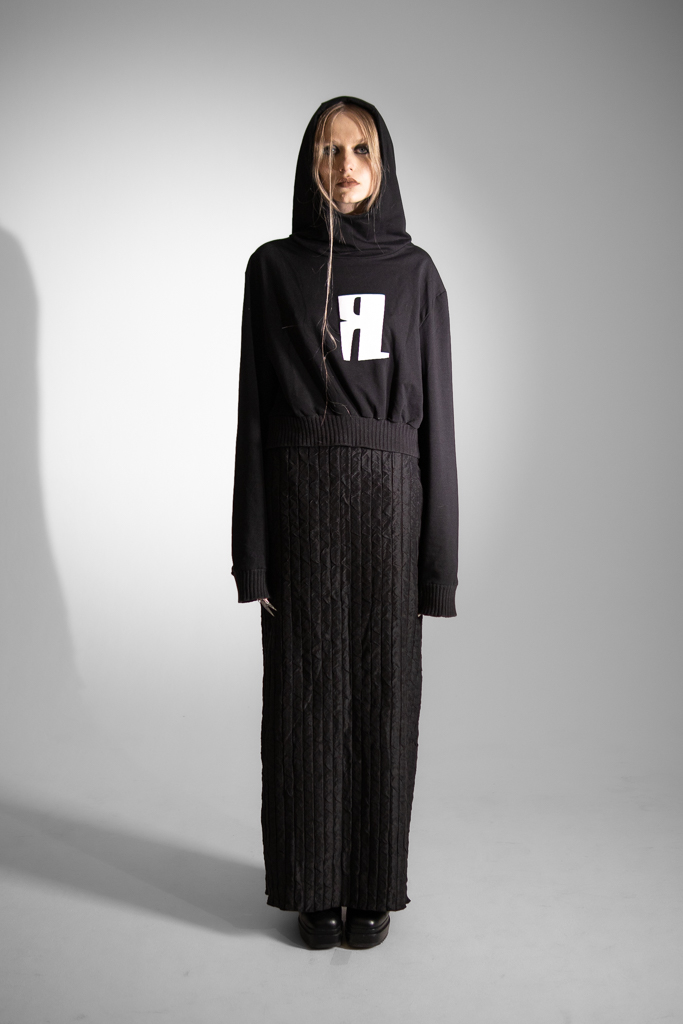
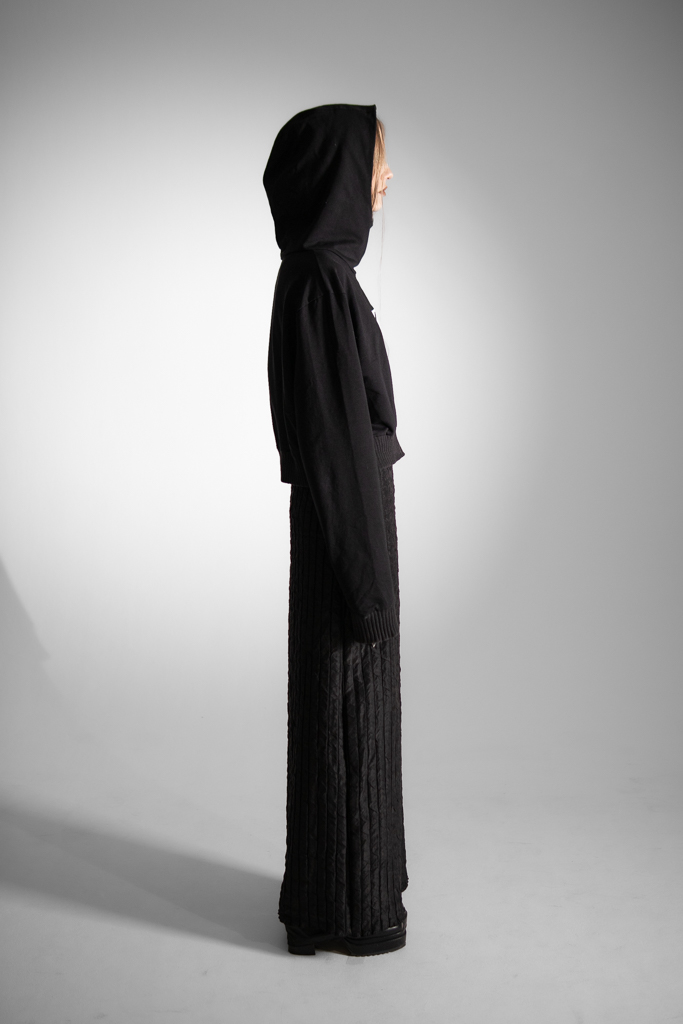
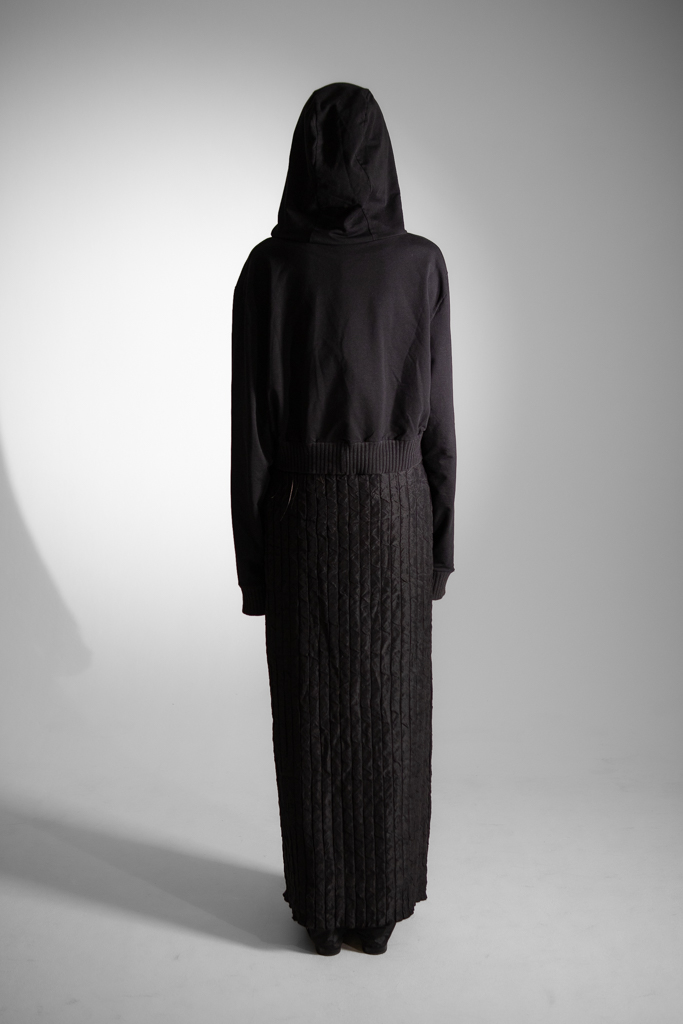
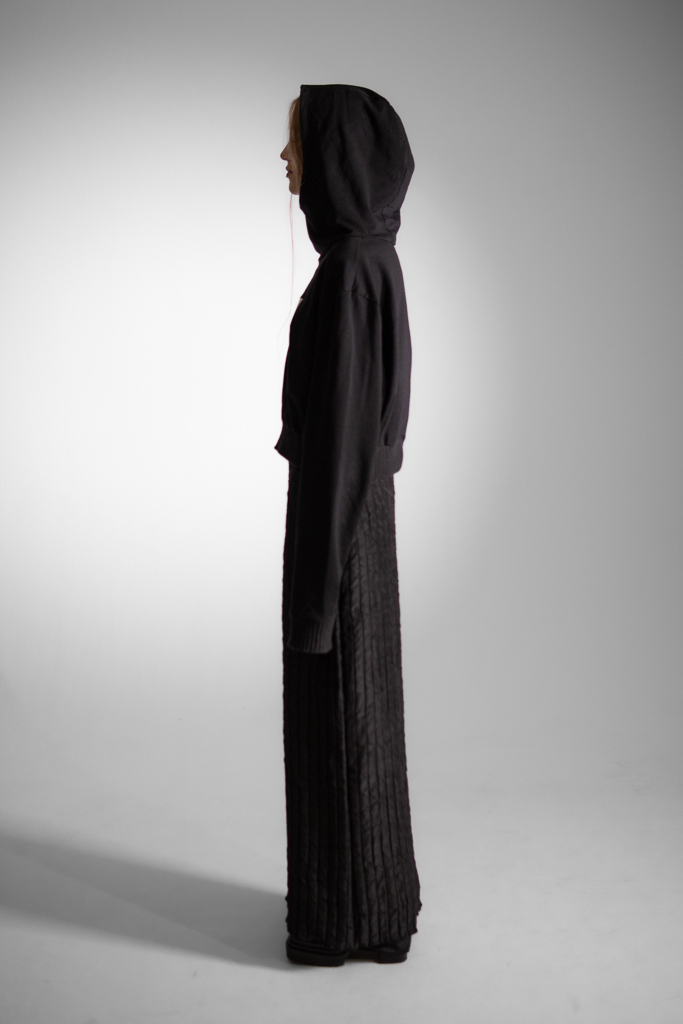
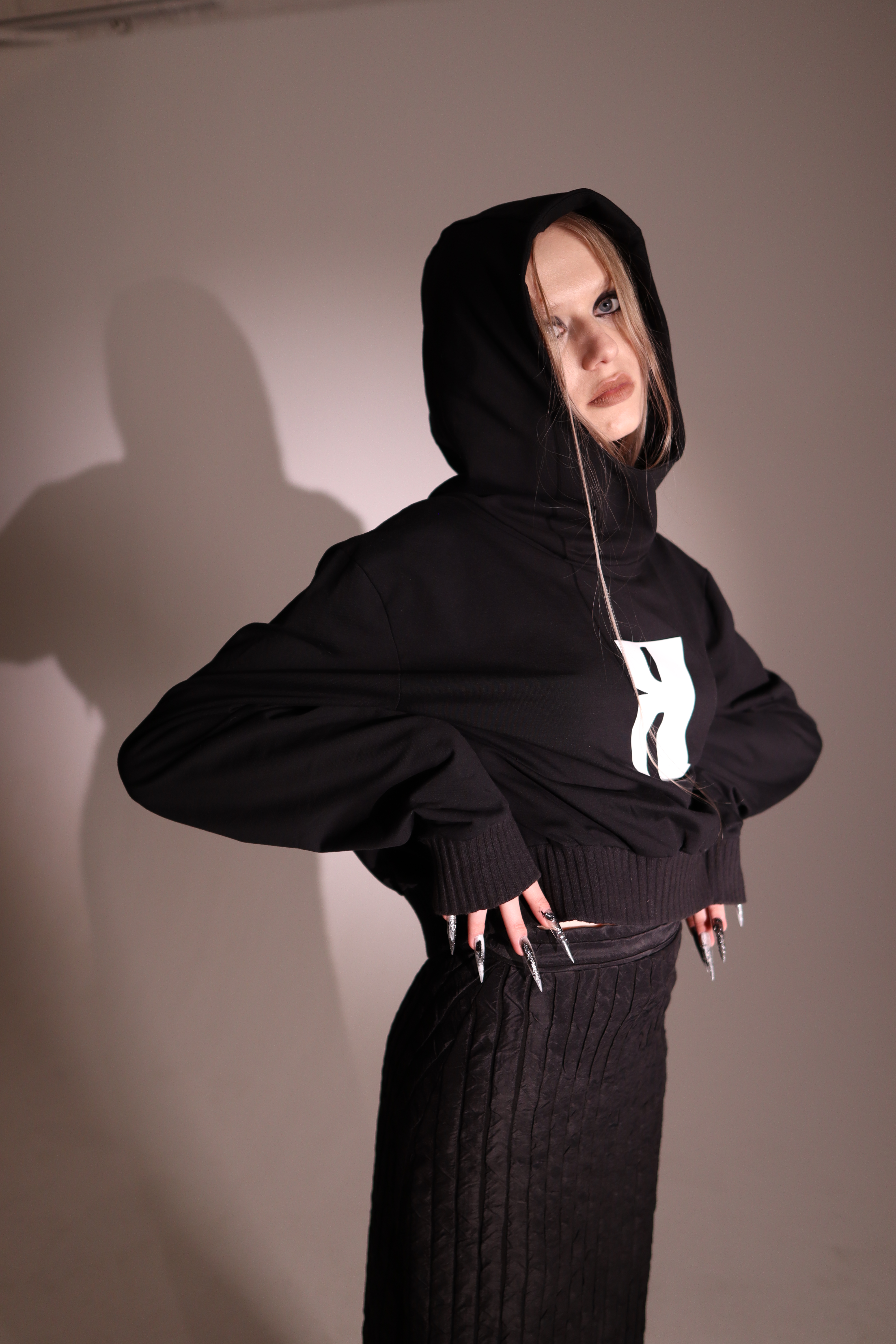
Silence is not always peaceful. Sometimes, it lingers, filling the space with unspoken words, unfinished thoughts, and endless possibilities. „Resonant Silence“ is the echo of overthinking – a silence that does not soothe but amplifies, multiplying until it becomes louder than any sound.
It is the moment when everything stands still, yet the mind refuses to stop spinning. Where thoughts, memories, and doubts vibrate through the mind like inaudible frequencies – distorted, repeated, inescapable. A stillness that offers no solace, only room for new unrest.
Infinite Reverie.
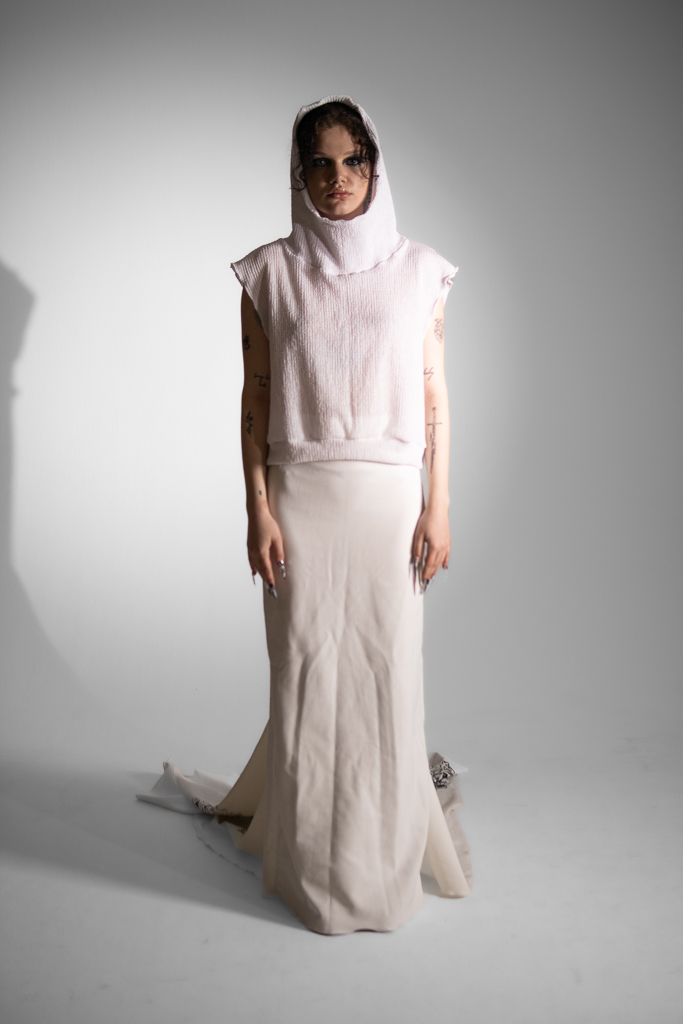
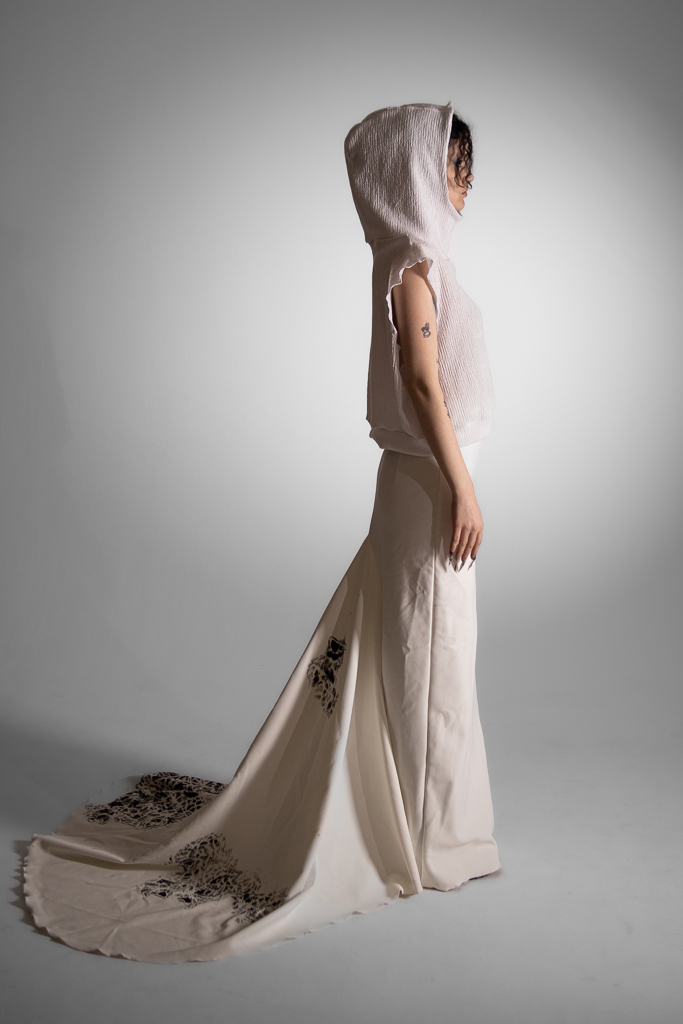
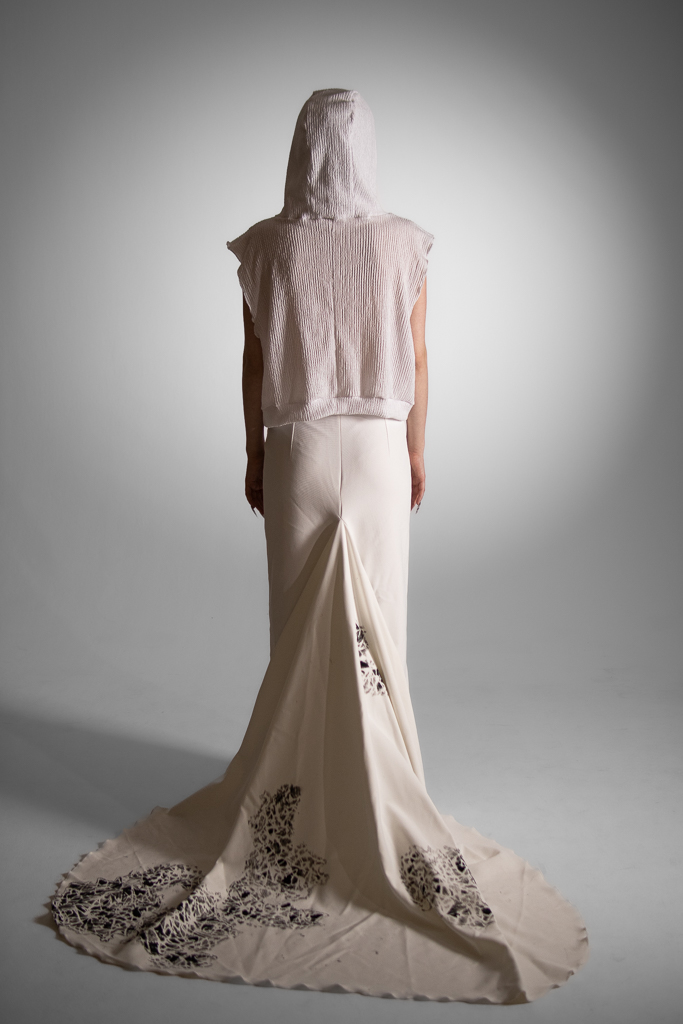
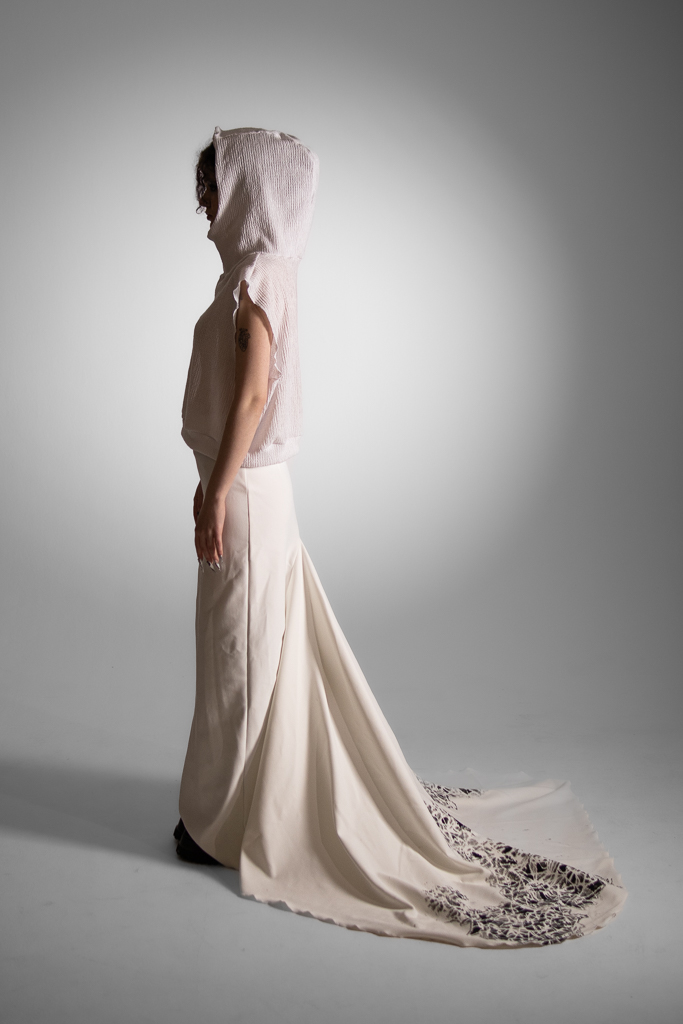
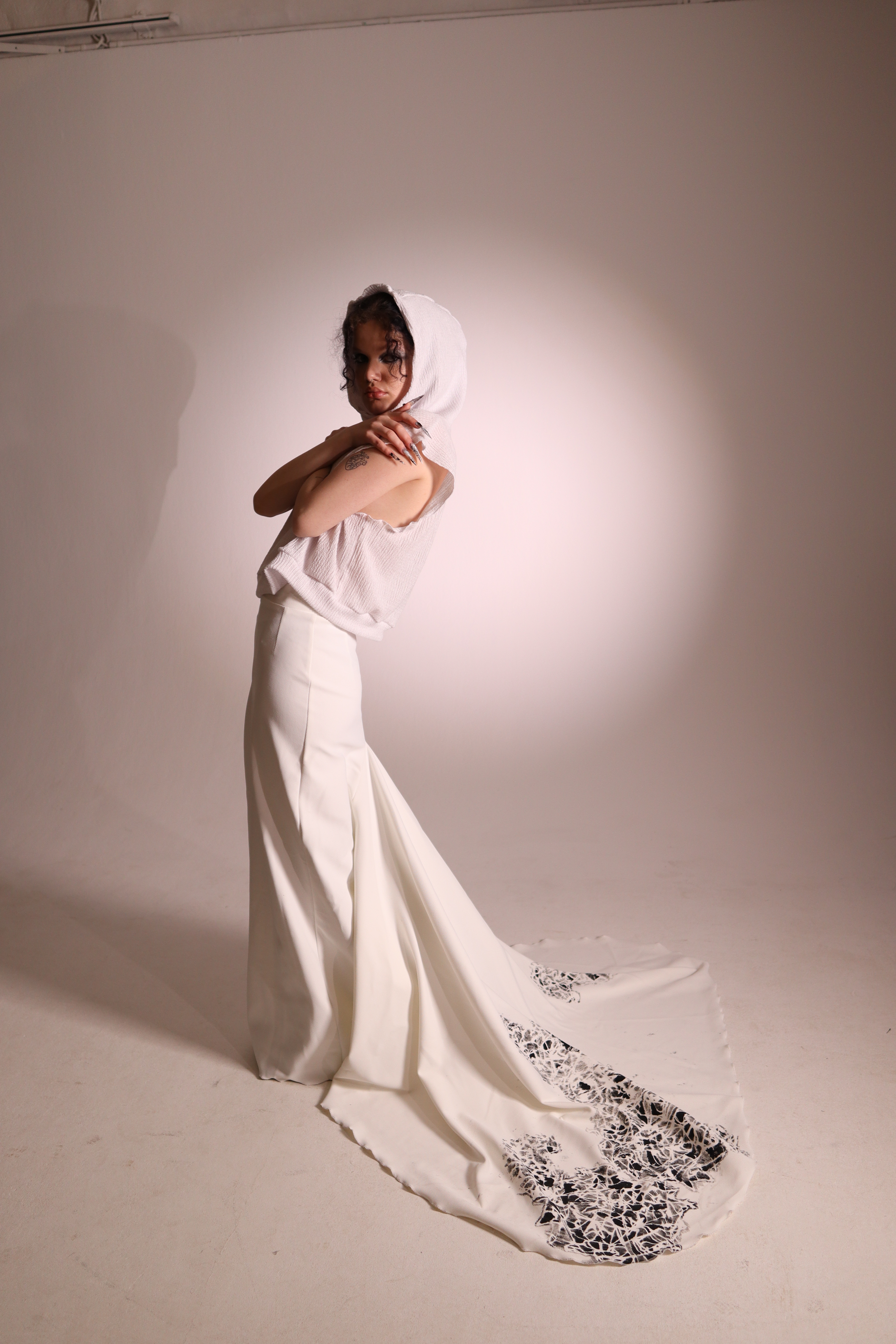
A stream of thoughts with neither beginning nor end – drifting between reality and illusion, lost in the endless twists of the mind. „Infinite Reverie“ is the sensation of being consumed by one’s own thoughts, sinking deeper and deeper without ever finding solid ground.
It is the moment when the present fades into a blur, while memories, fears, and desires dissolve into an intangible current. The mind becomes an infinite labyrinth, where every answer only gives birth to another question. An endless journey through consciousness – beautiful, unsettling, infinite.
Silent Chaos.
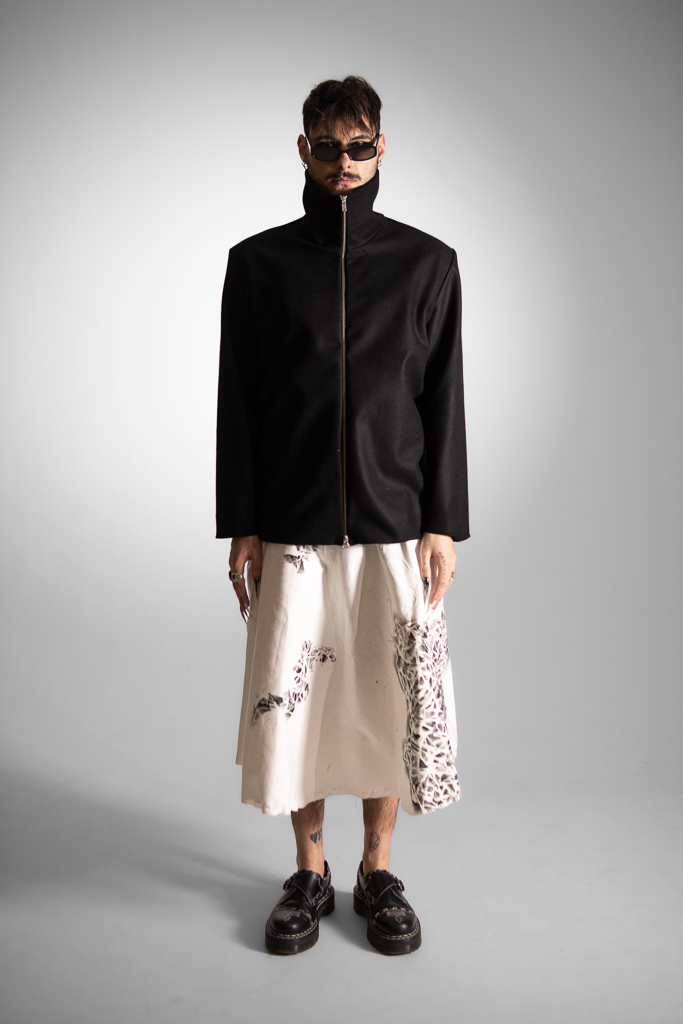

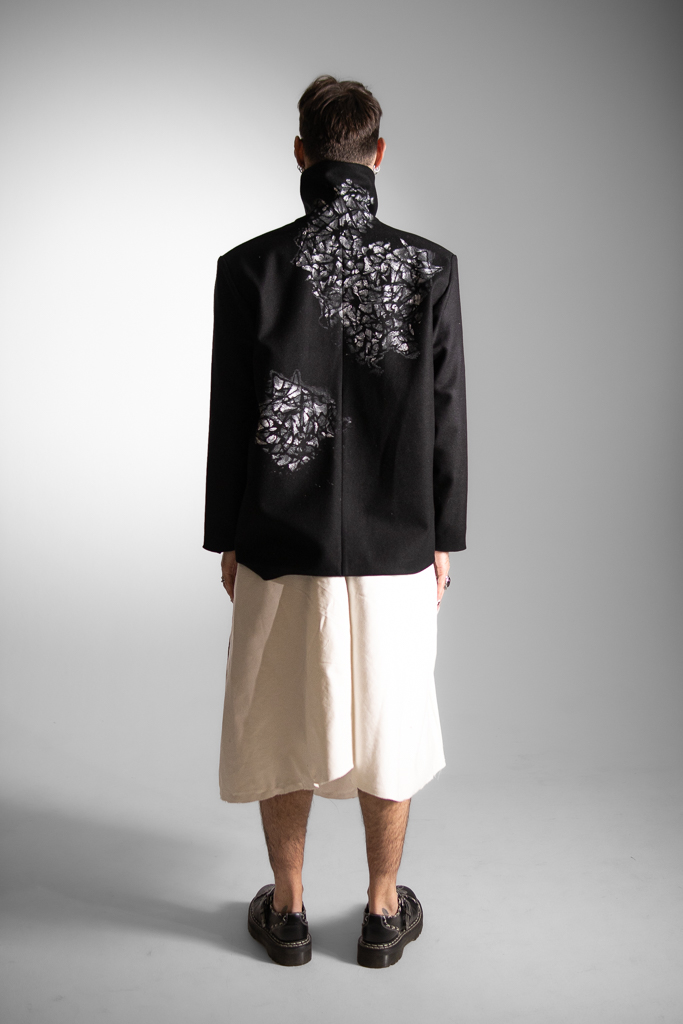
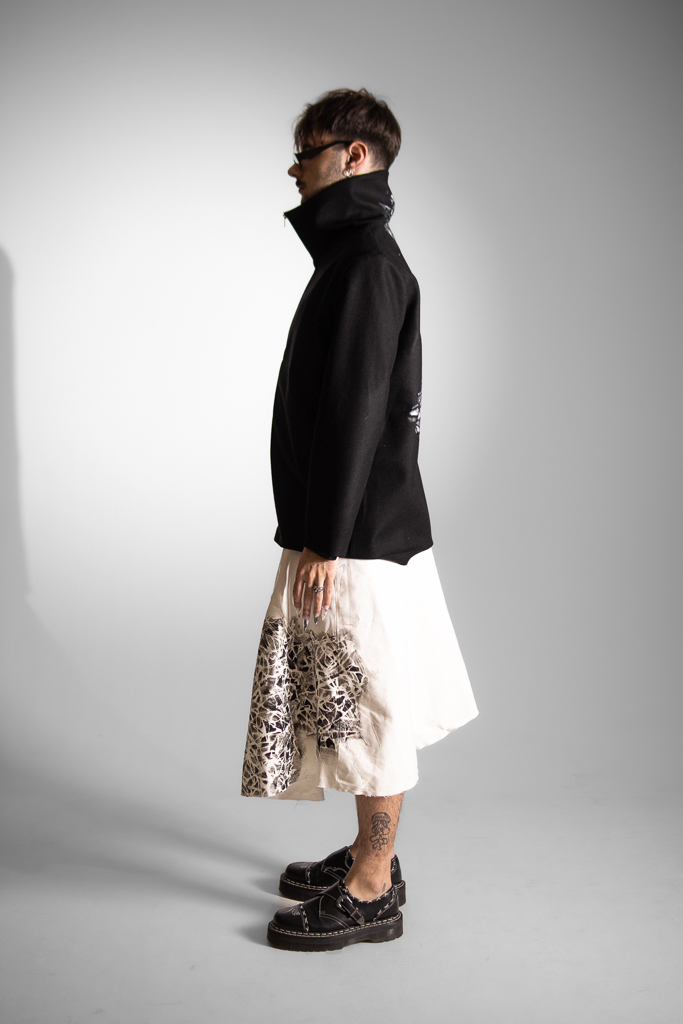
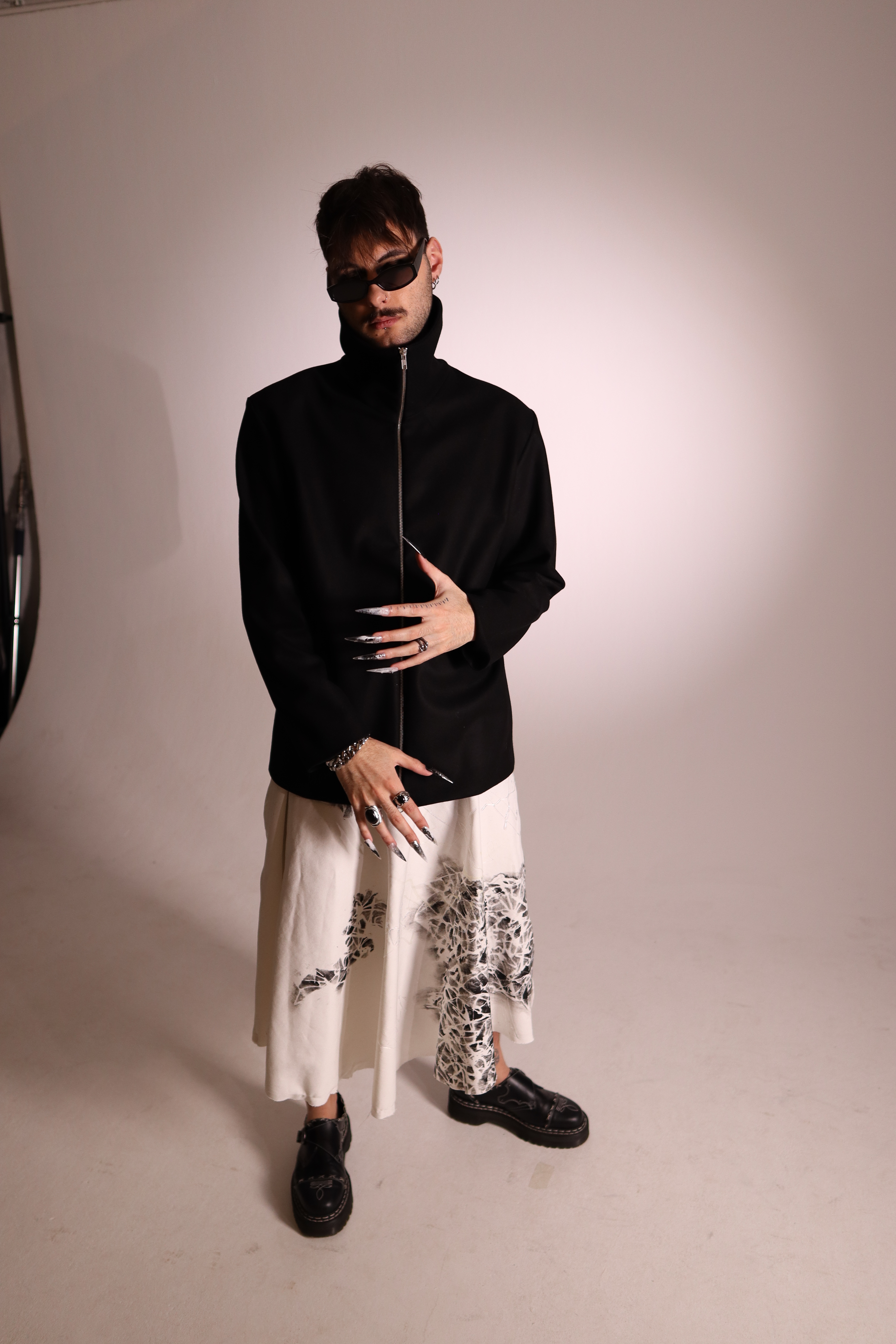
Not all chaos is loud. Sometimes, it simmers beneath the surface – unseen by the outside world, yet relentless within. „Silent Chaos“ is the paradox of a storm that rages in silence – overlapping thoughts, clashing emotions, all while appearing composed on the outside.
It is the ceaseless struggle between clarity and overwhelm, the desperate attempt to organize thoughts that refuse to be tamed. A tempest without sound, an uproar unfolding in complete quiet – until one’s own silence becomes louder than any word.
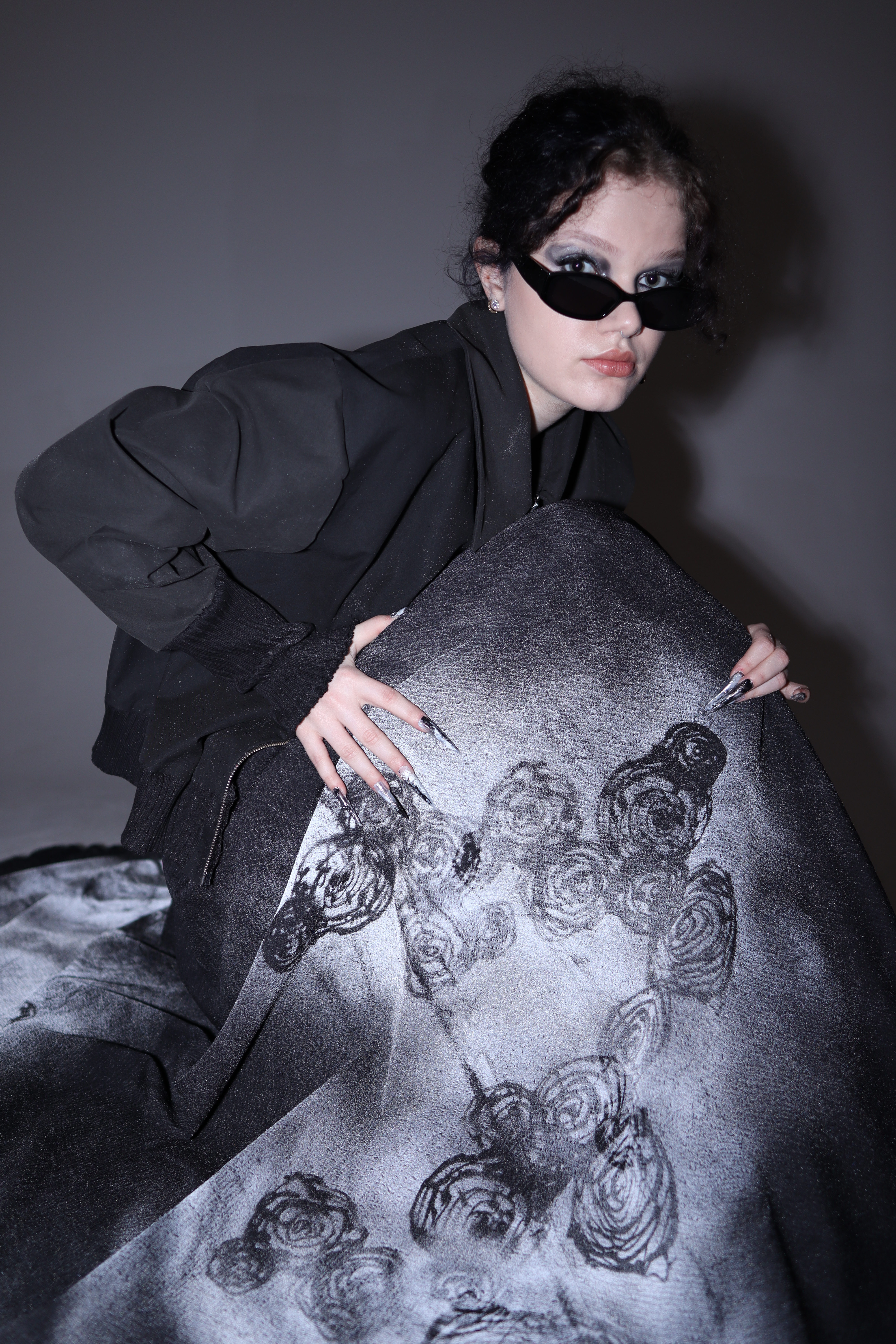
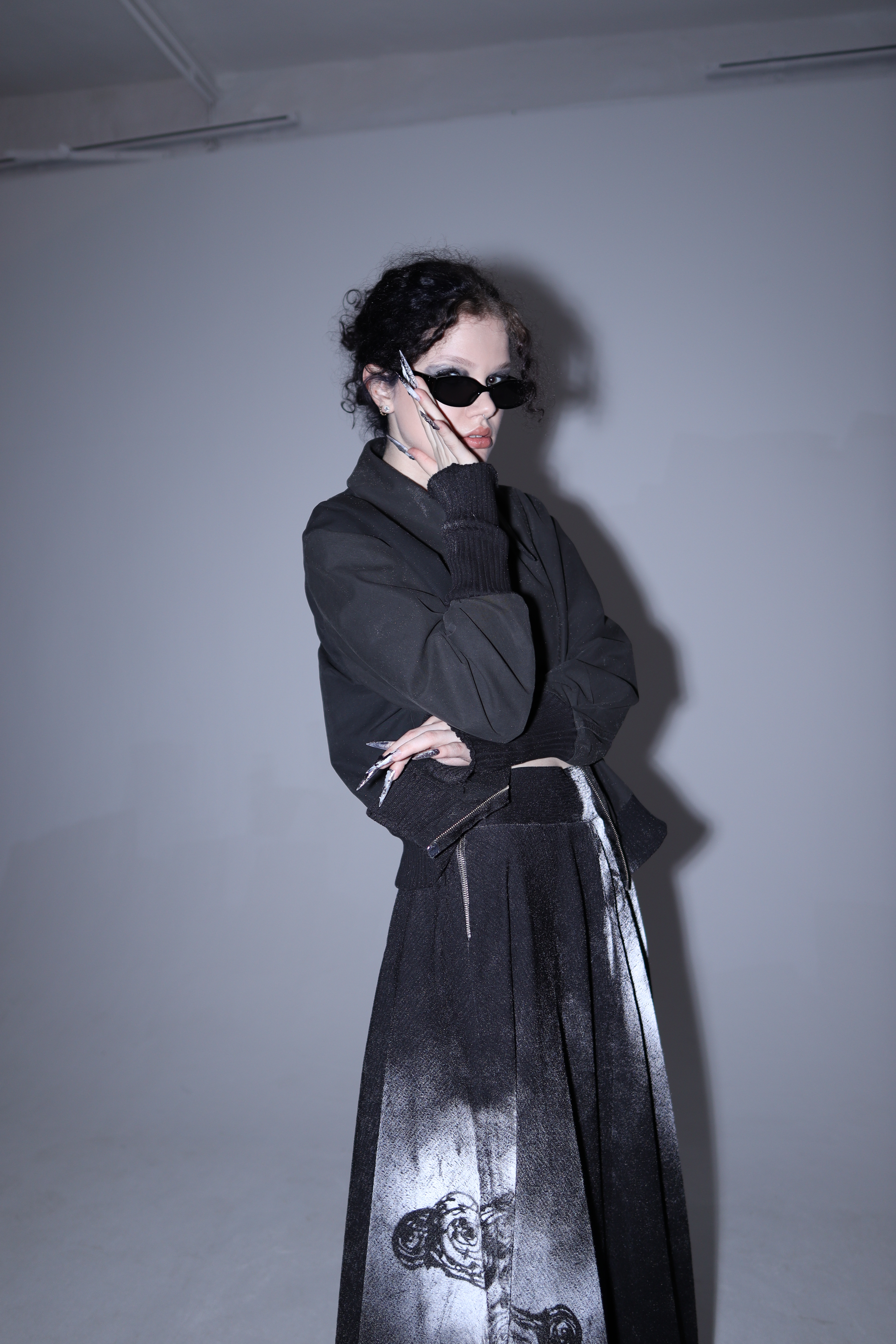
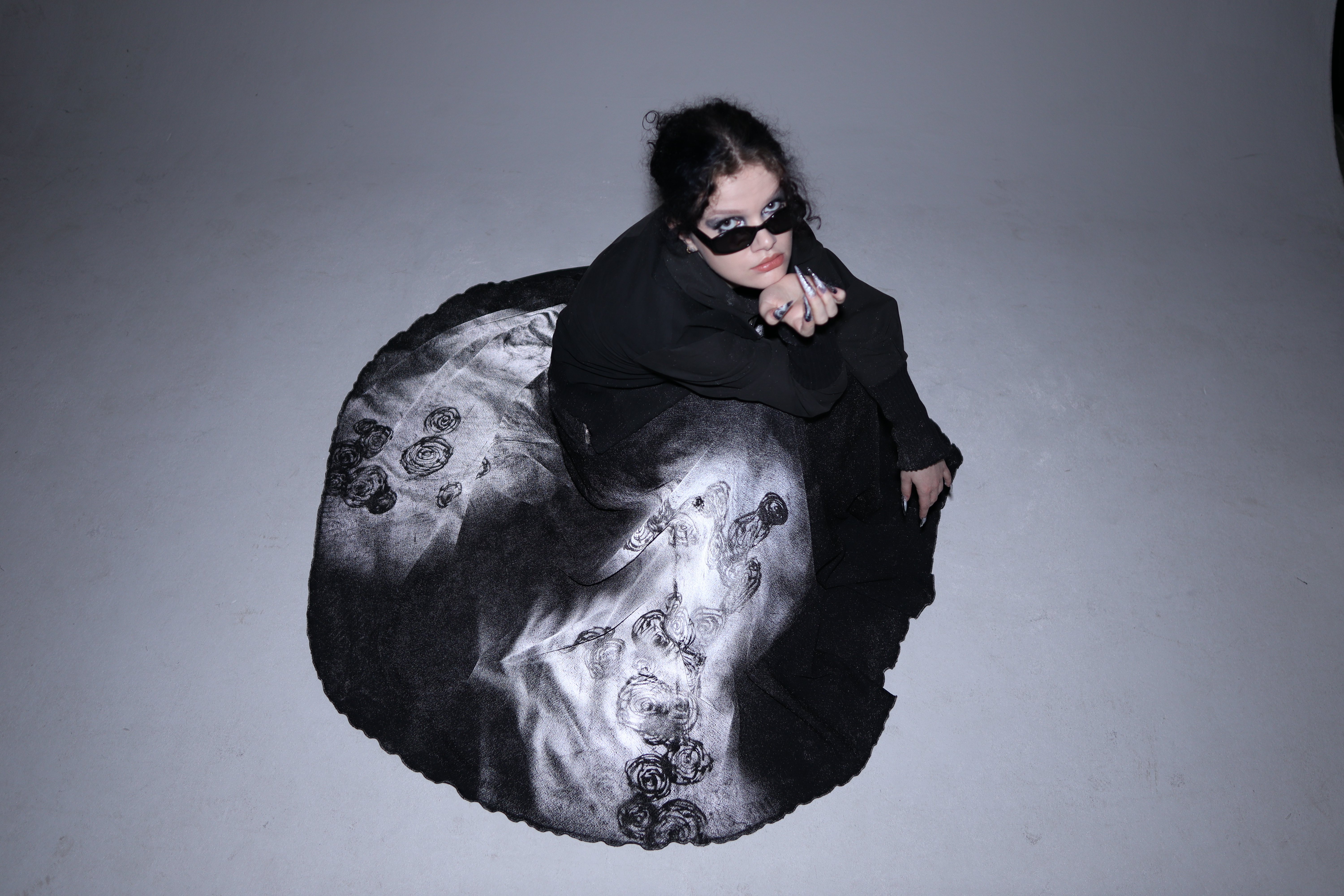
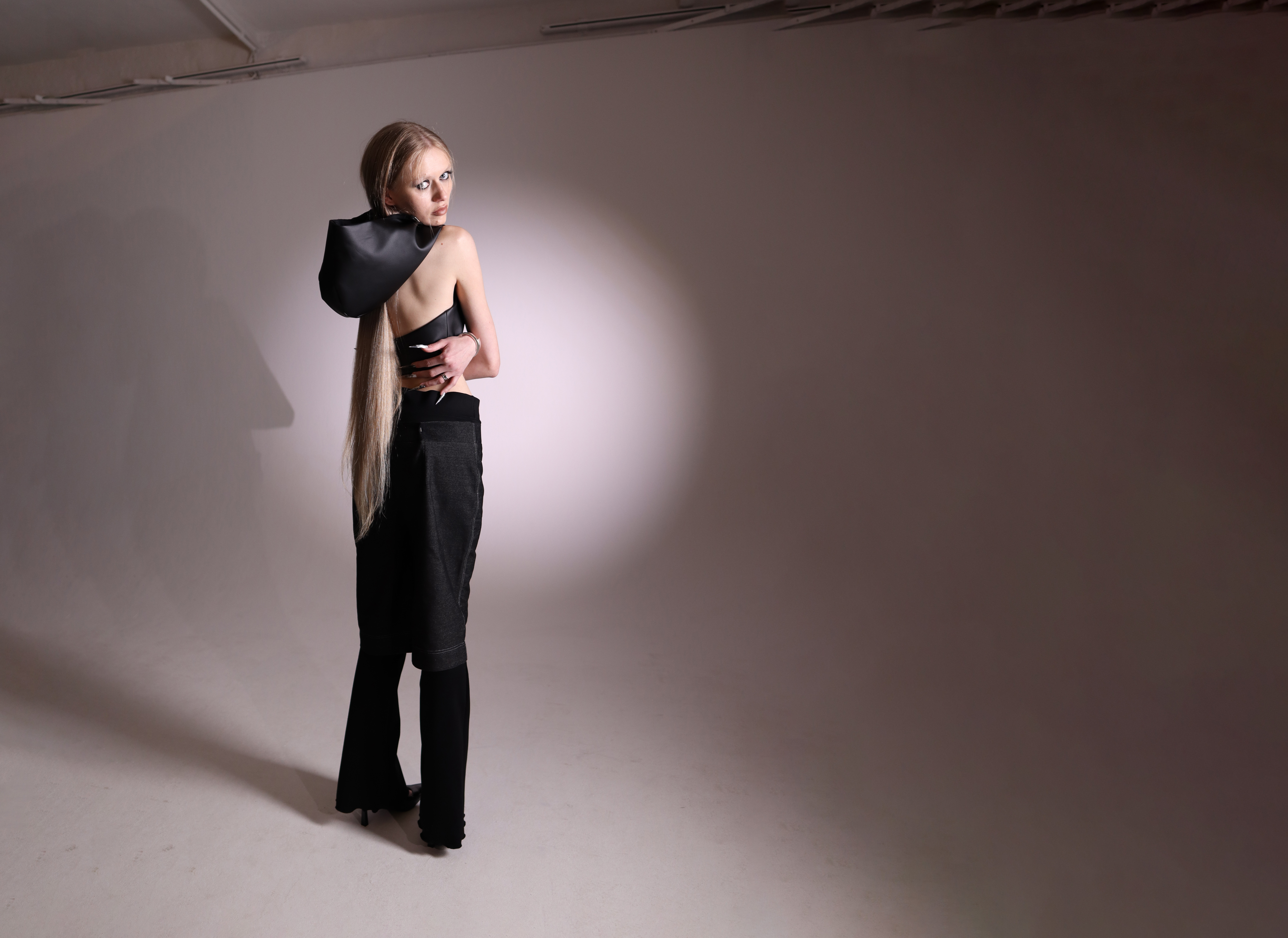
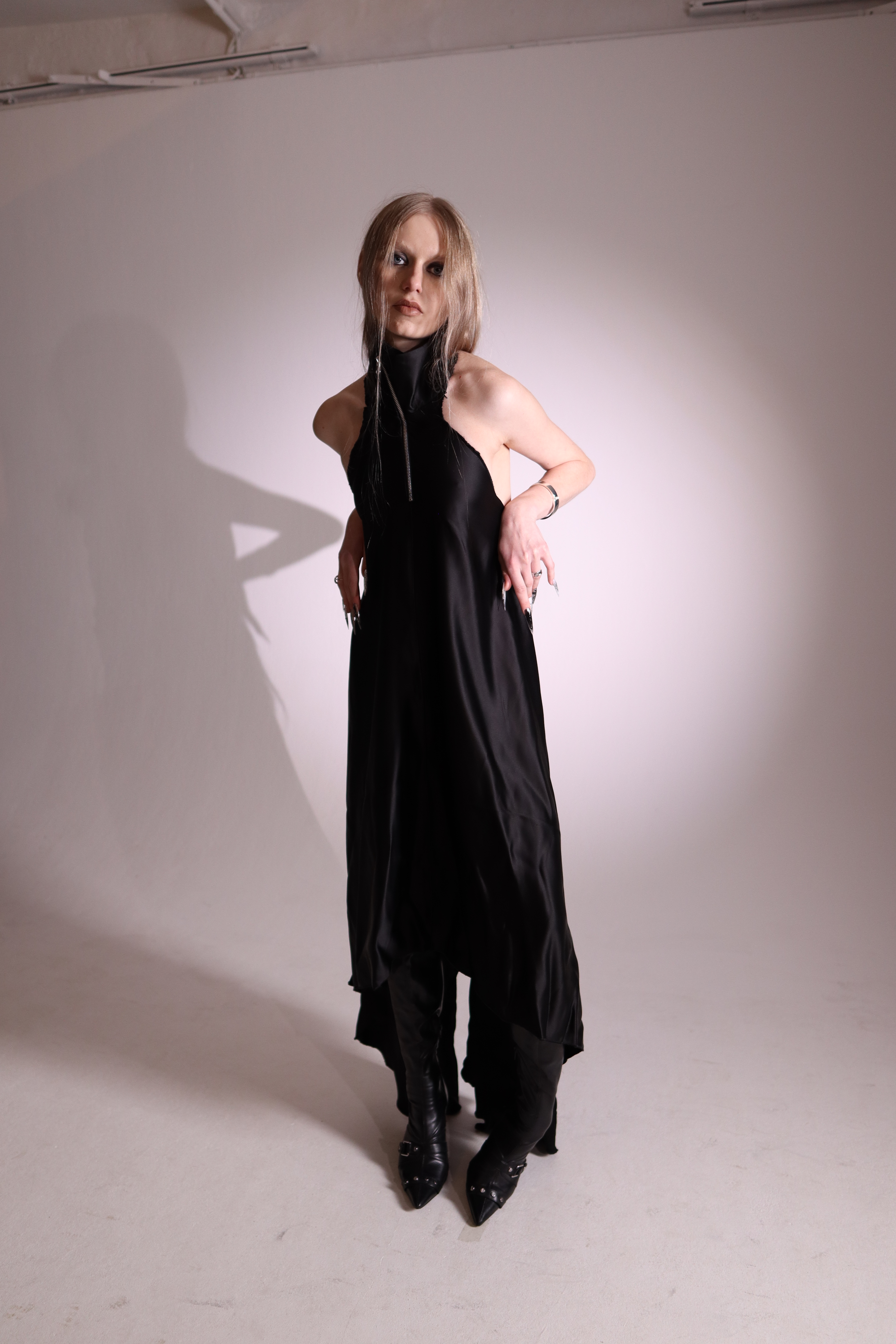
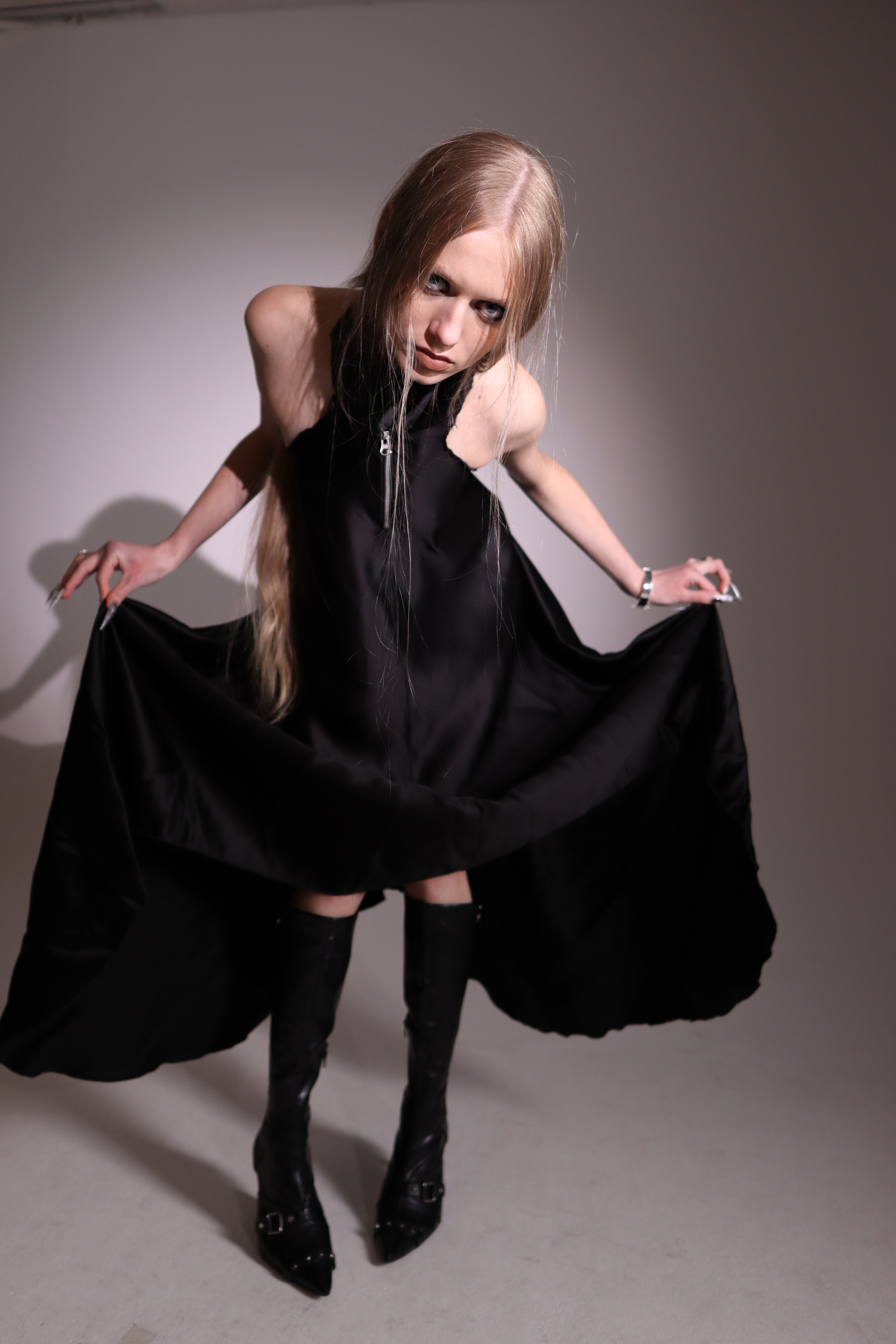
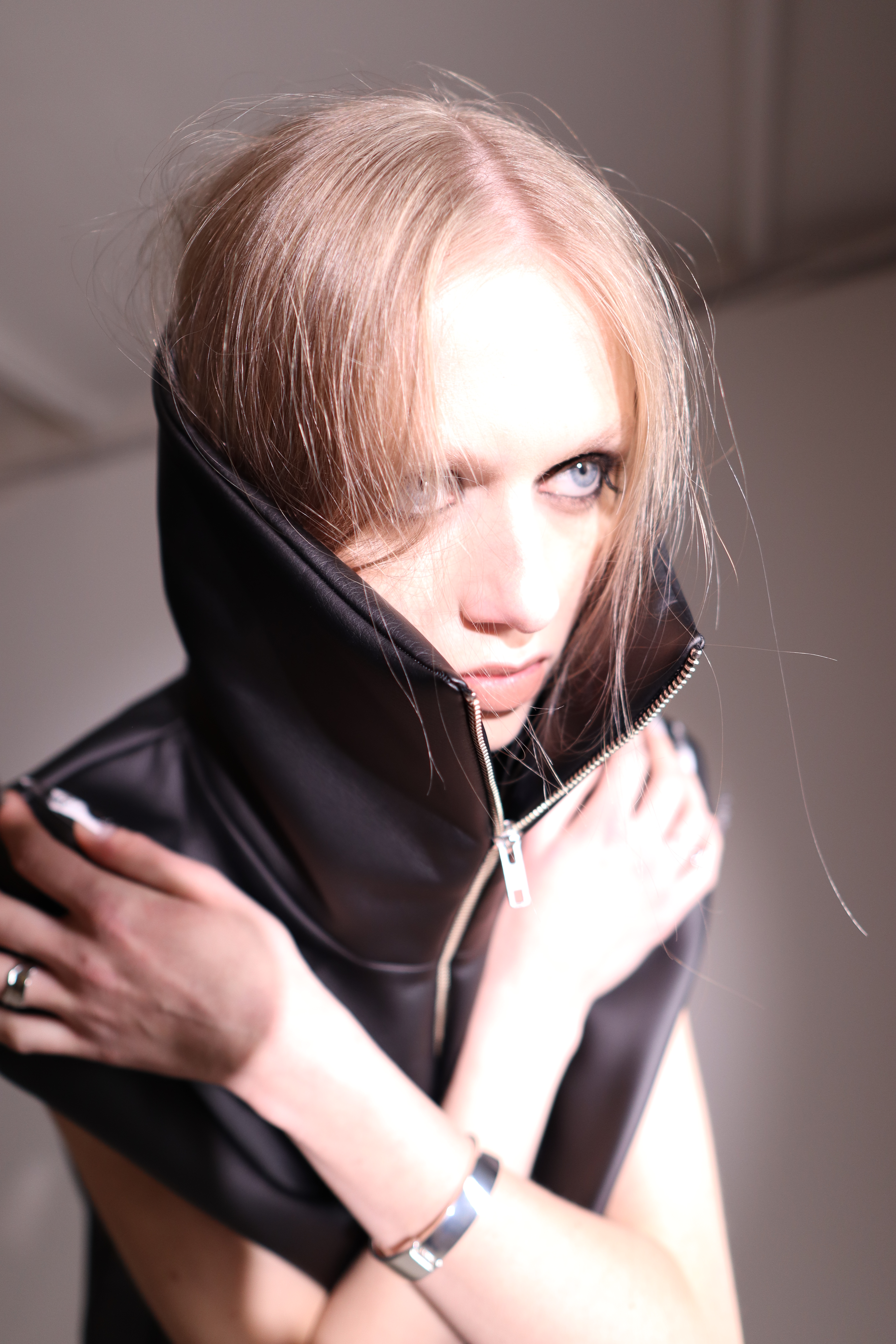
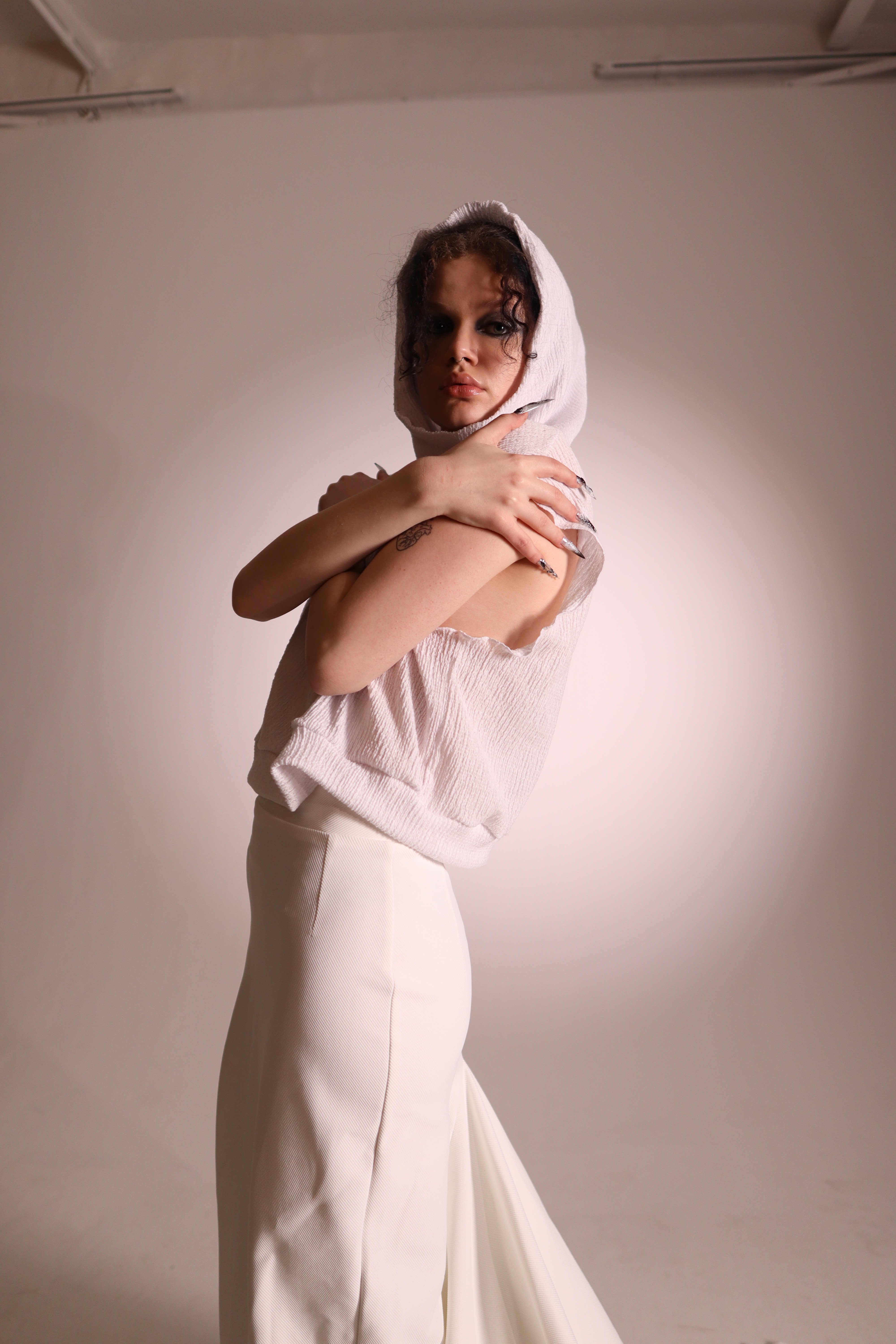
the material & color concept.
The „Thought Scapes“ collection is a visual exploration of the phenomenon of overthinking – the endless spiral of thoughts, doubts, and emotions. To make this state tangible, the collection relies on a high-contrast black-and-white color palette, reflecting the eternal conflict between chaos and clarity, light and darkness. Black embodies the weight of thoughts, the paralyzing depth of rumination, and the emotional burden, while white represents the attempt to bring order to chaos, moments of realization, and the effort to free oneself from the labyrinth of the mind.
The choice of materials plays a central role in narrating this inner turmoil. Different fabrics are deliberately combined to emphasize the interplay between control and dissolution, heaviness and lightness, as well as structure and fragmentation. The materials reflect the various emotional stages of overthinking – from oppressive rigidity to exhausting restlessness.
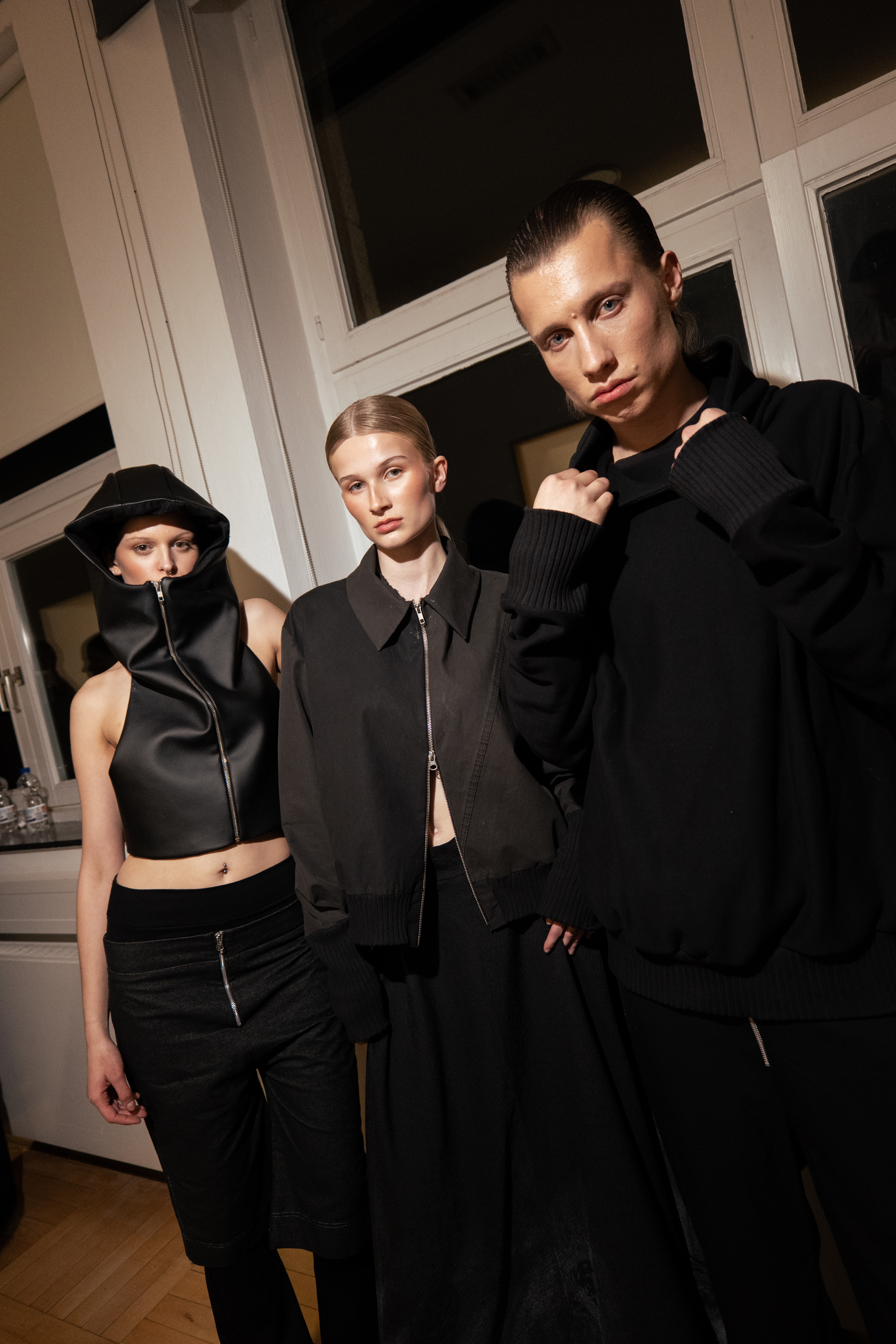
To mirror the heaviness and relentlessness of the mind, faux leather and denim are used. Faux leather represents the feeling of being trapped in one’s own thoughts – a protective shell that prevents external influences from breaking through while simultaneously restricting free breathing. Denim, on the other hand, symbolizes resistance – the persistent clinging to thoughts and the resulting inability to let go. In combination with softer materials, it illustrates the constant struggle between control and surrender.
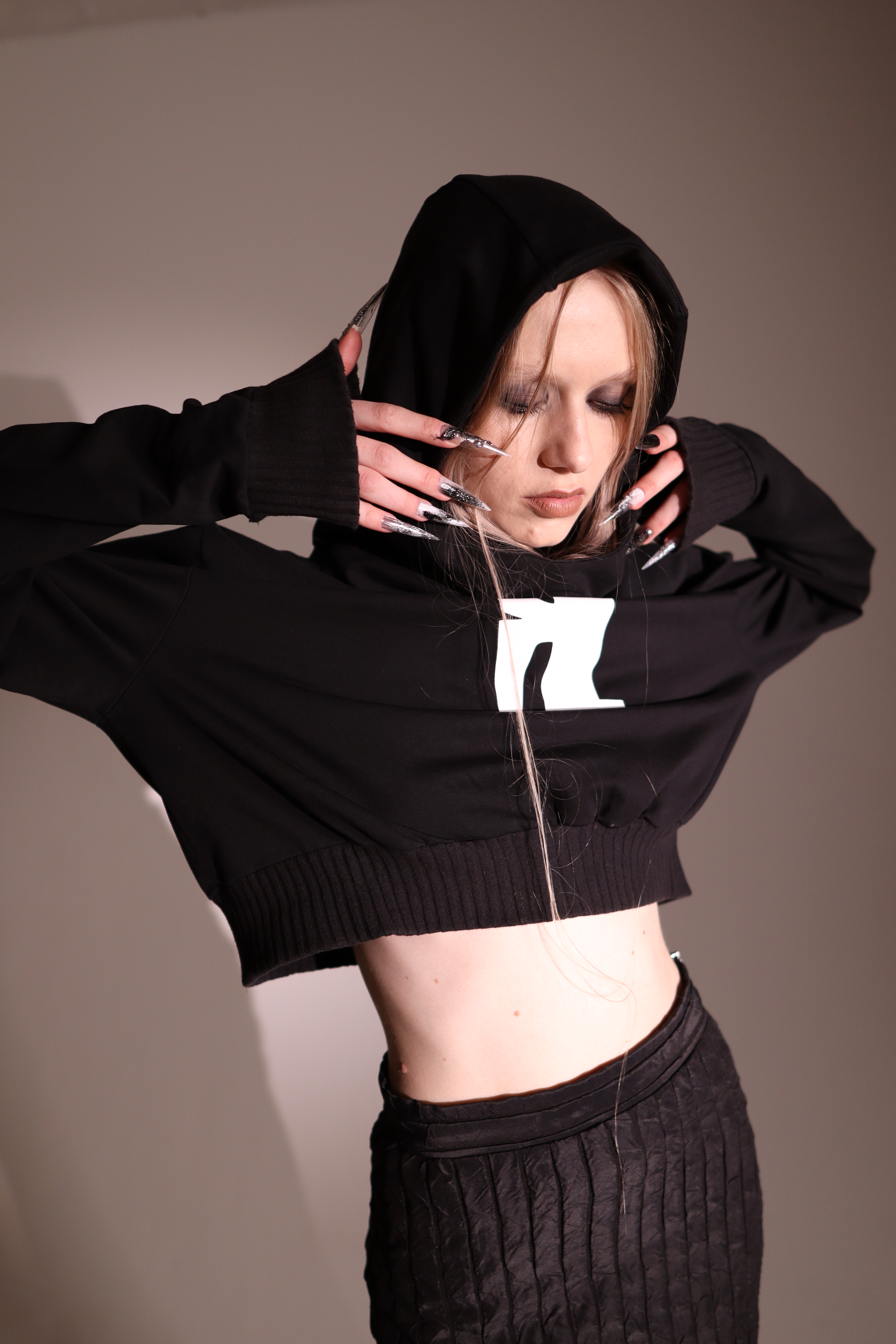
In contrast, jersey represents flexibility and movement. This fabric embodies the endless loops of thought that never find closure. Elastic fabrics further reinforce this sensation – they express the permanent tension between control and the desire for release.
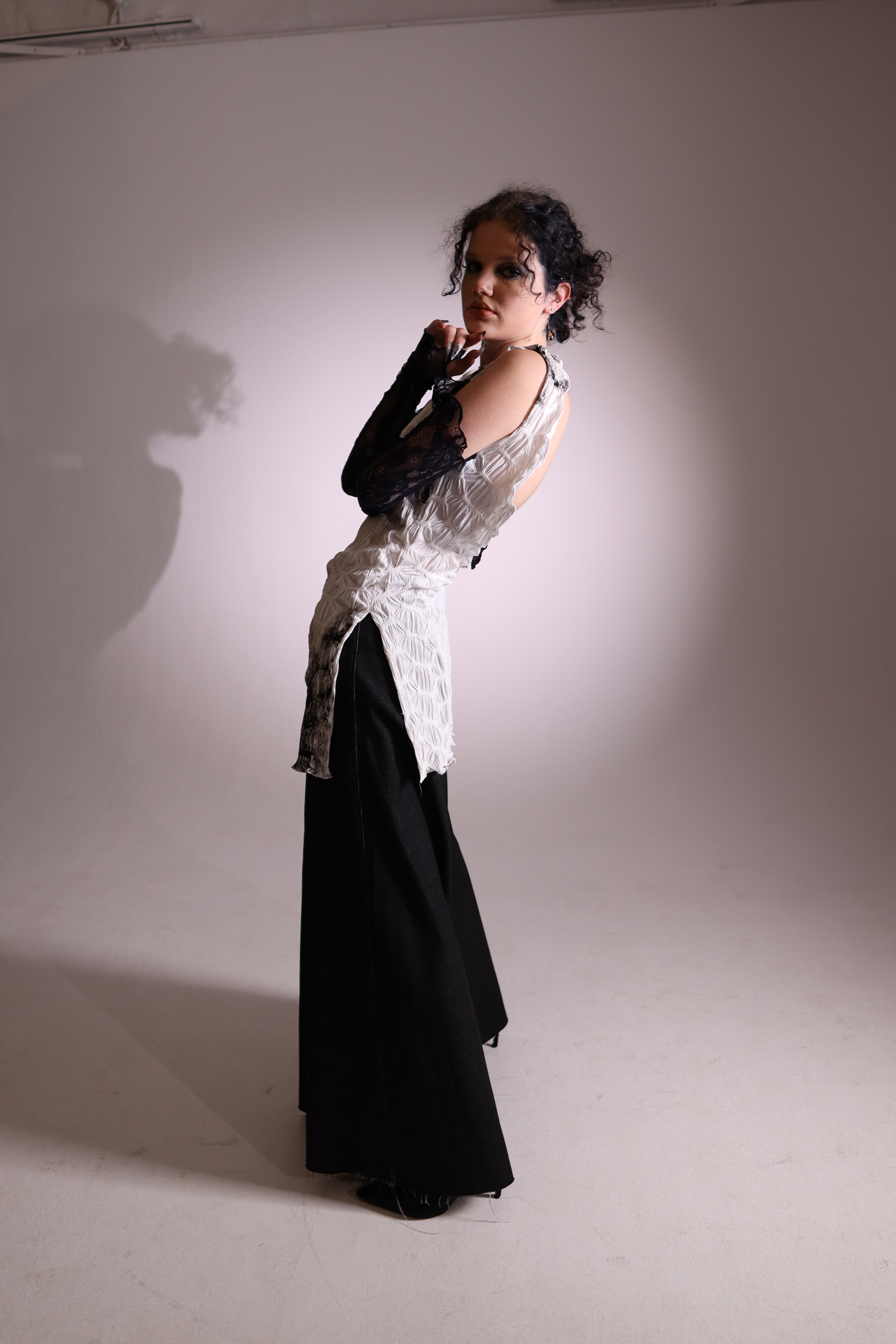
Lace introduces a new dimension of fragility to the collection. It stands for the delicate yet overwhelming complexity of overthinking. The fabric is transparent, ethereal, and multi-layered – just like thoughts that continue to branch out, remaining elusive and difficult to grasp.
Another key element is seersucker, a fabric with an irregular texture that mimics the undulating flow of thoughts. Its light but uncontrollable structure represents restlessness and fragmentation – thoughts that refuse to align in straight lines. Crinkle fabrics intensify this effect even further. Their irregular, wrinkled surfaces symbolize the chaos and internal conflict of overthinking, bringing a deliberately unstructured aesthetic to the collection.
To highlight the contrast between mental repetition and protective mechanisms, pleats are incorporated into the designs. The evenly repeated folds symbolize the cyclical nature of thought patterns – the loops from which one can hardly escape.
Wool and quilted fabrics play a particularly significant role. Wool stands for the weight of thoughts, the emotional burden resting on one’s shoulders. Quilted fabrics, in contrast, symbolize protective mechanisms and mental barriers. They illustrate how individuals enclose themselves within their thought world, attempting to maintain a certain distance from external influences.
Surface structures are crucial in reinforcing the themes of the collection. Glossy, smooth materials symbolize perfectionism and self-control, while matte, rough, or wrinkled fabrics emphasize chaos and inner unrest.
Additionally, black and white paint has been applied to enhance patterns and textures on the fabrics, highlighting existing structures even further. Reflective spray paint was used to create an abstract pattern, reinforcing the chaotic nature of thoughts while also representing the act of self-reflection. Under the right lighting, the pattern reacts and changes, altering the surface’s appearance and embodying the shifting nature of perception and thought.
Lastly, hot glue threads have been incorporated onto the surfaces to introduce even more chaos, disorder, and agitation, visually manifesting the tangled web of overthinking.
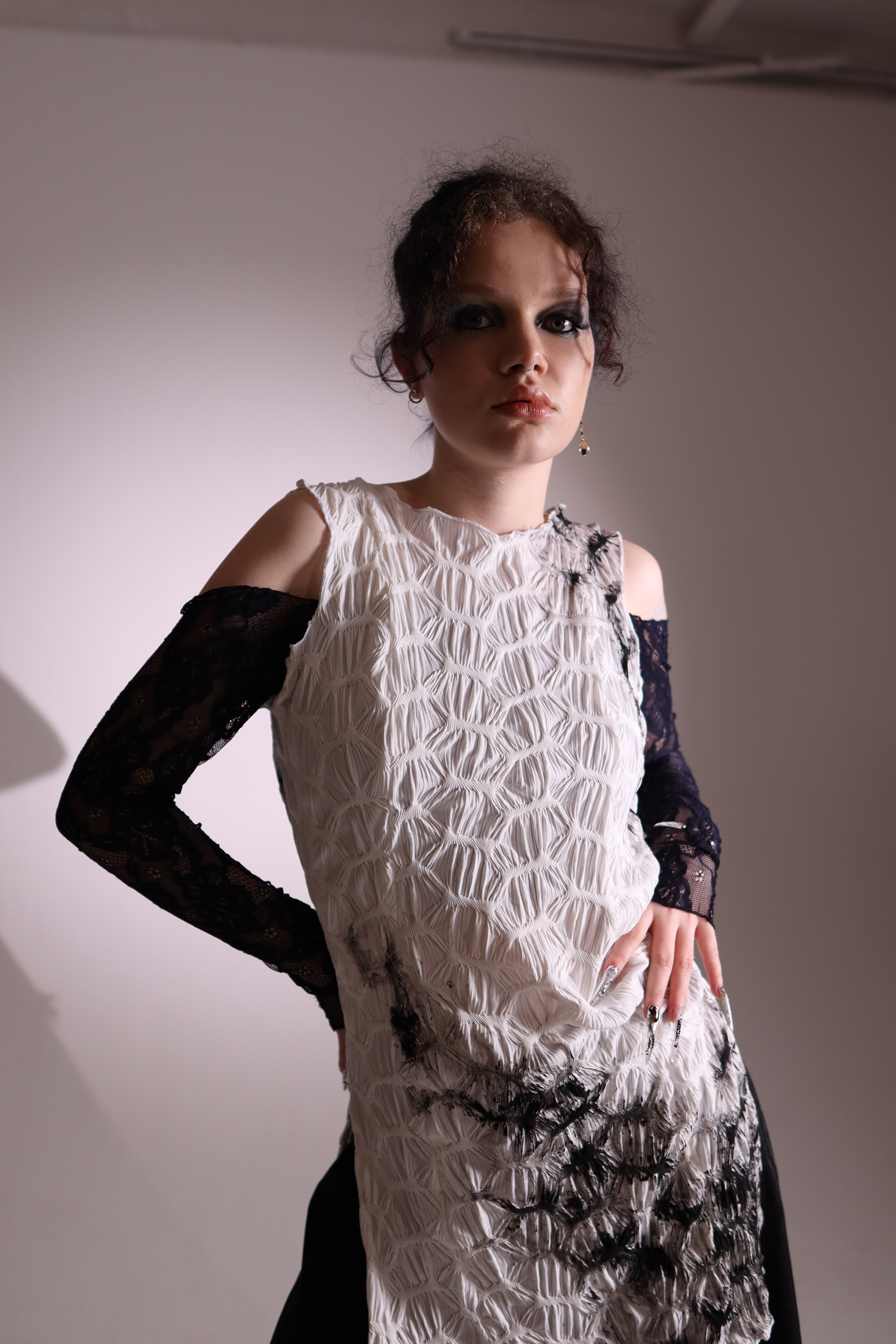
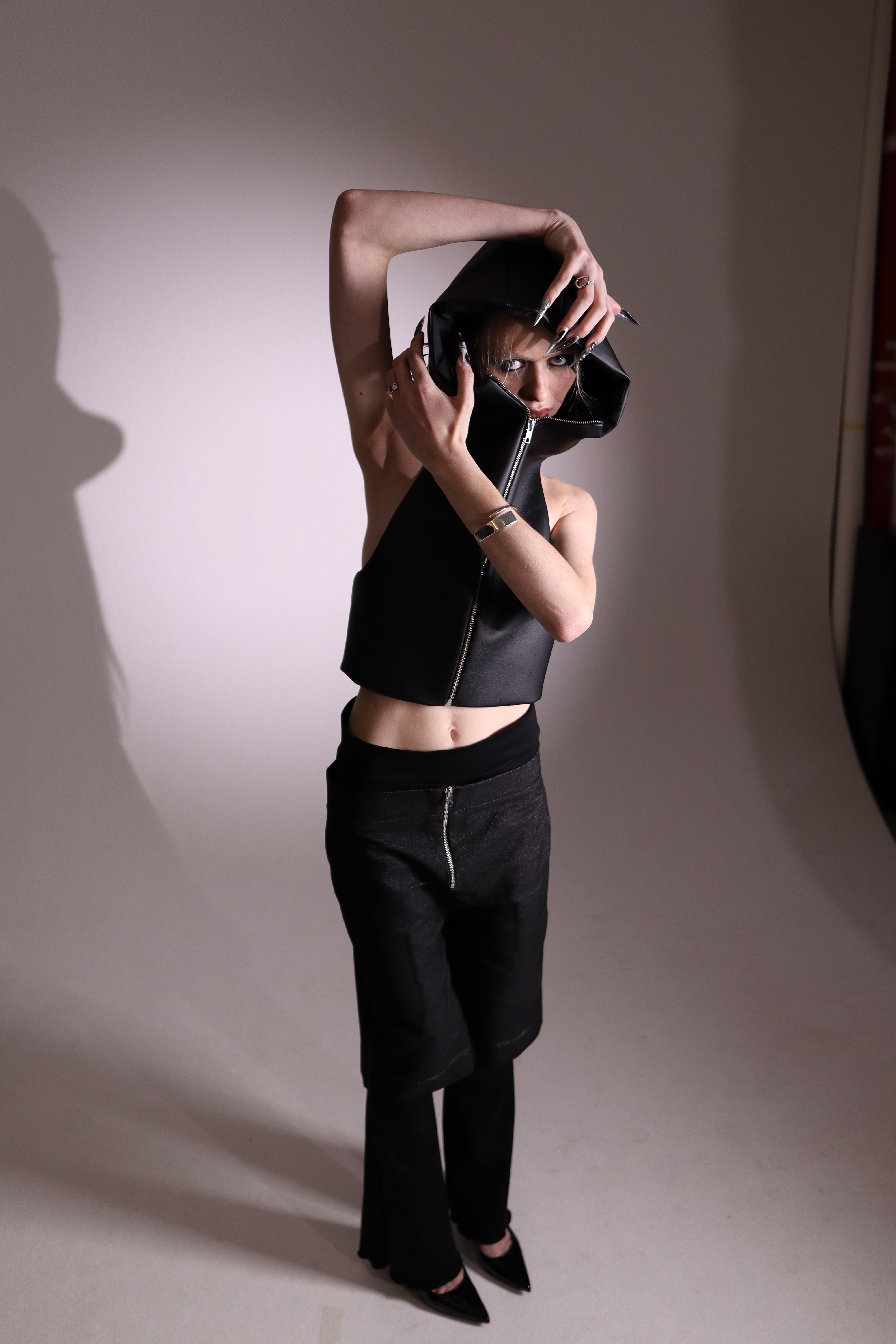
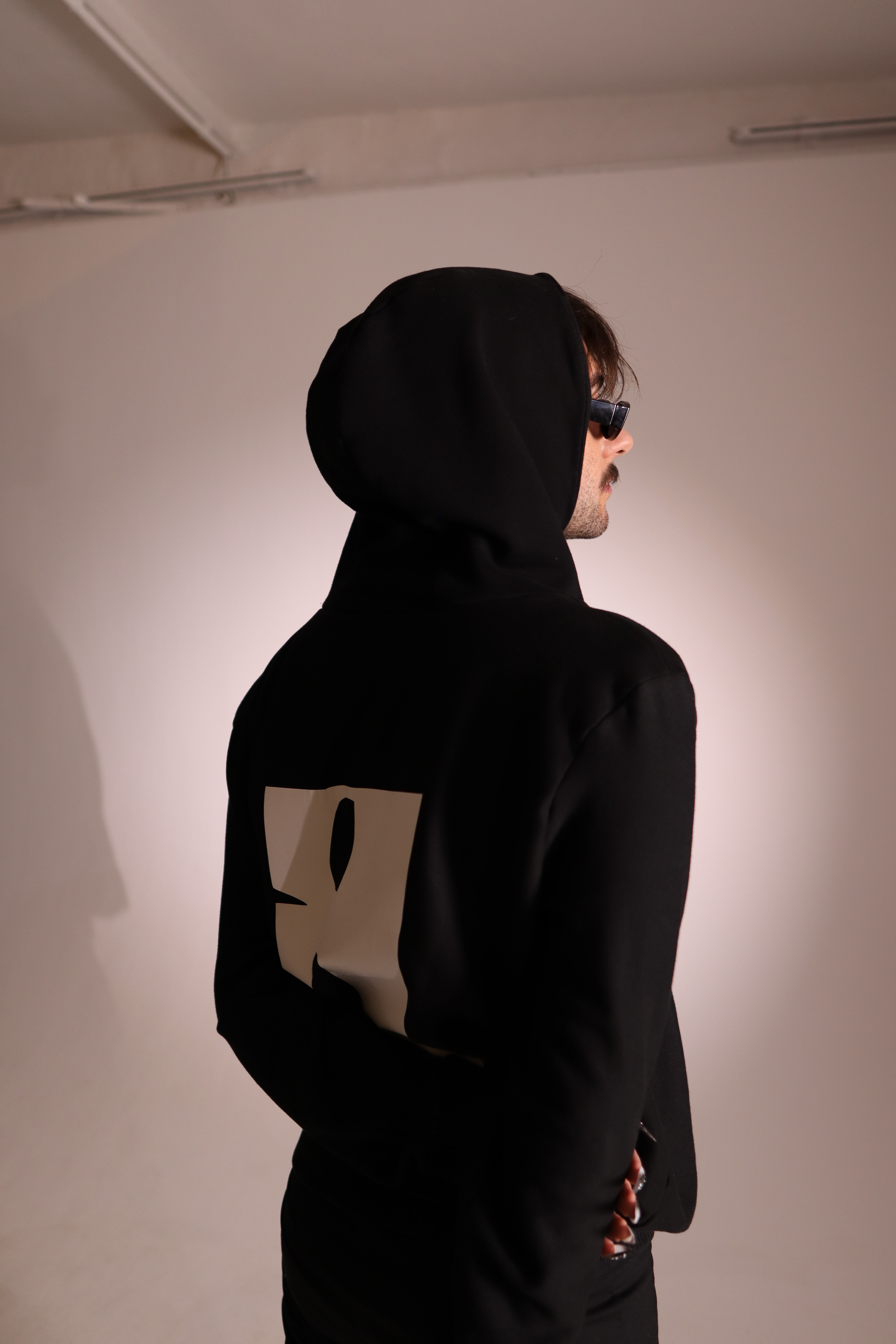
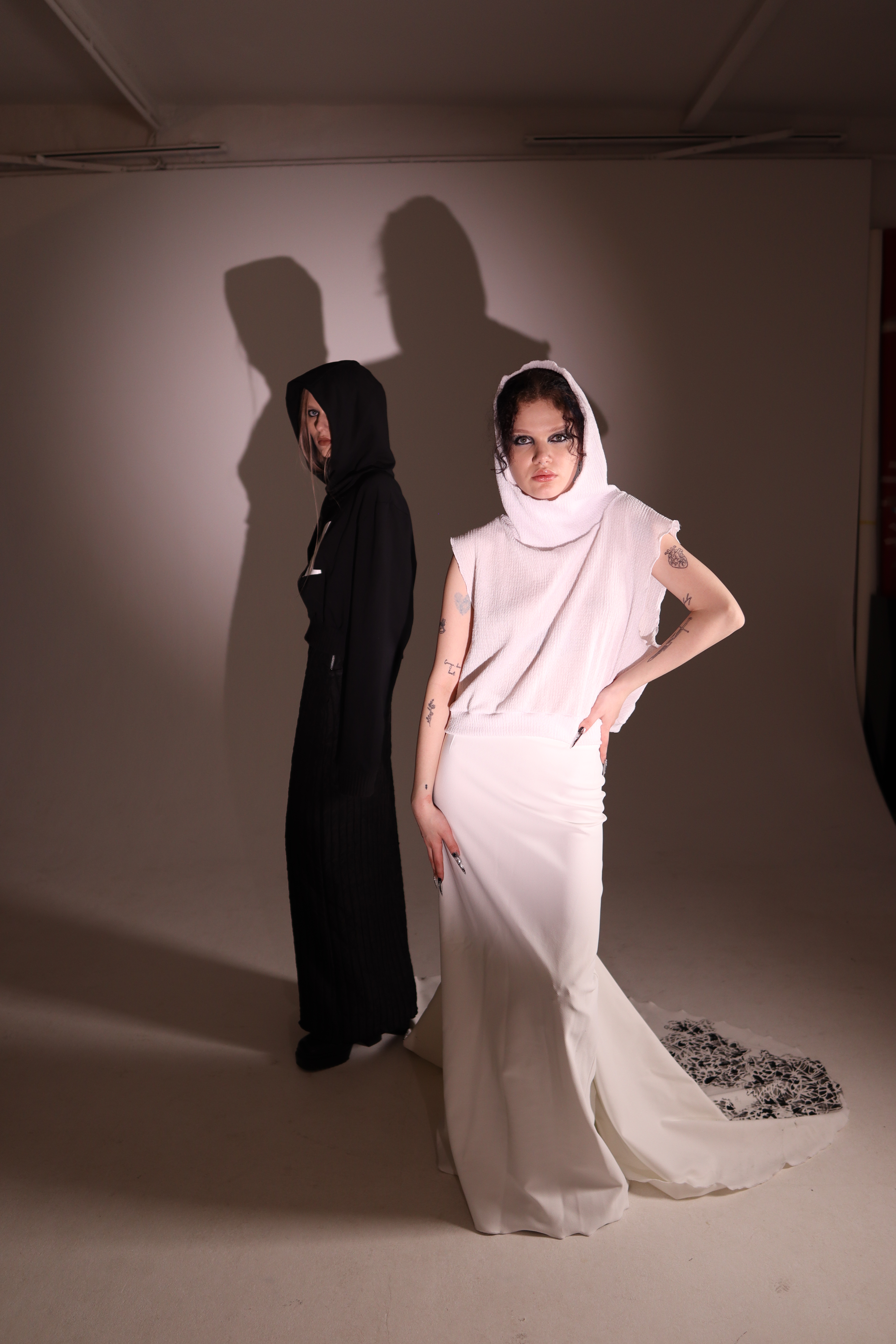
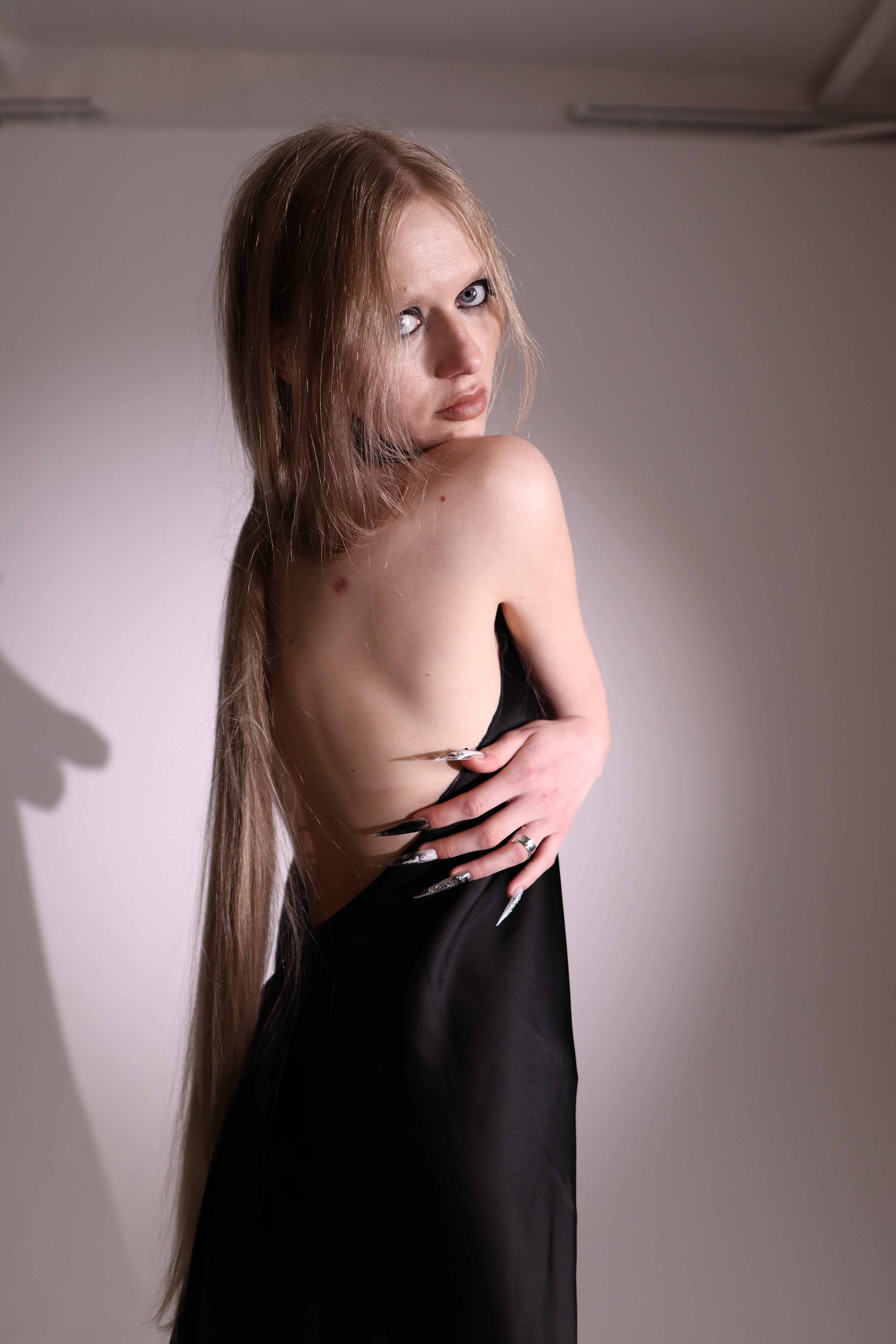
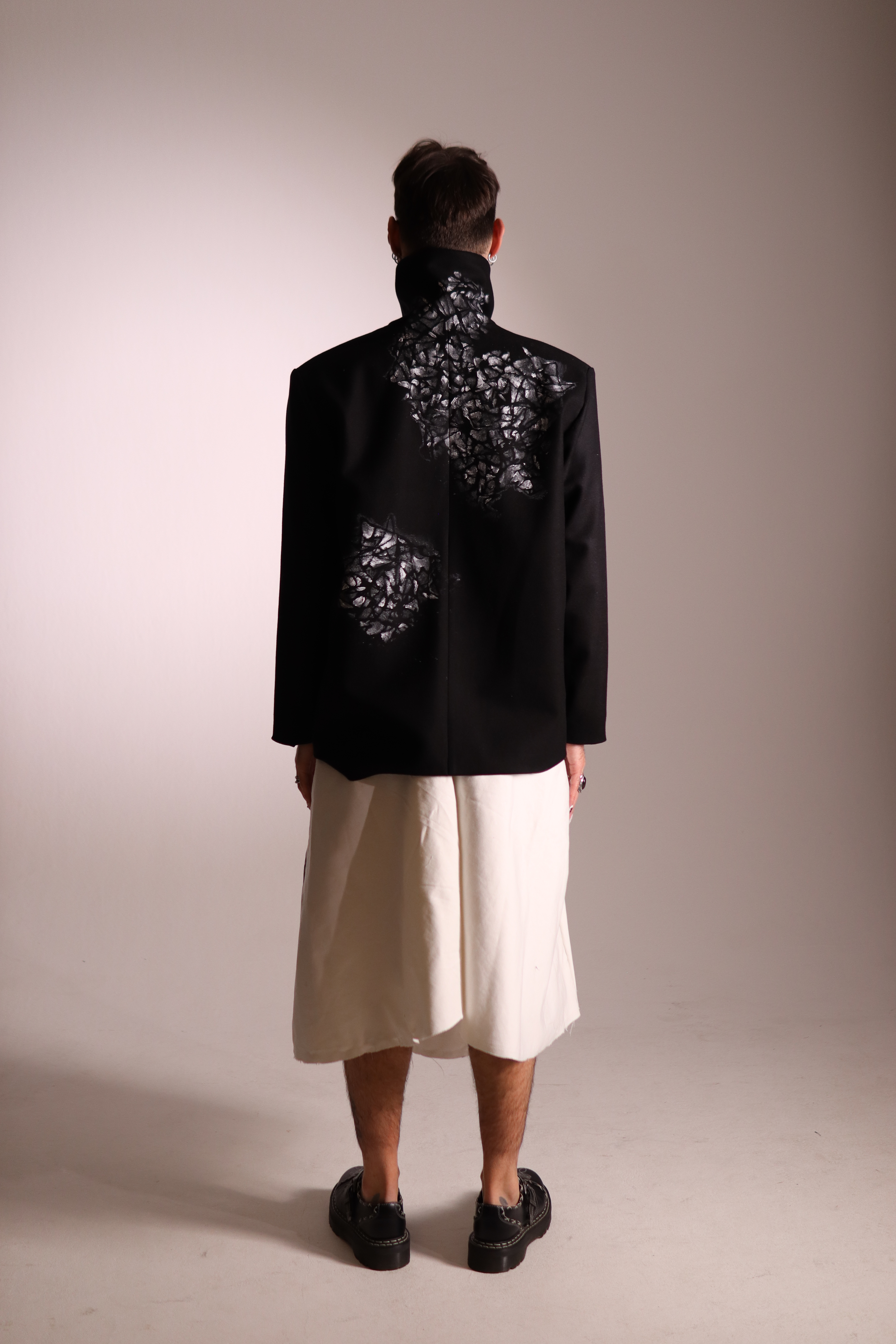
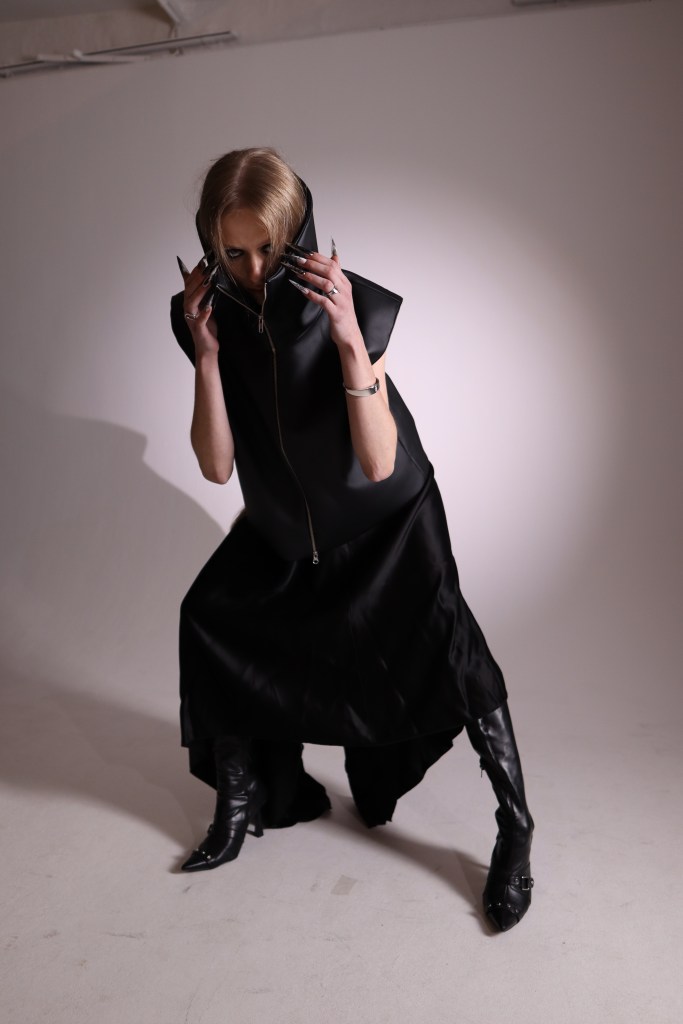

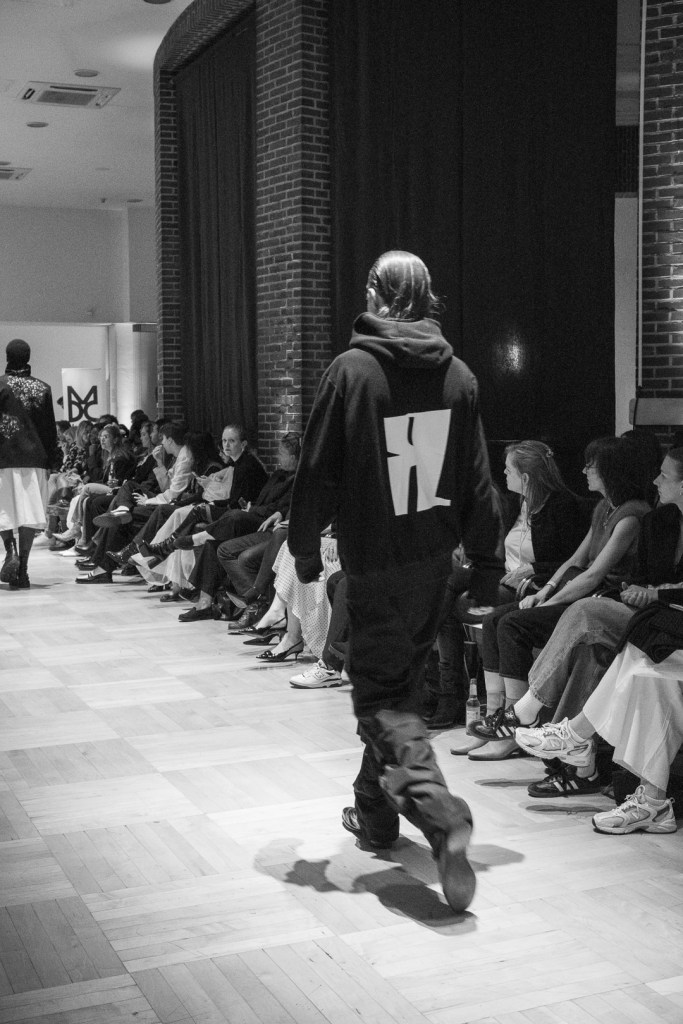
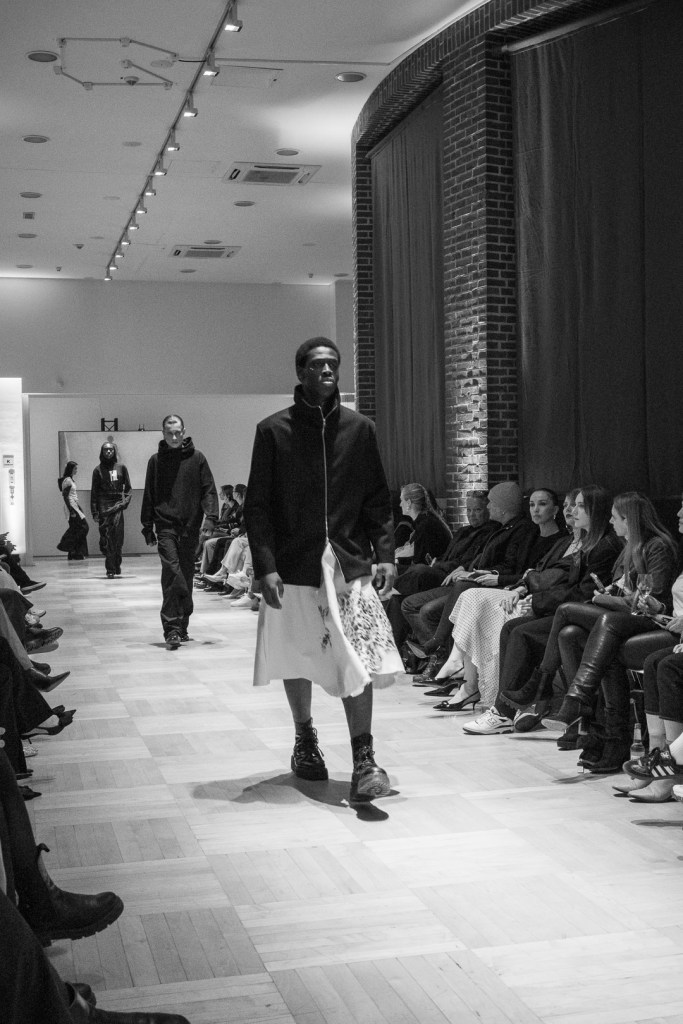
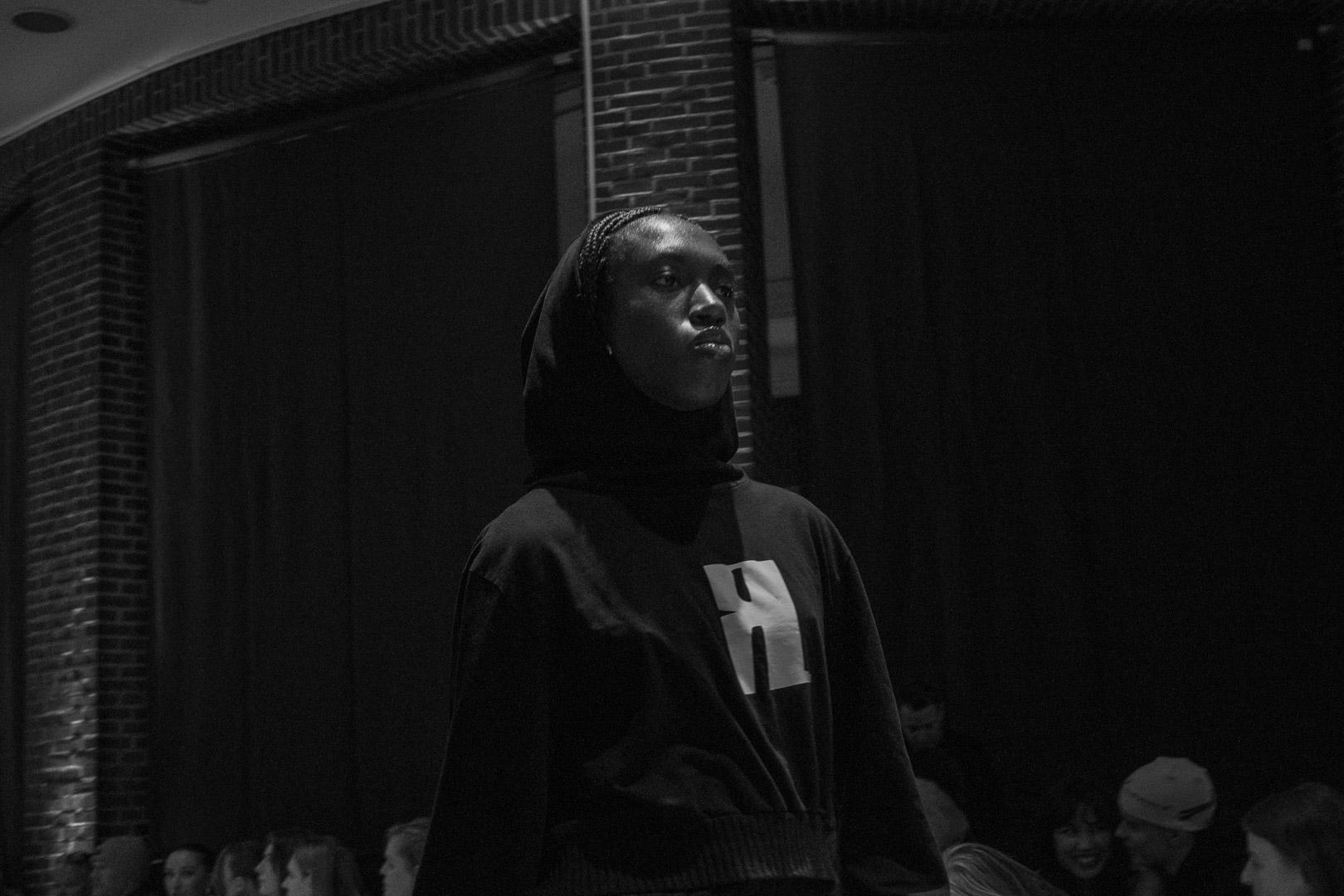
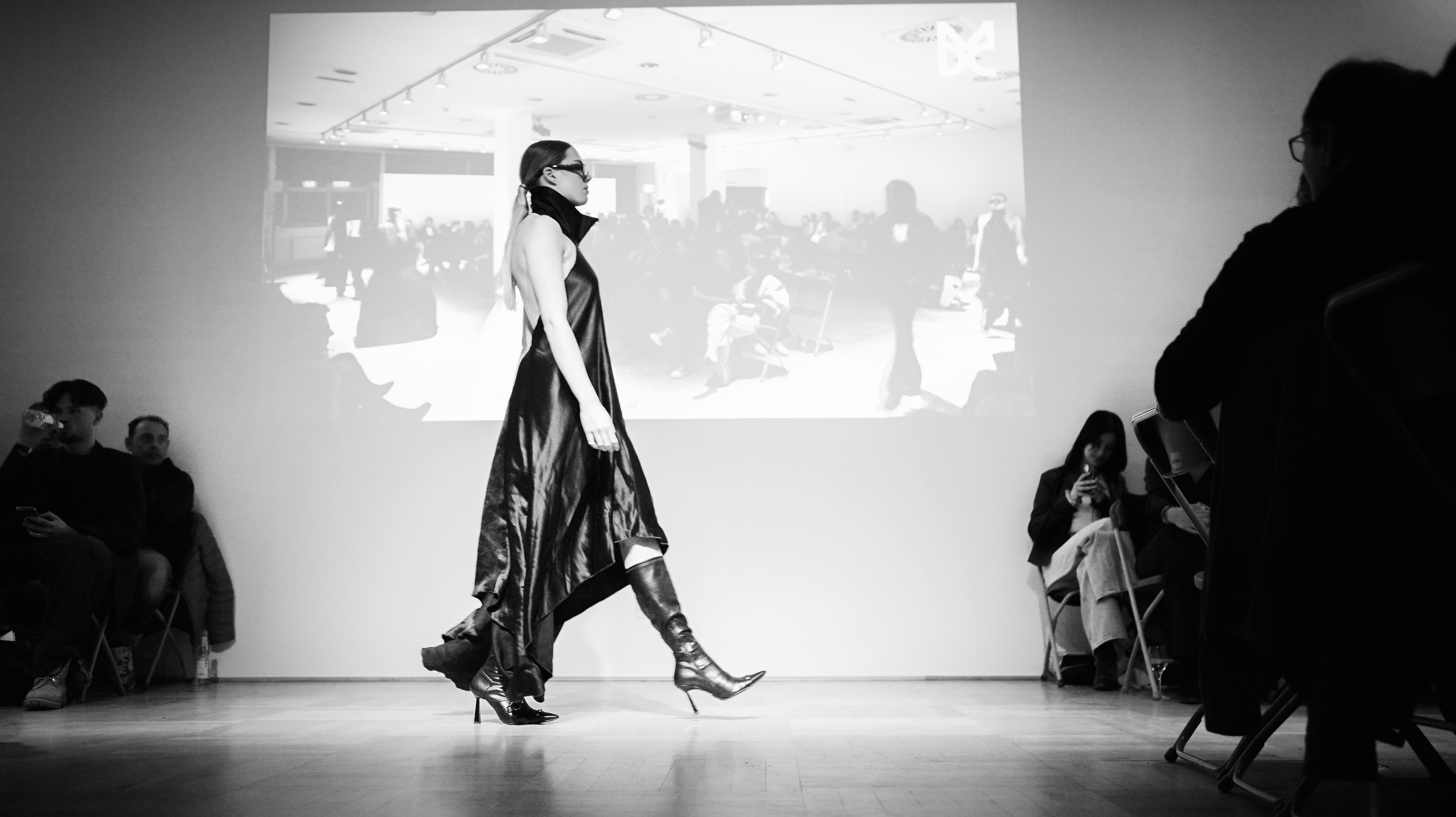
on the runway.
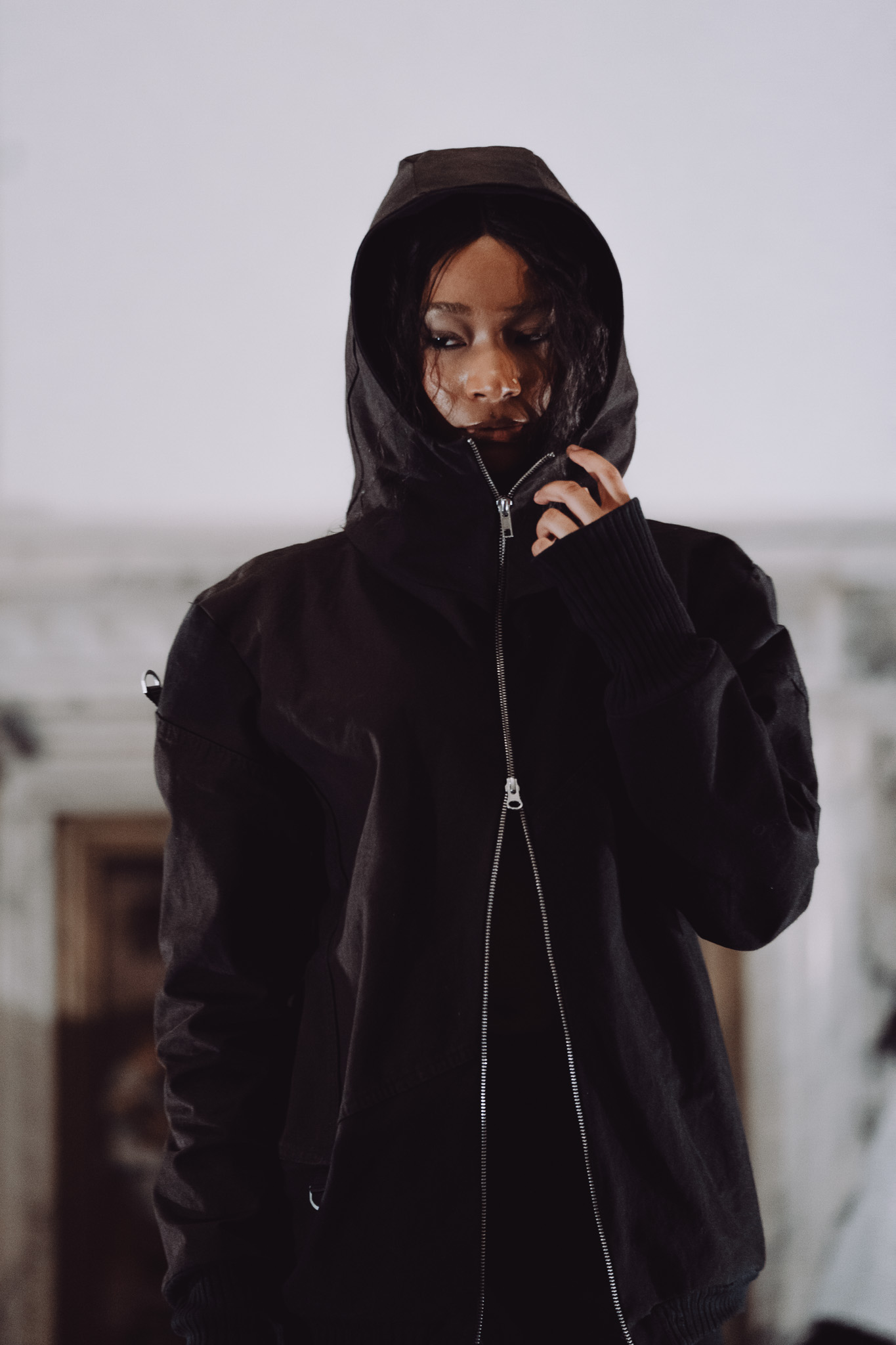
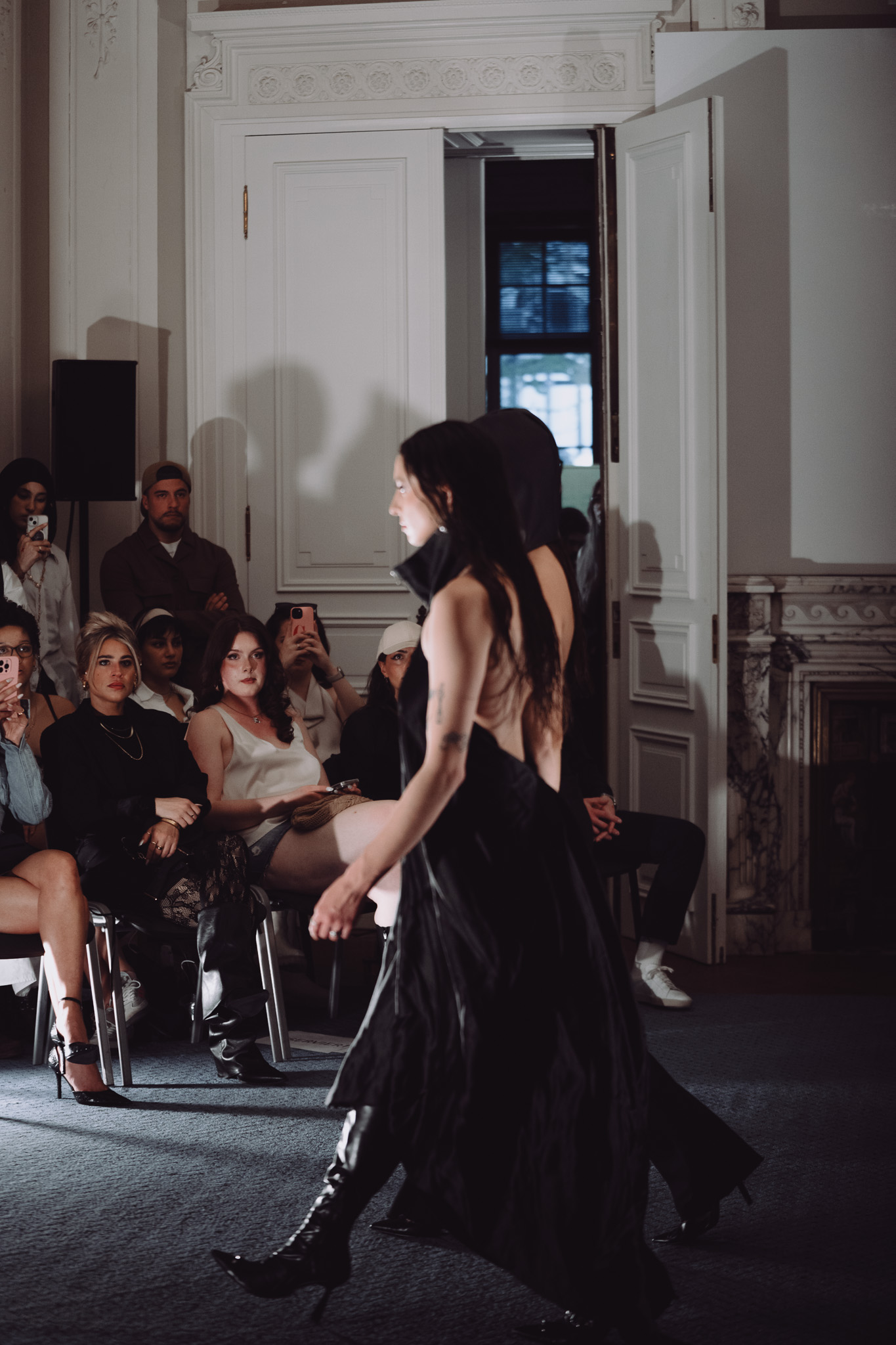
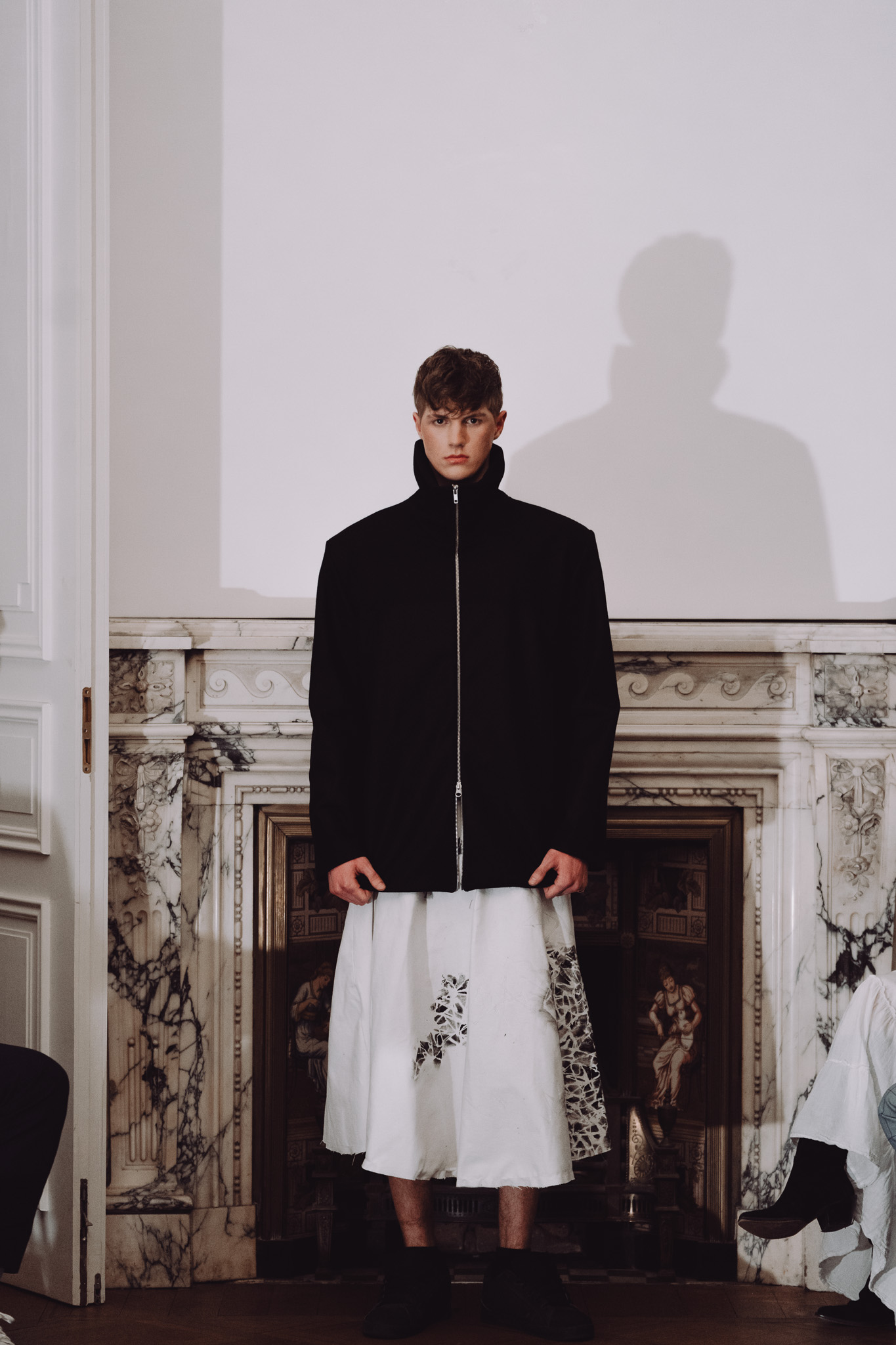
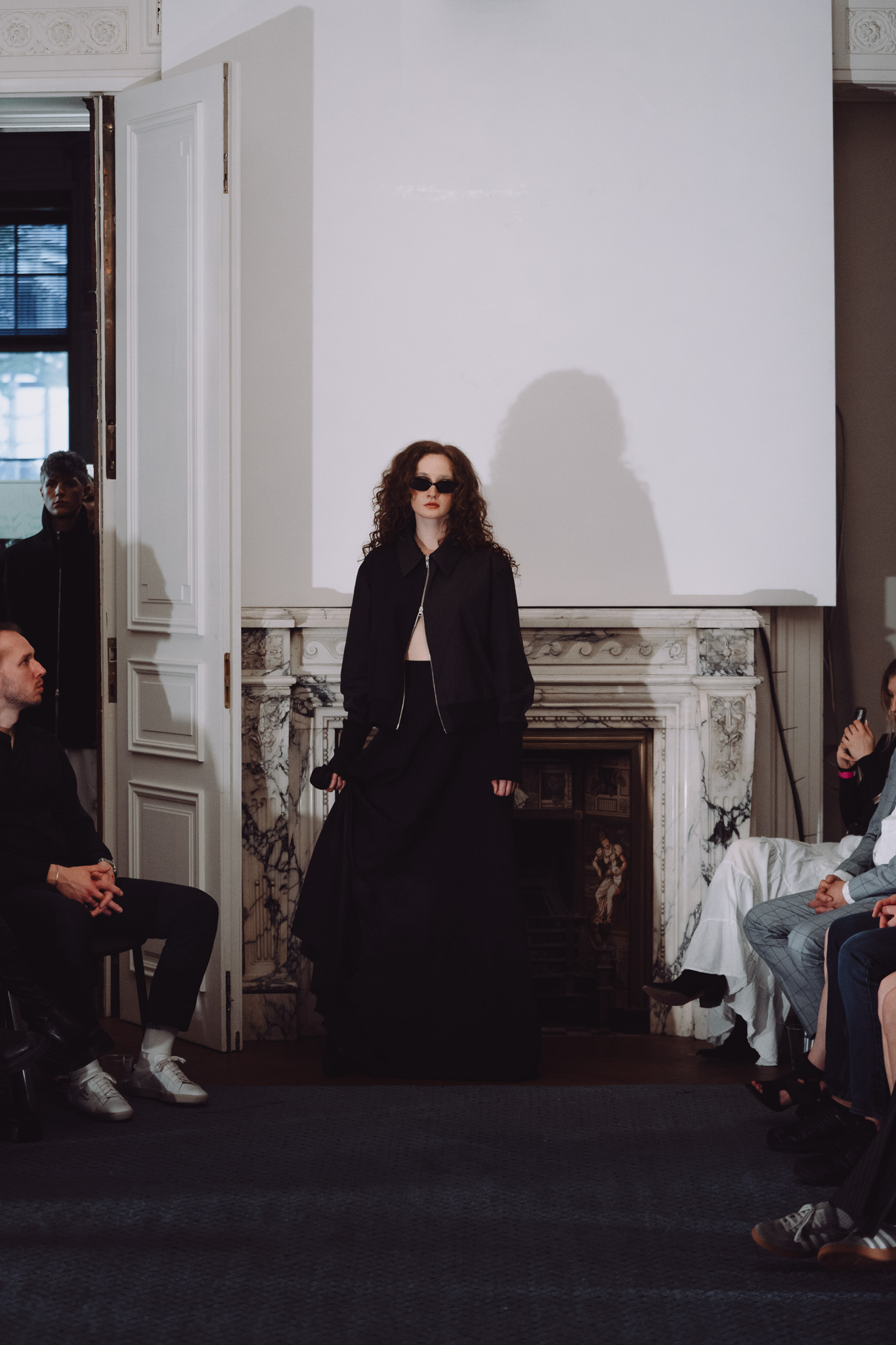
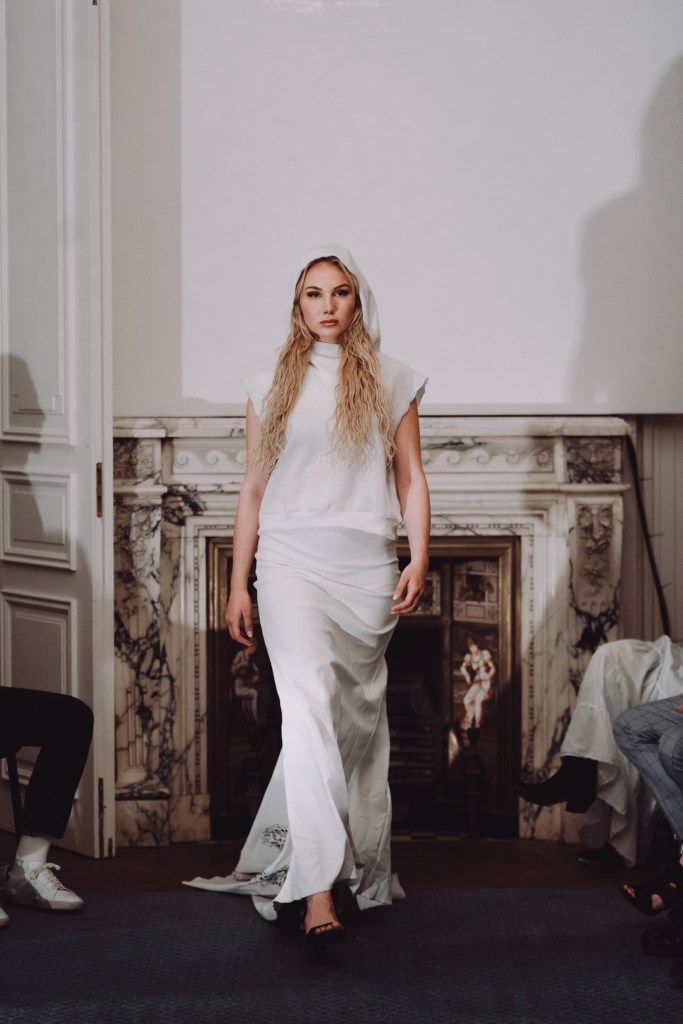
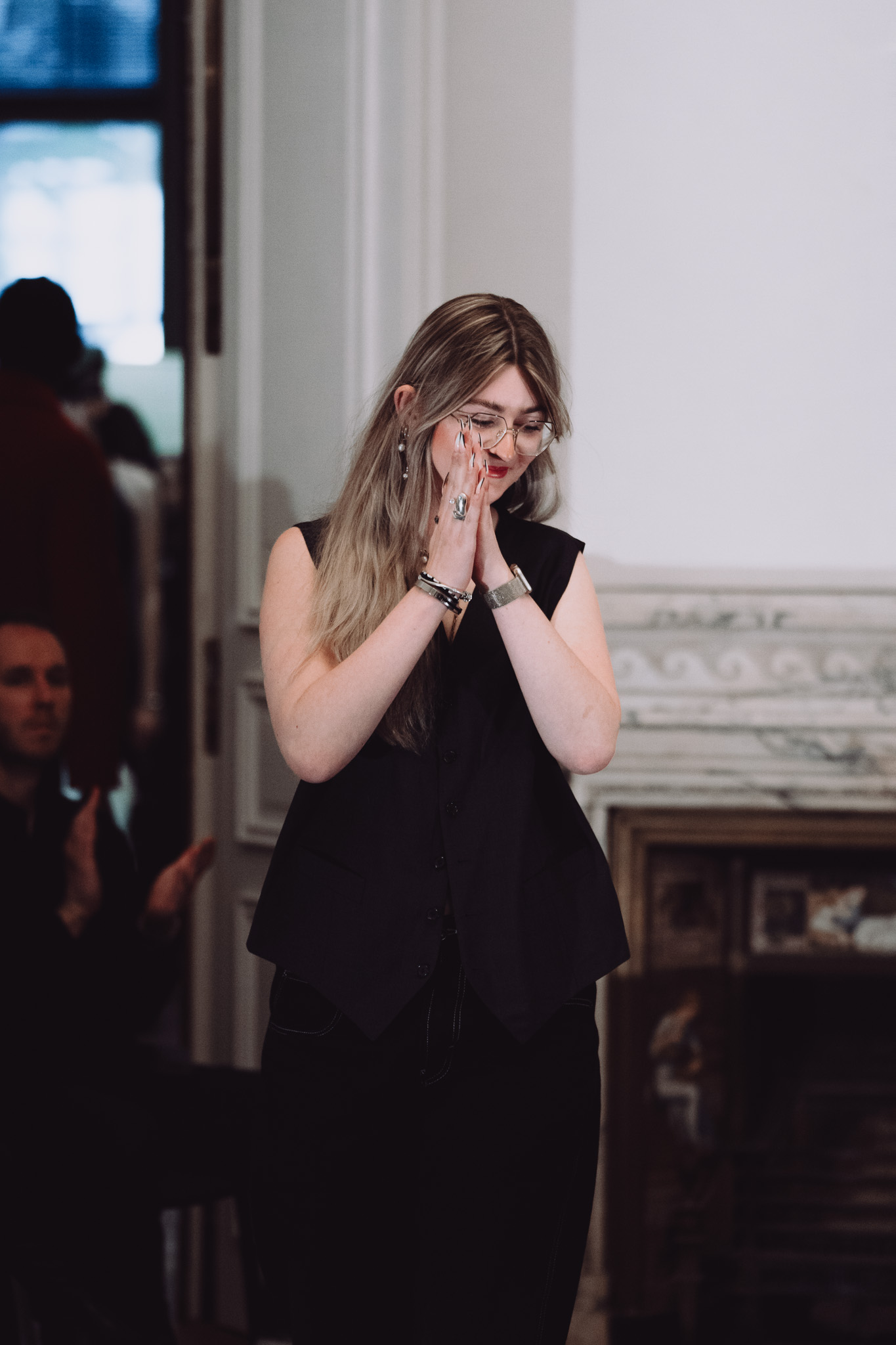
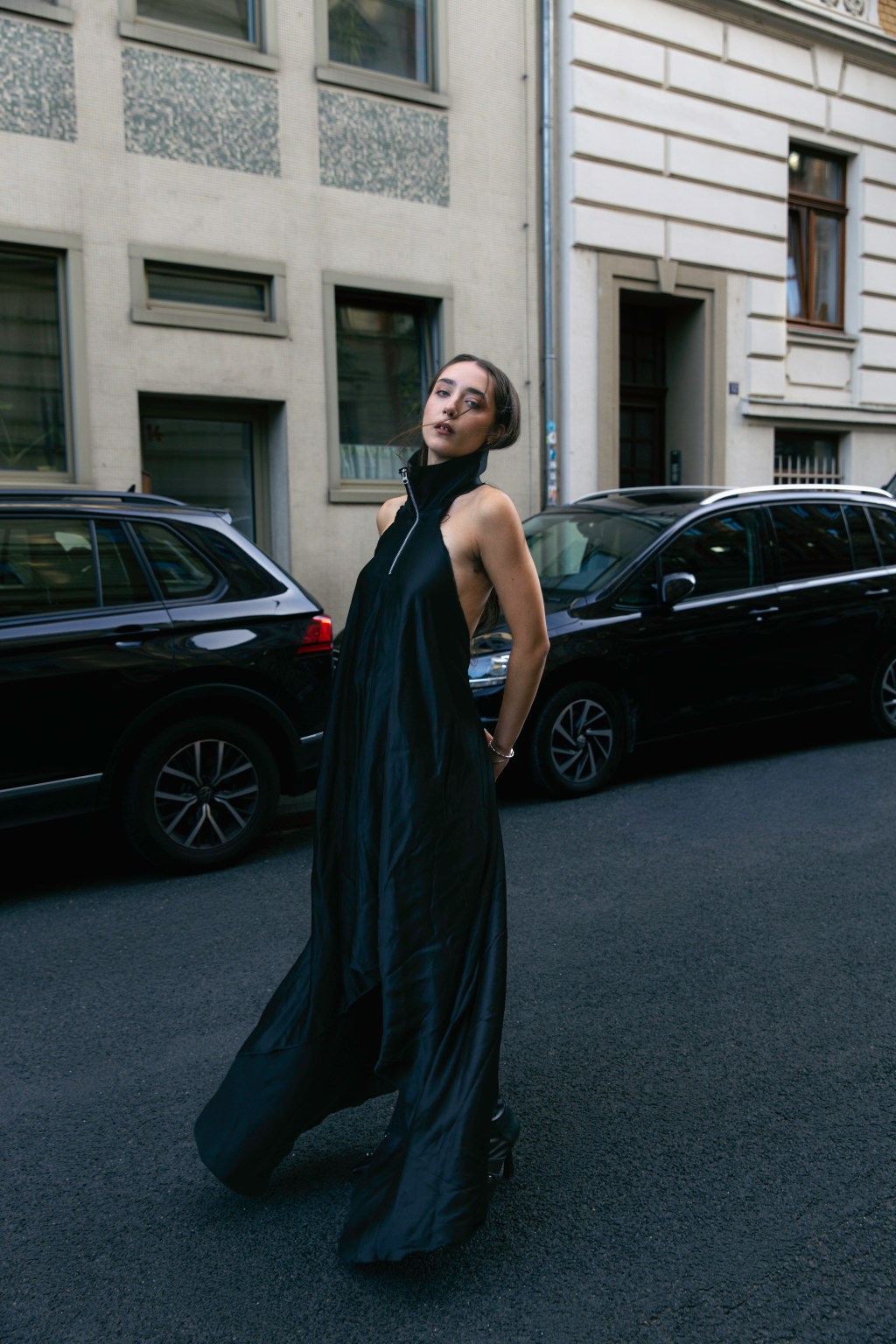
Thanks to Culture of Collaborations who organized this Fashion Show! And another big thanks to 5thhouseimagery who made this beautiful pictures and to all the models who brought my collection to life!
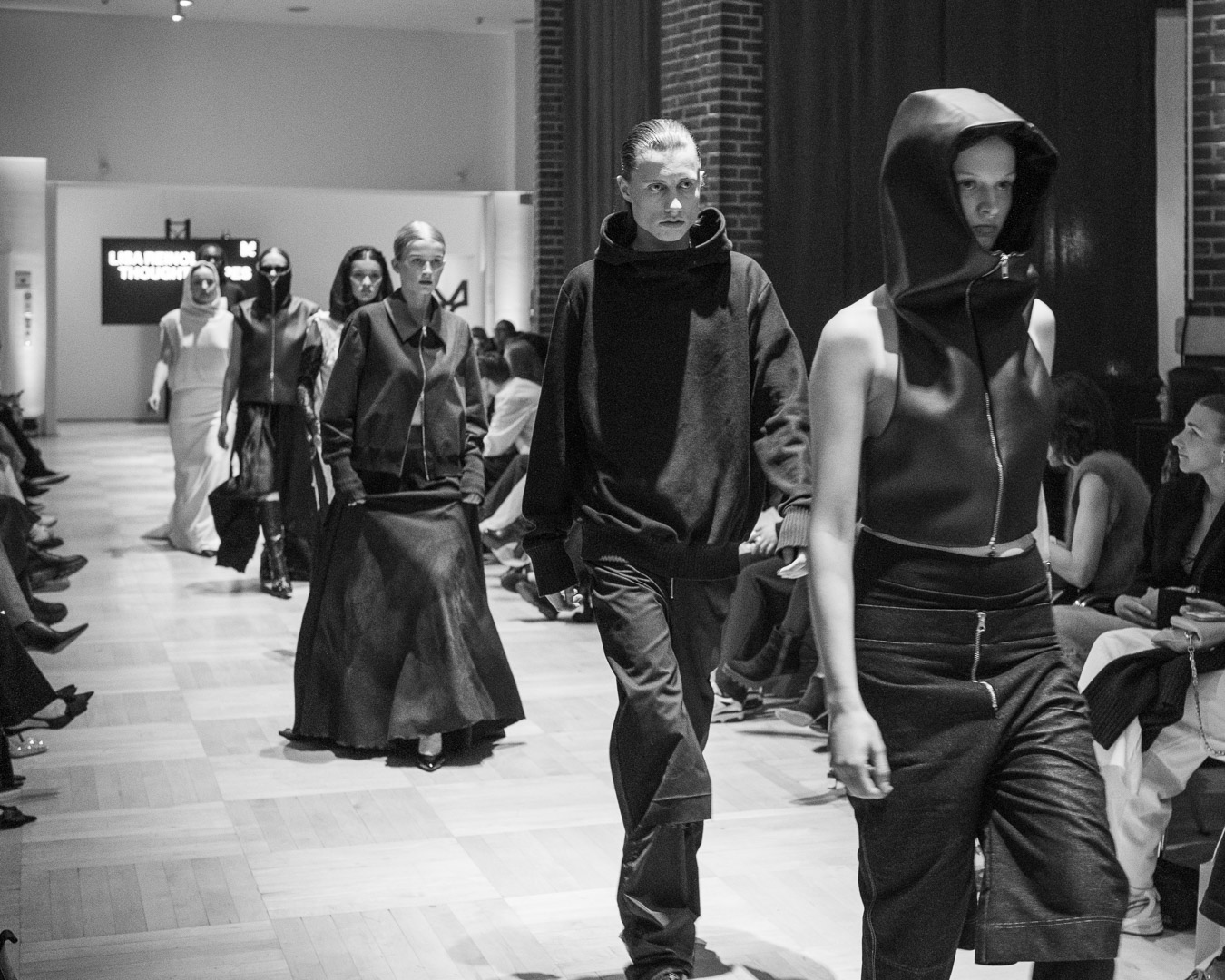
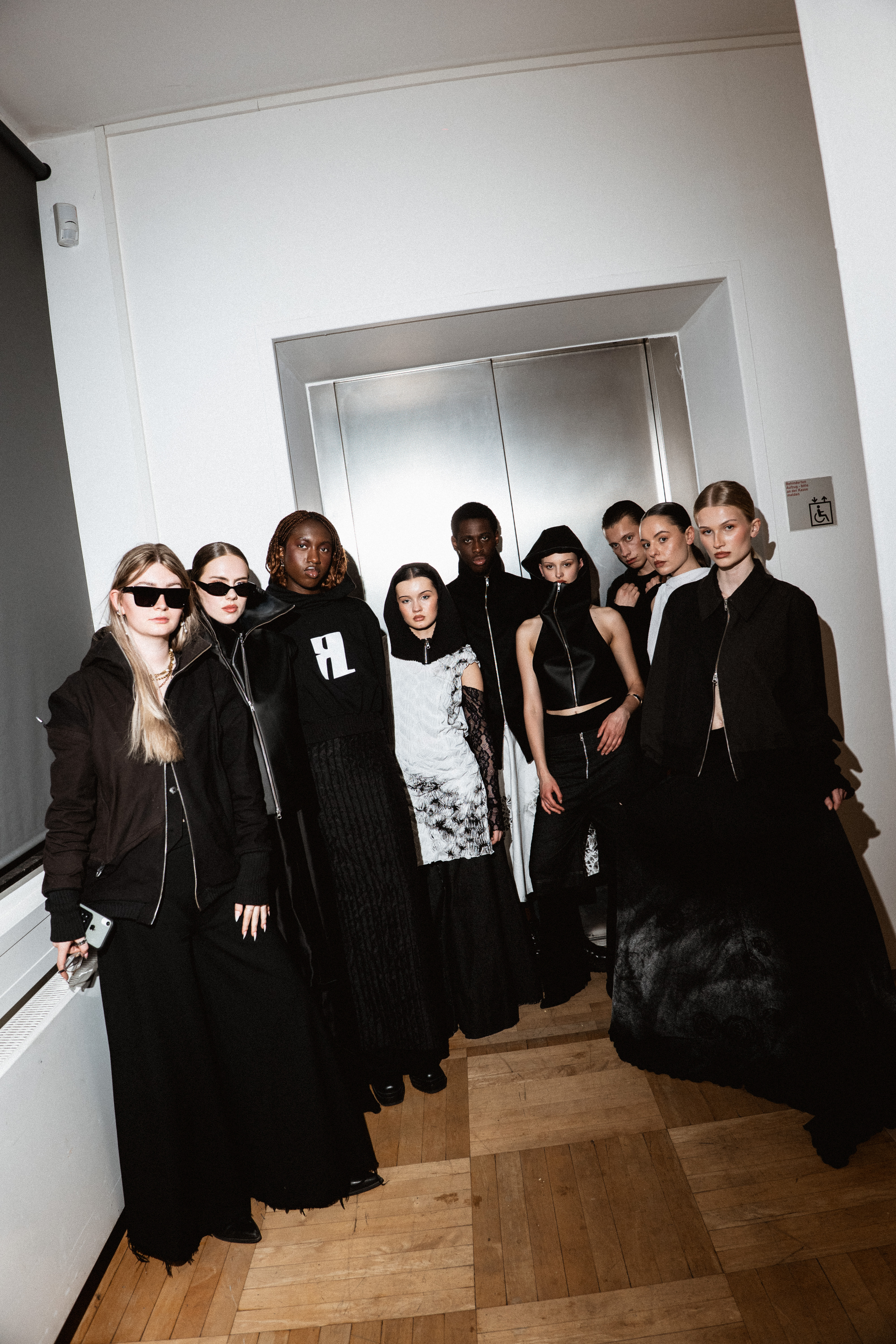
" First and foremost, I'd like to thank my family. Without my parents, my sister, and my grandmothers, none of this would have been possible. You supported me, encouraged me when I was feeling down, celebrated with me when I celebrated a success, and always believed in me. And I know I annoyed you all often enough with that, especially my sister Anna, who constantly had to model for me, try on all my collections, and even shot my fourth-semester collection for me.
And of course, I'd like to thank my friends, who were always there for me, even though most of them had no clue about fashion. Special thanks go to Jakob, Fabrice, Emil, Tom, Max, Xenia, Yola, Nick, Nina, Philipp, Thilo, and all the other wonderful people in my life.
Another thank you goes to my lecturer Marion, who believed in me from the very beginning and taught me so much. You helped me find my own style and were always willing to listen. I would also like to thank my instructor Verena. Without you, my graduation collection wouldn't be what it is today. You knew my goal from the beginning and helped me find my way there. Thank you!
Finally, I would like to thank all the models, photographers, makeup artists, videographers, instructors, fellow students, and everyone who has supported me with my collections over the past few years! "  - this was my thank you speech after I finished the final fashion show and my last semester at Mode Design College Düsseldorf.
design, creative direction & styling: Lisa Reinold @Liseira & @Reinoldarchives
photographer: Chantal Hueben – @chantalhueben
makeup & hair: Natalie Flormann – @nataliefmakeup
videographer: Pavel Kovalenko – @haunted_zeitgeist
model: Jonas – @black_pulpo
model: Leah – @leah.hln
model: Anastasia – @m3owii
assistant: Xenia – @x3nia_fndz
assistant: Yola – @yola.sle
nails: camilla inge volbert @camillaingevolbert
 Lisa Reinold